Loading...
Humayun vs Prithvi Narayan Shah
Prithvi Narayan Shah leads by 12.3 pts · 2 figures compared
…

Humayun
Emperor · Modern
49.6Total
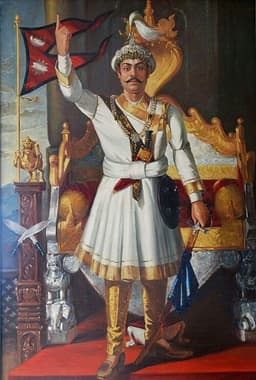
Prithvi Narayan Shah
Emperor · Modern
61.9Total
Basic Information
Born
1508
1723
Died
1556
1775
Era
Modern
Modern
Nationality
Mughal Empire
Nepal
Occupation
Emperor
Emperor
Civilization
Indian
Indian
Score Comparison
Military (10%)
45.0
70.0
Political (20%)
36.5
72.0
Influence (20%)
58.0
55.0
Legacy (20%)
50.0
58.0
Leadership (15%)
55.3
72.0
Strategy (15%)
43.3
51.0
TOTAL
49.6
61.9
Humayun — Complete Timeline
1539 AD
Battle of ChausaWar◆ Major
Humayun's army was defeated by the Afghan ruler Sher Shah Suri at Chausa in Bihar. Humayun barely escaped with his life, reportedly crossing the Ganges River on a water skin. This defeat led to the loss of Mughal control over Bengal and Bihar, weakening Humayun's position.
BattleDefeatSher Shah Suri
Impact: regionaltragic
1540 AD
Battle of KannaujWar◆ Major
Humayun was decisively defeated by Sher Shah Suri at Kannauj (also known as the Battle of Bilgram). This defeat forced Humayun to flee India entirely, seeking refuge in Persia. Sher Shah Suri established the Sur Empire, which ruled northern India for the next 15 years.
BattleExileSur Empire
Impact: regionaltragic
1555 AD
Restoration of the Mughal EmpireWar
Humayun, with military support from the Safavid Shah Tahmasp I, recaptured Delhi and Agra from the Sur Empire. He defeated the Sur forces at the Battle of Sirhind. This victory restored the Mughal Empire in India, though Humayun died shortly after, leaving the empire to his son Akbar.
RestorationMughal EmpireSafavid Alliance
Impact: regionalconstructive
1556 AD
Death from a FallOther◆ Major
Humayun died after falling down the stairs of his library in Delhi. He was reportedly carrying a load of books when he heard the call to prayer and slipped. His death occurred just months after restoring the Mughal Empire, leaving his 13-year-old son Akbar as his successor.
DeathAccidentSuccession
Impact: nationaltragic
Prithvi Narayan Shah — Complete Timeline
1767 AD
Battle of KirtipurWar◆ Major
Prithvi Narayan Shah's forces captured the strategic town of Kirtipur after a prolonged siege. The victory was crucial for controlling the Kathmandu Valley and demonstrated his military strategy, though it involved heavy casualties on both sides.
SiegeMilitary CampaignGorkha Conquest
Impact: regional
1768 AD
Unification of NepalWar
Prithvi Narayan Shah conquered the Kathmandu Valley, defeating the Malla kingdoms of Kathmandu, Patan, and Bhaktapur. This victory unified the valley under his rule and marked the foundation of the modern state of Nepal.
ConquestUnificationKathmandu Valley
Impact: regionalconstructive
1769 AD
Proclamation of the Kingdom of NepalPolitical Action
After unifying the Kathmandu Valley, Prithvi Narayan Shah proclaimed the Kingdom of Nepal, with Kathmandu as its capital. He established the Shah dynasty, which ruled Nepal until 2008, and laid the administrative foundations of the state.
Foundation of NepalShah DynastyState Formation
Impact: regionalconstructive
1774 AD
Divyopadesh (Divine Counsel)Cultural◆ Major
Prithvi Narayan Shah delivered the Divyopadesh, a set of political and strategic instructions to his successors. The counsel emphasized nationalism, self-reliance, and the importance of maintaining Nepal's independence from British India and China.
Political TestamentNationalismForeign Policy
Impact: nationalconstructive
Expert Analysis
Origins
Humayun was born on March 6, 1508, in Kabul, the eldest son of Babur, founder of the Mughal Empire. He inherited a precarious realm at age 22, with his father's death in 1530. Humayun's early life was shaped by court intrigues and the need to consolidate power against his brothers and rival Afghan nobles. He was educated in Persian, Arabic, and military arts but lacked his father's strategic acumen.
Prithvi Narayan Shah was born on January 7, 1723, in Gorkha, a small hill principality in present-day Nepal. He was the eldest son of King Nara Bhupal Shah and Queen Kaushalyavati. From a young age, he was groomed for leadership, receiving training in statecraft and warfare. His formative experiences included observing the fragmentation of the Kathmandu Valley's Malla kingdoms and the growing influence of British colonial powers in India.
Rise to Power
Humayun ascended the throne in 1530 after Babur's death. He faced immediate challenges from his brothers, who claimed territories, and from Afghan forces under Sher Shah Suri. His early reign saw military campaigns to secure his borders, but his inability to maintain alliances led to defeats. In 1539, the Battle of Chausa saw Humayun's army routed by Sher Shah; Humayun escaped by swimming across the Ganges. The following year, the Battle of Kannauj (1540) ended with a decisive defeat, forcing Humayun into exile in Persia for 15 years.
Prithvi Narayan Shah became king of Gorkha in 1743 at age 20. He began his unification campaign by securing strategic hill forts and forging alliances with local rulers. His key turning point was the conquest of Nuwakot in 1744, which gave him control over trade routes. He systematically isolated the Malla kingdoms of Kathmandu, Patan, and Bhaktapur, using economic blockades and military pressure. After a long siege, he captured Kirtipur in 1767, despite fierce resistance. Finally, in 1769, he conquered the Kathmandu Valley, proclaiming the Kingdom of Nepal.
Leadership & Governance
Humayun's leadership was marked by indecision and reliance on others. He scored 55.3 in leadership, reflecting his ability to regain power with Safavid help but also his failures in maintaining control. His governance was weak; he failed to establish a stable administration or secure loyalty from nobles. After his return from Persia in 1555, he recaptured Delhi but spent most of his time consolidating rather than reforming. His death in 1556 from a fall left the empire to his 13-year-old son Akbar.
Prithvi Narayan Shah scored 72 in leadership, demonstrating decisive action and strategic vision. He implemented a centralized administration, replacing fragmented Malla rule. His governance emphasized nationalism and self-reliance, as outlined in his Divyopadesh (Divine Counsel). He banned the use of foreign goods, promoted local industries, and maintained a strong military. His policies laid the foundation for a unified Nepali state that resisted British colonization.
Triumph & Tragedy
Humayun's greatest triumph was reclaiming his empire in 1555, restoring Mughal rule after 15 years in exile. He defeated the Sur successors at the Battle of Sirhind and re-established Mughal authority in Delhi and Agra. However, his greatest failure was losing the empire in the first place to Sher Shah Suri, a more capable ruler. His military score of 45.0 reflects his poor strategic decisions, such as dividing his forces and failing to secure supply lines. His death from a fall was an anticlimax, depriving him of time to rebuild.
Prithvi Narayan Shah's triumph was unifying the Kathmandu Valley and founding the Kingdom of Nepal, a feat that changed the region's political landscape. He scored 70 in military and 72 in political, showing his effectiveness in both areas. His failure was the prolonged siege of Kirtipur, which cost many lives and revealed his ruthlessness. He also faced ongoing resistance from remaining Malla loyalists and had to manage tensions with Tibet and British India. His early death in 1775 at age 52 left the expansion unfinished, but his successors continued his work.
Character & Destiny
Humayun was known for his interest in astrology, arts, and literature, but his character was marked by indecisiveness and naivety. He frequently pardoned enemies and trusted untrustworthy allies, leading to his downfall. His destiny was to be a transitional figure, overshadowed by his father Babur and son Akbar. Historians often view him as a failure who nonetheless preserved the Mughal lineage.
Prithvi Narayan Shah was a determined, pragmatic leader with a clear vision. He was ruthless when necessary, as seen in his treatment of Kirtipur's defenders, but also politically astute, forming alliances with local chiefs. His character shaped his destiny as the unifier of Nepal, a legacy that endures. He is revered as a national hero, and his Divyopadesh remains a foundational text.
Legacy
Humayun's legacy is mixed. He is remembered for losing and regaining an empire, but his reign was unstable. His main contribution was fathering Akbar, who expanded and consolidated the Mughal Empire. His tomb in Delhi is a UNESCO World Heritage site. In scores, his legacy is 50.0 and influence 58.0, reflecting his role as a link in the Mughal dynasty.
Prithvi Narayan Shah's legacy is profound in Nepal. He is celebrated as the Father of the Nation, and his unification campaign ended centuries of fragmentation. The Shah dynasty ruled Nepal until 2008. His emphasis on nationalism and self-reliance influenced Nepali identity. His legacy score is 58.0, and influence 55.0, showing his lasting impact on a smaller scale but with greater national significance.
Conclusion
While Humayun's scores total 49.6 against Prithvi Narayan Shah's 61.9, the comparison is not just numerical. Humayun's failures were largely his own, while Prithvi Narayan Shah's successes were deliberate. Humayun's impact was indirect, through his son Akbar, whereas Prithvi Narayan Shah directly created a nation. Prithvi Narayan Shah had greater impact in terms of concrete achievement: he unified a country that remains independent today. Humayun, despite his dynasty's later glory, was a weak ruler who lost his empire. The data supports Prithvi Narayan Shah as the more effective leader with higher scores across military, political, and leadership dimensions. His unification of Nepal was a strategic masterpiece, while Humayun's reign was a series of missed opportunities. Thus, Prithvi Narayan Shah had greater impact.
Rankings
🥇
Prithvi Narayan ShahLeader
Mil: 70.0Pol: 72.0Inf: 55.0
61.9
🥈
Humayun
Mil: 45.0Pol: 36.5Inf: 58.0
49.6
+12.3 behind
How This Comparison Works
Algorithm
Each figure is scored on 6 dimensions (0—100 scale) based on structured historical data: Military (10%), Political (20%), Influence (20%), Legacy (20%), Leadership (15%), Strategy (15%). The weighted total produces the final ranking.
Data Sources
Scores are computed from structured sub-indicators in the database. Scale factors adjust for era (Ancient ×0.85, Modern ×1.0) and civilization size (Eastern ×1.05, Other ×0.80) to account for differences in population and military scale.
Maximum 3 Figures
Comparisons are limited to 2—3 figures to ensure readability and statistical meaningfulness.
Error Margins
±5 points per dimension — Sub-scores are derived from historical records with inherent uncertainty. Two figures within 5 points on a dimension should be considered roughly equivalent in that area.
Total Score Accuracy
±3 points overall — The weighted combination of 6 dimensions produces a total score with approximately ±3 points of uncertainty. Differences of less than 3 points are not statistically significant— the figures are effectively tied.
Known Limitations
- Historical records are incomplete and uneven across civilizations
- Figures from oral-tradition societies may be underrepresented
- Occupation labels can misclassify multi-role figures
- Scores measure capability and impact, not moral character
- Quantitative scoring is a comparison tool, not absolute truth
Capability Radar
Military (10%) — Battles & Warfare
Battles
35
55
Win Rate
30
60
Expansion
30
60
Political (20%) — Governance & Reform
Reform
25
60
Diplomacy
30
65
Economy
25
50
Influence (20%) — Cultural & Global Reach
Cultural
40
60
Global
40
45
Legacy (20%) — Historical Impact
Historical
55
65
Longevity
50
60
Leadership (15%) — Power & Stability
Tenure
30
55
Stability
20
55
Strategy (15%) — Tactics & Innovation
Strategy
35
65
Tactics
40
58
Reform
20
50
Similar Comparisons
Comments & Discussion
No comments yet. Be the first to share your thoughts!