Loading...
Hotta Masatoshi vs Jacinda Ardern
Jacinda Ardern leads by 8.0 pts · 2 figures compared
…

Hotta Masatoshi
Politician · Modern
49.5Total
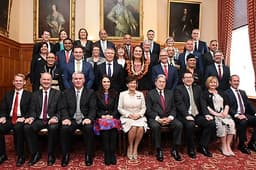
Jacinda Ardern
Politician · Modern
57.5Total
Basic Information
Born
1631
1980
Died
1684
—
Era
Modern
Modern
Nationality
Japan
New Zealand
Occupation
Politician
Politician
Civilization
Eastern
Western
Score Comparison
Military (10%)
14.8
50.0
Political (20%)
62.7
65.0
Influence (20%)
51.8
56.7
Legacy (20%)
45.0
49.2
Leadership (15%)
72.0
80.0
Strategy (15%)
36.3
42.9
TOTAL
49.5
57.5
Hotta Masatoshi — Complete Timeline
1681 AD
Appointment as TairoPolitical Action◆ Major
Hotta Masatoshi was appointed tairo under Shogun Tokugawa Tsunayoshi. He became the shogun's chief advisor and helped implement Tsunayoshi's policies, including the controversial Laws of Compassion regarding animal protection.
AppointmentTairoTokugawa Tsunayoshi
Impact: nationalconstructive
1682 AD
Implementation of the Laws of CompassionReform
As tairo, Masatoshi helped enforce Tsunayoshi's edicts protecting dogs, horses, and other animals, which included severe punishments for violators. These laws caused hardship for commoners and were widely resented, but Masatoshi supported them as loyal advisor.
Laws of CompassionAnimal protectionTokugawa Tsunayoshi
Impact: nationaldestructive
1684 AD
Assassination by Inaba MasayasuPolitical Action◆ Major
Hotta Masatoshi was stabbed to death in Edo Castle by a disgruntled junior official, Inaba Masayasu, who was then executed. The assassination shocked the shogunate and led to a purge of Inaba's faction, strengthening Tsunayoshi's authoritarian rule.
AssassinationEdo CastlePolitical violence
Impact: nationaltragic
Jacinda Ardern — Complete Timeline
2017 AD
Became Prime Minister of New ZealandPolitical Action◆ Major
Jacinda Ardern became Prime Minister after the Labour Party formed a coalition government with New Zealand First, supported by the Green Party. At 37, she was the youngest female head of government in the world at the time.
ElectionGender MilestoneGovernment Formation
Impact: nationalconstructive
2019 AD
Response to the Christchurch Mosque ShootingsPolitical Action
Following the terrorist attack on two mosques in Christchurch that killed 51 people, Ardern's government swiftly enacted gun law reforms, banning military-style semi-automatic weapons. Her empathetic leadership and wearing of a headscarf gained international praise.
TerrorismGun ControlCrisis Management
Impact: globalconstructive
2020 AD
COVID-19 Pandemic ResponsePolitical Action
Ardern's government implemented a strict nationwide lockdown and border closure in response to the COVID-19 pandemic. New Zealand successfully eliminated community transmission for several months, with low case numbers and deaths compared to many countries.
Public HealthPandemicLockdown
Impact: globalconstructive
2023 AD
Resigned as Prime MinisterPolitical Action◆ Major
Jacinda Ardern announced her resignation as Prime Minister, stating she no longer had 'enough in the tank' to lead. Her departure marked the end of a transformative but increasingly challenging tenure.
ResignationPolitical Career
Impact: national
Expert Analysis
Origins
Hotta Masatoshi was born in 1634 into a prominent samurai family in Japan. His father, Hotta Masamori, served as a senior advisor to the Tokugawa shoguns. Masatoshi received a traditional Confucian education and trained in martial arts, preparing him for a life in the shogunate bureaucracy. His early career included various posts in the shogunate, where he demonstrated administrative competence and loyalty.
Jacinda Ardern was born on July 26, 1980, in Hamilton, New Zealand. Her father worked as a police officer, and her mother as a school lunch worker. Ardern grew up in a Mormon household but later left the church. She studied political science at the University of Waikato and began her career as a researcher in the office of Prime Minister Helen Clark. Her early political involvement included working for Labour Party MPs and serving as president of the International Union of Socialist Youth.
Rise to Power
Hotta Masatoshi's rise was gradual within the Tokugawa shogunate. He became a trusted advisor to Shogun Tokugawa Tsunayoshi, who appointed him tairo (chief advisor) in 1680. The tairo was the highest-ranking official under the shogun. Masatoshi's appointment came at a time when Tsunayoshi sought to consolidate power and implement his policies, including the controversial Laws of Compassion, which protected animals.
Jacinda Ardern's rise was rapid. She entered Parliament in 2008 as a list MP and quickly gained attention for her communication skills. In 2017, she became Labour Party leader just seven weeks before the general election. After the election, Labour formed a coalition government with New Zealand First and the Green Party, making Ardern prime minister at age 37. She became the world's youngest female head of government at that time.
Leadership & Governance
Hotta Masatoshi's leadership style was authoritarian and bureaucratic. He enforced Tsunayoshi's edicts strictly, including the Laws of Compassion, which imposed severe punishments for harming animals. For example, a samurai was executed for killing a dog. Masatoshi also managed the shogunate's finances and maintained order among the daimyo. His governance focused on stability and adherence to Confucian hierarchy.
Jacinda Ardern's leadership was empathetic and crisis-oriented. She emphasized kindness and evidence-based decision-making. Her government's response to the Christchurch mosque shootings in 2019 included swift gun law reforms, banning military-style semi-automatic weapons within 28 days. During the COVID-19 pandemic, she implemented a strict elimination strategy, including a nationwide lockdown and border closure. New Zealand achieved low case numbers and deaths compared to many countries.
Triumph & Tragedy
Hotta Masatoshi's greatest success was stabilizing the shogunate during Tsunayoshi's early reign. He implemented policies that reduced corruption and improved administration. However, his greatest failure was his rigid enforcement of the Laws of Compassion, which alienated many samurai and commoners. The laws were widely resented, and Masatoshi's assassination by Inaba Masayasu in 1684 highlighted the deep discontent. The assassination occurred in Edo Castle, shocking the shogunate.
Jacinda Ardern's triumphs include her compassionate response to the Christchurch attacks and the successful COVID-19 elimination strategy. Her leadership during these crises earned her international acclaim. However, her government faced criticism for housing affordability issues and rising inequality. Her resignation in 2023, citing burnout, was seen by some as a failure to sustain leadership through long-term challenges.
Character & Destiny
Hotta Masatoshi was loyal, disciplined, and uncompromising. His dedication to duty and adherence to the shogun's will made him effective but also rigid. His assassination resulted from his strict enforcement of unpopular laws and perhaps his own arrogance. Historical accounts suggest he ignored warnings about Inaba Masayasu's grievances.
Jacinda Ardern was empathetic, communicative, and decisive in crises. Her ability to connect with people and project calm during emergencies was a key strength. However, her leadership style may have contributed to burnout, as she struggled with the relentless demands of the role. Her resignation reflected a recognition of personal limits.
Legacy
Hotta Masatoshi's legacy is mixed. He is remembered as a capable administrator but also as the enforcer of Tsunayoshi's eccentric animal protection laws. His assassination marked a turning point in Tsunayoshi's reign, leading to a shift in policy. In Japan, he is a minor historical figure, with a political score of 62.7 and leadership of 72.0, but his influence (51.8) and legacy (45.0) are limited.
Jacinda Ardern's legacy is more global. She is remembered for her crisis leadership and for normalizing empathy in politics. Her gun law reforms have been cited as a model internationally. However, some criticize her government's handling of economic issues. Her influence score is 56.7, leadership 80.0, and legacy 49.2, reflecting a lasting impact on New Zealand and global perceptions of leadership.
Conclusion
Jacinda Ardern had a greater impact than Hotta Masatoshi. Her leadership during crises like the Christchurch shootings and the COVID-19 pandemic set a benchmark for empathetic, decisive governance. While Masatoshi was an effective administrator, his rigid enforcement of unpopular laws led to his downfall and limited his lasting influence. Ardern's total score of 57.5 surpasses Masatoshi's 49.5, and her leadership score of 80.0 versus his 72.0 underscores her superior ability to inspire and manage complex challenges. In a world increasingly valuing empathy and evidence-based policy, Ardern's approach remains more relevant.
Rankings
🥇
Jacinda ArdernLeader
Mil: 50.0Pol: 65.0Inf: 56.7
57.5
🥈
Hotta Masatoshi
Mil: 14.8Pol: 62.7Inf: 51.8
49.5
+8.0 behind
How This Comparison Works
Algorithm
Each figure is scored on 6 dimensions (0—100 scale) based on structured historical data: Military (10%), Political (20%), Influence (20%), Legacy (20%), Leadership (15%), Strategy (15%). The weighted total produces the final ranking.
Data Sources
Scores are computed from structured sub-indicators in the database. Scale factors adjust for era (Ancient ×0.85, Modern ×1.0) and civilization size (Eastern ×1.05, Other ×0.80) to account for differences in population and military scale.
Maximum 3 Figures
Comparisons are limited to 2—3 figures to ensure readability and statistical meaningfulness.
Error Margins
±5 points per dimension — Sub-scores are derived from historical records with inherent uncertainty. Two figures within 5 points on a dimension should be considered roughly equivalent in that area.
Total Score Accuracy
±3 points overall — The weighted combination of 6 dimensions produces a total score with approximately ±3 points of uncertainty. Differences of less than 3 points are not statistically significant— the figures are effectively tied.
Known Limitations
- Historical records are incomplete and uneven across civilizations
- Figures from oral-tradition societies may be underrepresented
- Occupation labels can misclassify multi-role figures
- Scores measure capability and impact, not moral character
- Quantitative scoring is a comparison tool, not absolute truth
Capability Radar
Military (10%) — Battles & Warfare
Battles
14
27
Win Rate
15
30
Expansion
20
37
Political (20%) — Governance & Reform
Reform
55
70
Diplomacy
60
75
Economy
55
60
Influence (20%) — Cultural & Global Reach
Cultural
30
60
Global
20
65
Legacy (20%) — Historical Impact
Historical
40
55
Longevity
30
40
Leadership (15%) — Power & Stability
Tenure
60
65
Stability
50
70
Strategy (15%) — Tactics & Innovation
Strategy
22
41
Tactics
27
42
Reform
27
41
Similar Comparisons
Comments & Discussion
No comments yet. Be the first to share your thoughts!