Loading...
This comparison has not been analyzed yet.
One-time AI generation (~1 minute). Scores and timeline are already available below.
Hormizd III vs Jeroboam I
Hormizd III leads by 3.0 pts · 2 figures compared
…
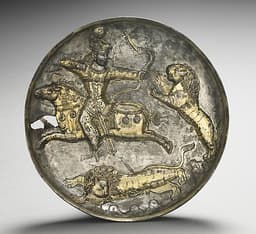
Hormizd III
Emperor · Ancient
50.0Total
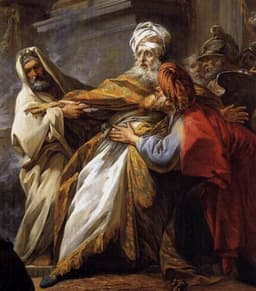
Jeroboam I
Emperor · Ancient
47.0Total
Basic Information
Born
430
-931
Died
459
-910
Era
Ancient
Ancient
Nationality
Sasanian Empire
Israel
Occupation
Emperor
Emperor
Civilization
Middle Eastern
Middle Eastern
Score Comparison
Military (10%)
35.0
50.0
Political (20%)
68.0
37.9
Influence (20%)
56.4
48.6
Legacy (20%)
39.2
41.7
Leadership (15%)
45.0
62.2
Strategy (15%)
56.4
43.7
TOTAL
50.0
47.0
Hormizd III — Complete Timeline
457 AD
Accession to the Sasanian thronePolitical Action◆ Major
Upon the death of his father Yazdegerd II, Hormizd III ascended the throne. His reign was immediately contested by his younger brother Peroz, who had the support of the nobility and the Hephthalite Huns.
SuccessionSasanian EmpireCivil War
Impact: national
459 AD
Defeat and death at the hands of PerozWar◆ Major
After a two-year civil war, Hormizd III was defeated by his brother Peroz, who had secured Hephthalite military support. Hormizd was captured and executed, allowing Peroz to become the sole ruler of the Sasanian Empire.
Civil WarRegicideSasanian Empire
Impact: nationaltragic
Jeroboam I — Complete Timeline
931 BC
Proclamation as King of Northern IsraelPolitical Action
After Rehoboam refused to lighten the tax burden, the ten northern tribes proclaimed Jeroboam as their king at Shechem. This established the Kingdom of Israel, separate from the Kingdom of Judah, fulfilling the prophecy of Ahijah.
Kingdom SplitIsraelRehoboam
Impact: national
930 BC
Establishment of Golden Calves at Dan and BethelCultural◆ Major
Jeroboam set up two golden calves, one at Bethel and one at Dan, as alternative worship sites to Jerusalem. He appointed non-Levitical priests and instituted festivals, leading to the establishment of a separate religious cult in Israel.
IdolatryReligionNorthern Kingdom
Impact: nationaldestructive
913 BC
War with Abijah of JudahWar◆ Major
Jeroboam fought a prolonged war with Abijah, king of Judah. Abijah's forces defeated Jeroboam's army, capturing several cities including Bethel, Jeshanah, and Ephron. This weakened Jeroboam's kingdom and reduced his territory.
WarJudahAbijah
Impact: regionaldestructive
This comparison has not been analyzed yet.
One-time AI generation (~1 minute). Scores and timeline are already available below.
Rankings
🥇
Hormizd IIILeader
Mil: 35.0Pol: 68.0Inf: 56.4
50.0
🥈
Jeroboam I
Mil: 50.0Pol: 37.9Inf: 48.6
47.0
+3.0 behind
How This Comparison Works
Algorithm
Each figure is scored on 6 dimensions (0—100 scale) based on structured historical data: Military (10%), Political (20%), Influence (20%), Legacy (20%), Leadership (15%), Strategy (15%). The weighted total produces the final ranking.
Data Sources
Scores are computed from structured sub-indicators in the database. Scale factors adjust for era (Ancient ×0.85, Modern ×1.0) and civilization size (Eastern ×1.05, Other ×0.80) to account for differences in population and military scale.
Maximum 3 Figures
Comparisons are limited to 2—3 figures to ensure readability and statistical meaningfulness.
Error Margins
±5 points per dimension — Sub-scores are derived from historical records with inherent uncertainty. Two figures within 5 points on a dimension should be considered roughly equivalent in that area.
Total Score Accuracy
±3 points overall — The weighted combination of 6 dimensions produces a total score with approximately ±3 points of uncertainty. Differences of less than 3 points are not statistically significant— the figures are effectively tied.
Known Limitations
- Historical records are incomplete and uneven across civilizations
- Figures from oral-tradition societies may be underrepresented
- Occupation labels can misclassify multi-role figures
- Scores measure capability and impact, not moral character
- Quantitative scoring is a comparison tool, not absolute truth
Capability Radar
Military (10%) — Battles & Warfare
Battles
39
20
Win Rate
39
20
Expansion
45
15
Political (20%) — Governance & Reform
Reform
0
40
Diplomacy
0
30
Economy
0
30
Influence (20%) — Cultural & Global Reach
Cultural
0
30
Global
0
20
Legacy (20%) — Historical Impact
Historical
5
40
Longevity
0
30
Leadership (15%) — Power & Stability
Tenure
5
60
Stability
0
20
Strategy (15%) — Tactics & Innovation
Strategy
47
20
Tactics
50
20
Reform
51
15
Similar Comparisons
Comments & Discussion
No comments yet. Be the first to share your thoughts!