Loading...
This comparison has not been analyzed yet.
One-time AI generation (~1 minute). Scores and timeline are already available below.
Hormizd III vs Ishme-Dagan I
Hormizd III leads by 12.3 pts · 2 figures compared
…
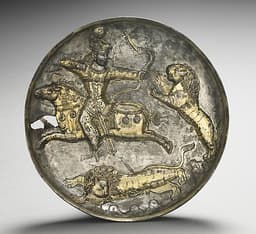
Hormizd III
Emperor · Ancient
50.0Total

Ishme-Dagan I
Emperor · Ancient
37.7Total
Basic Information
Born
430
-1775
Died
459
-1740
Era
Ancient
Ancient
Nationality
Sasanian Empire
Assyria
Occupation
Emperor
Emperor
Civilization
Middle Eastern
Middle Eastern
Score Comparison
Military (10%)
35.0
45.0
Political (20%)
68.0
25.0
Influence (20%)
56.4
44.8
Legacy (20%)
39.2
35.0
Leadership (15%)
45.0
38.1
Strategy (15%)
56.4
38.3
TOTAL
50.0
37.7
Hormizd III — Complete Timeline
457 AD
Accession to the Sasanian thronePolitical Action◆ Major
Upon the death of his father Yazdegerd II, Hormizd III ascended the throne. His reign was immediately contested by his younger brother Peroz, who had the support of the nobility and the Hephthalite Huns.
SuccessionSasanian EmpireCivil War
Impact: national
459 AD
Defeat and death at the hands of PerozWar◆ Major
After a two-year civil war, Hormizd III was defeated by his brother Peroz, who had secured Hephthalite military support. Hormizd was captured and executed, allowing Peroz to become the sole ruler of the Sasanian Empire.
Civil WarRegicideSasanian Empire
Impact: nationaltragic
Ishme-Dagan I — Complete Timeline
1775 BC
Succeeded Shamshi-Adad I as king of AssyriaPolitical Action◆ Major
Ishme-Dagan I inherited the Assyrian throne from his father Shamshi-Adad I. He ruled from the capital Ekallatum, but his authority was challenged by rivals, including Hammurabi of Babylon, leading to a gradual loss of territory.
SuccessionAssyriaEkallatum
Impact: regional
1770 BC
Struggled to maintain control over rebellious provincesWar
During his reign, Ishme-Dagan I faced revolts in provinces such as Mari and other former territories of his father. He was unable to suppress all rebellions, leading to the fragmentation of the empire and loss of key regions.
RevoltInstabilityDecline
Impact: regionaldestructive
1765 BC
Corresponded with Hammurabi and other rulersPolitical Action
Ishme-Dagan I engaged in diplomatic correspondence with Hammurabi and other contemporary rulers, as documented in the Mari archives. These letters reveal his attempts to negotiate alliances and manage conflicts during his declining power.
DiplomacyCorrespondenceMari
Impact: regional
1760 BC
Lost the empire to Hammurabi of BabylonWar◆ Major
Ishme-Dagan I was defeated by Hammurabi, who conquered much of Assyria including the capital Ashur. This defeat ended the first Assyrian empire and incorporated Assyrian territories into the Babylonian kingdom, reducing Ishme-Dagan to a vassal.
DefeatHammurabiBabylon
Impact: regionaltragic
This comparison has not been analyzed yet.
One-time AI generation (~1 minute). Scores and timeline are already available below.
Rankings
🥇
Hormizd IIILeader
Mil: 35.0Pol: 68.0Inf: 56.4
50.0
🥈
Ishme-Dagan I
Mil: 45.0Pol: 25.0Inf: 44.8
37.7
+12.3 behind
How This Comparison Works
Algorithm
Each figure is scored on 6 dimensions (0—100 scale) based on structured historical data: Military (10%), Political (20%), Influence (20%), Legacy (20%), Leadership (15%), Strategy (15%). The weighted total produces the final ranking.
Data Sources
Scores are computed from structured sub-indicators in the database. Scale factors adjust for era (Ancient ×0.85, Modern ×1.0) and civilization size (Eastern ×1.05, Other ×0.80) to account for differences in population and military scale.
Maximum 3 Figures
Comparisons are limited to 2—3 figures to ensure readability and statistical meaningfulness.
Error Margins
±5 points per dimension — Sub-scores are derived from historical records with inherent uncertainty. Two figures within 5 points on a dimension should be considered roughly equivalent in that area.
Total Score Accuracy
±3 points overall — The weighted combination of 6 dimensions produces a total score with approximately ±3 points of uncertainty. Differences of less than 3 points are not statistically significant— the figures are effectively tied.
Known Limitations
- Historical records are incomplete and uneven across civilizations
- Figures from oral-tradition societies may be underrepresented
- Occupation labels can misclassify multi-role figures
- Scores measure capability and impact, not moral character
- Quantitative scoring is a comparison tool, not absolute truth
Capability Radar
Military (10%) — Battles & Warfare
Battles
39
25
Win Rate
39
20
Expansion
45
20
Political (20%) — Governance & Reform
Reform
0
15
Diplomacy
0
20
Economy
0
20
Influence (20%) — Cultural & Global Reach
Cultural
0
15
Global
0
10
Legacy (20%) — Historical Impact
Historical
5
20
Longevity
0
10
Leadership (15%) — Power & Stability
Tenure
5
30
Stability
0
15
Strategy (15%) — Tactics & Innovation
Strategy
47
25
Tactics
50
30
Reform
51
10
Similar Comparisons
Comments & Discussion
No comments yet. Be the first to share your thoughts!