Loading...
This comparison has not been analyzed yet.
One-time AI generation (~1 minute). Scores and timeline are already available below.
Hormizd I vs Ramesses XI
Hormizd I leads by 5.1 pts · 2 figures compared
…
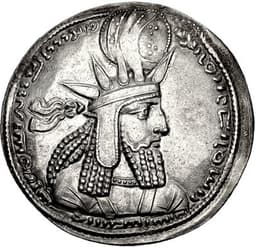
Hormizd I
Emperor · Ancient
40.0Total

Ramesses XI
Emperor · Ancient
34.9Total
Basic Information
Born
270
-1107
Died
271
-1077
Era
Ancient
Ancient
Nationality
Sasanian Empire
Egypt
Occupation
Emperor
Emperor
Civilization
Middle Eastern
Middle Eastern
Score Comparison
Military (10%)
34.6
10.2
Political (20%)
27.9
30.7
Influence (20%)
42.4
43.2
Legacy (20%)
32.5
35.0
Leadership (15%)
55.3
34.6
Strategy (15%)
53.4
45.0
TOTAL
40.0
34.9
Hormizd I — Complete Timeline
270 AD
Accession to the ThronePolitical Action
Hormizd I succeeded his father Shapur I as king of the Sasanian Empire. His reign was extremely brief, lasting less than one year, and little is known about his policies or actions during this short period.
AccessionShort Reign
Impact: national
271 AD
Death from IllnessOther
Hormizd I died from an illness after ruling for less than a year. His death led to the accession of his brother Bahram I, and the brevity of his reign meant he had no significant impact on the empire.
DeathIllnessShort Reign
Impact: nationaltragic
Ramesses XI — Complete Timeline
1094 BC
The Year of the HyenasOther
A period of severe famine and social unrest occurred during Ramesses XI's reign, recorded in the Turin Papyrus as 'The Year of the Hyenas.' The scarcity of food led to widespread suffering and contributed to the breakdown of central authority in Egypt.
FamineUnrestCrisis
Impact: nationaltragic
1080 BC
The Wenamun expeditionPolitical Action
The priest Wenamun was sent to Byblos to procure cedar wood for the temple of Amun. The account of his journey, recorded in the Papyrus Moscow 120, describes the weakened state of Egyptian influence in the Levant, where Wenamun was treated with disrespect by local rulers.
DiplomacyTradeDecline
Impact: regional
1077 BC
End of the New KingdomPolitical Action◆ Major
Ramesses XI's death marked the end of the New Kingdom and the beginning of the Third Intermediate Period. During his reign, the power of the pharaoh declined significantly, with the High Priest of Amun at Thebes and the Viceroy of Kush exercising de facto control over Upper Egypt.
End of EraDeclineThird Intermediate Period
Impact: globaltragic
This comparison has not been analyzed yet.
One-time AI generation (~1 minute). Scores and timeline are already available below.
Rankings
🥇
Hormizd ILeader
Mil: 34.6Pol: 27.9Inf: 42.4
40.0
🥈
Ramesses XI
Mil: 10.2Pol: 30.7Inf: 43.2
34.9
+5.1 behind
How This Comparison Works
Algorithm
Each figure is scored on 6 dimensions (0—100 scale) based on structured historical data: Military (10%), Political (20%), Influence (20%), Legacy (20%), Leadership (15%), Strategy (15%). The weighted total produces the final ranking.
Data Sources
Scores are computed from structured sub-indicators in the database. Scale factors adjust for era (Ancient ×0.85, Modern ×1.0) and civilization size (Eastern ×1.05, Other ×0.80) to account for differences in population and military scale.
Maximum 3 Figures
Comparisons are limited to 2—3 figures to ensure readability and statistical meaningfulness.
Error Margins
±5 points per dimension — Sub-scores are derived from historical records with inherent uncertainty. Two figures within 5 points on a dimension should be considered roughly equivalent in that area.
Total Score Accuracy
±3 points overall — The weighted combination of 6 dimensions produces a total score with approximately ±3 points of uncertainty. Differences of less than 3 points are not statistically significant— the figures are effectively tied.
Known Limitations
- Historical records are incomplete and uneven across civilizations
- Figures from oral-tradition societies may be underrepresented
- Occupation labels can misclassify multi-role figures
- Scores measure capability and impact, not moral character
- Quantitative scoring is a comparison tool, not absolute truth
Capability Radar
Military (10%) — Battles & Warfare
Battles
37
5
Win Rate
44
5
Expansion
42
5
Political (20%) — Governance & Reform
Reform
0
10
Diplomacy
10
15
Economy
5
10
Influence (20%) — Cultural & Global Reach
Cultural
5
15
Global
5
10
Legacy (20%) — Historical Impact
Historical
10
15
Longevity
5
15
Leadership (15%) — Power & Stability
Tenure
5
30
Stability
5
10
Strategy (15%) — Tactics & Innovation
Strategy
49
5
Tactics
53
5
Reform
51
5
Similar Comparisons
Comments & Discussion
No comments yet. Be the first to share your thoughts!