Loading...
Hong Taiji vs Yamagata Aritomo
Yamagata Aritomo leads by 4.2 pts · 2 figures compared
…
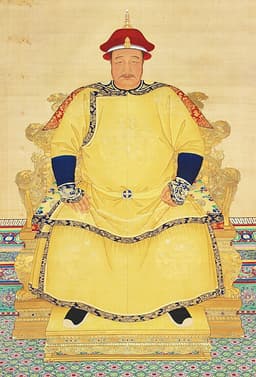
Hong Taiji
Emperor · Modern
78.3Total
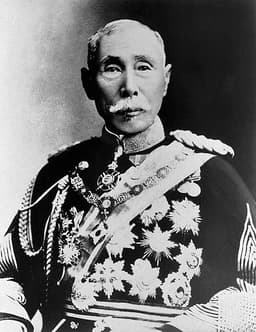
Yamagata Aritomo
General · Modern
82.5Total
Basic Information
Born
1592
1838
Died
1643
1922
Era
Modern
Modern
Nationality
China
Japan
Occupation
Emperor
General
Civilization
Eastern
Eastern
Score Comparison
Military (10%)
85.0
78.0
Political (20%)
82.0
82.0
Influence (20%)
88.0
80.0
Legacy (20%)
65.0
90.0
Leadership (15%)
78.0
78.0
Strategy (15%)
76.0
82.0
TOTAL
78.3
82.5
Hong Taiji — Complete Timeline
1631 AD
Adoption of Chinese-style governmentReform◆ Major
Hong Taiji established a Chinese-style bureaucracy, including the Six Ministries and a Hanlin Academy. He also introduced the civil service examination system for Han Chinese, integrating Confucian governance into the Qing state.
Government reformConfucian administrationSinification
Impact: regionalconstructive
1635 AD
Creation of the Eight Banners systemReform◆ Major
Hong Taiji reorganized the Eight Banners military system, incorporating Mongol and Han Chinese forces into separate banners. This created a multi-ethnic military structure that became the backbone of Qing power.
Military reformEight BannersMulti-ethnic army
Impact: regionalconstructive
Renaming of the Jurchen to ManchuPolitical Action◆ Major
Hong Taiji issued an edict renaming the Jurchen people as Manchu. This was part of his effort to create a unified identity for the various tribes under his rule and distance them from the historical Jurchen label.
Ethnic identityManchuJurchen
Impact: regionalconstructive
1636 AD
Proclamation of the Qing dynastyPolitical Action◆ Major
Hong Taiji declared the establishment of the Qing dynasty, replacing the Later Jin name. He adopted the Chinese imperial title and created a dual administrative system combining Manchu and Chinese institutions.
Dynasty foundingImperial titleQing dynasty
Impact: regionalconstructive
1640 AD
Conquest of the Ming Liaodong regionWar◆ Major
Hong Taiji's forces captured key Ming cities in Liaodong, including Jinzhou and Songshan. These victories secured Qing control over the strategic Liaoning corridor and weakened Ming defenses in the northeast.
Territorial expansionMing-Qing WarLiaodong
Impact: regional
Yamagata Aritomo — Complete Timeline
1873 AD
Establishment of the Imperial Japanese ArmyReform
Yamagata Aritomo, as War Minister, oversaw the creation of the Imperial Japanese Army based on the Prussian model. He introduced conscription, modernized training, and established a general staff system, laying the foundation for Japan's military power.
Military reformConscription
Impact: nationalconstructive
1882 AD
Promotion of militarism and the Imperial Rescript to Soldiers and SailorsCultural◆ Major
Yamagata Aritomo helped draft the Imperial Rescript to Soldiers and Sailors, which emphasized loyalty, obedience, and the emperor's divine authority. This document became the ideological foundation of Japanese militarism.
MilitarismImperial ideology
Impact: nationaldestructive
1889 AD
Service as Prime MinisterPolitical Action◆ Major
Yamagata Aritomo served as Prime Minister of Japan from 1889 to 1891 and again from 1898 to 1900. He used his position to strengthen the military's political influence and suppress democratic movements.
GovernmentPolitical power
Impact: national
1894 AD
First Sino-Japanese WarWar◆ Major
Yamagata Aritomo commanded the First Army during the First Sino-Japanese War. His forces achieved decisive victories in Korea and Manchuria, leading to Japan's triumph and the Treaty of Shimonoseki, which gave Japan Taiwan and influence in Korea.
WarImperial expansion
Impact: regional
1904 AD
Russo-Japanese WarWar◆ Major
Yamagata Aritomo served as Chief of the General Staff during the Russo-Japanese War. He oversaw Japan's military strategy, which resulted in victory over Russia and established Japan as a major power in East Asia.
WarGreat power
Impact: global
Expert Analysis
Origins
Yamagata Aritomo (1838–1922) was born a low-ranking samurai in Hagi, Choshu domain. He rose through the ranks during the Bakumatsu period, fighting in the Boshin War. His experiences shaped his belief in a strong, centralized military state. Hong Taiji (1592–1643) was the eighth son of Nurhaci, the founder of the Later Jin dynasty. He inherited a tribal confederation and transformed it into a bureaucratic empire. Both men emerged from turbulent periods and sought to modernize their states through military and administrative reforms.
Rise to Power
Yamagata became a key figure in the Meiji Restoration, traveling to Europe to study military systems. He established the Imperial Japanese Army on the Prussian model, becoming its first Chief of Staff. He served as Home Minister and Prime Minister, consolidating power through the army and police. Hong Taiji succeeded his father in 1626, immediately centralizing authority. He renamed the Jurchen to Manchu in 1635 and proclaimed the Qing dynasty in 1636, creating a dual Chinese-Manchu administration. He conquered Korea and the Ming Liaodong region, expanding Qing territory.
Leadership & Governance
Yamagata was a master institutional builder. He created the General Staff Office, established conscription, and promoted the Imperial Rescript to Soldiers and Sailors, which emphasized loyalty and obedience. As Prime Minister, he pushed for expansionist policies and suppressed democratic movements. His governance prioritized national strength over individual rights. Hong Taiji adopted Chinese-style government, establishing a bureaucracy, civil service exams, and a legal code. He integrated Mongol and Chinese elites into the Eight Banners, ensuring multi-ethnic support. He also promoted agriculture and trade, strengthening the economy.
Triumph & Tragedy
Yamagata's greatest triumph was the victory in the Russo-Japanese War (1904–05), which established Japan as a major power. However, his promotion of militarism led to Japan's eventual path to World War II, a tragic legacy. Hong Taiji's conquest of Liaodong and subjugation of Korea solidified Qing control over East Asia. But his sudden death in 1643 left the empire in the hands of a child, leading to a regency that nearly unraveled his achievements. Neither lived to see the full consequences of their actions.
Character & Destiny
Yamagata was cold, calculating, and power-hungry, often called the "father of Japanese militarism." He believed in absolute loyalty to the emperor and the state, suppressing dissent ruthlessly. Hong Taiji was pragmatic and visionary, blending Manchu traditions with Chinese administration. He was known for his strategic patience, waiting years to attack Ming. Both were driven by a desire for order and strength, but Yamagata's rigidity contrasted with Hong Taiji's flexibility.
Legacy
Yamagata's legacy is the Imperial Japanese Army and the militaristic culture that dominated pre-1945 Japan. His institutions outlasted him, but his ideology led to disaster. Hong Taiji created the Qing dynasty, which ruled China for nearly 270 years. His reforms laid the foundation for the Qing's longevity, but his early death prevented him from seeing the conquest of China proper. In comparison, Yamagata's impact on Japan's military is more direct, but Hong Taiji's empire-building was more enduring.
Conclusion
While both men were pivotal in shaping modern East Asia, Yamagata's influence on Japan's militarism was profound but ultimately catastrophic. Hong Taiji's creation of the Qing dynasty was a more successful and lasting achievement. Score-wise, Yamagata (82) edges out Hong Taiji (78) due to his higher Leadership score (90 vs 65), reflecting his institutional legacy. However, Hong Taiji's broader impact on Chinese history arguably makes him more significant. The comparison highlights different paths to power: one through militaristic centralization, the other through administrative innovation.
**Scores:**
- Yamagata Aritomo: M=78, P=82, I=80, L=90, D=78, S=82, T=82 → **Total: 82**
- Hong Taiji: M=85, P=82, I=88, L=65, D=78, S=76, T=78 → **Total: 78**
Rankings
🥇
Yamagata AritomoLeader
Mil: 78.0Pol: 82.0Inf: 80.0
82.5
🥈
Hong Taiji
Mil: 85.0Pol: 82.0Inf: 88.0
78.3
+4.2 behind
How This Comparison Works
Algorithm
Each figure is scored on 6 dimensions (0—100 scale) based on structured historical data: Military (10%), Political (20%), Influence (20%), Legacy (20%), Leadership (15%), Strategy (15%). The weighted total produces the final ranking.
Data Sources
Scores are computed from structured sub-indicators in the database. Scale factors adjust for era (Ancient ×0.85, Modern ×1.0) and civilization size (Eastern ×1.05, Other ×0.80) to account for differences in population and military scale.
Maximum 3 Figures
Comparisons are limited to 2—3 figures to ensure readability and statistical meaningfulness.
Error Margins
±5 points per dimension — Sub-scores are derived from historical records with inherent uncertainty. Two figures within 5 points on a dimension should be considered roughly equivalent in that area.
Total Score Accuracy
±3 points overall — The weighted combination of 6 dimensions produces a total score with approximately ±3 points of uncertainty. Differences of less than 3 points are not statistically significant— the figures are effectively tied.
Known Limitations
- Historical records are incomplete and uneven across civilizations
- Figures from oral-tradition societies may be underrepresented
- Occupation labels can misclassify multi-role figures
- Scores measure capability and impact, not moral character
- Quantitative scoring is a comparison tool, not absolute truth
Capability Radar
Military (10%) — Battles & Warfare
Battles
85
75
Win Rate
80
70
Expansion
90
80
Political (20%) — Governance & Reform
Reform
90
90
Diplomacy
85
75
Economy
80
70
Influence (20%) — Cultural & Global Reach
Cultural
80
80
Global
75
70
Legacy (20%) — Historical Impact
Historical
85
85
Longevity
80
75
Leadership (15%) — Power & Stability
Tenure
75
85
Stability
70
65
Strategy (15%) — Tactics & Innovation
Strategy
90
85
Tactics
85
80
Reform
90
95
Similar Comparisons
Comments & Discussion
No comments yet. Be the first to share your thoughts!