Loading...
Hong Taiji vs Xu Da
Hong Taiji leads by 3.4 pts · 2 figures compared
…
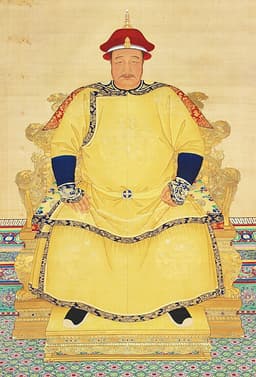
Hong Taiji
Emperor · Modern
78.3Total
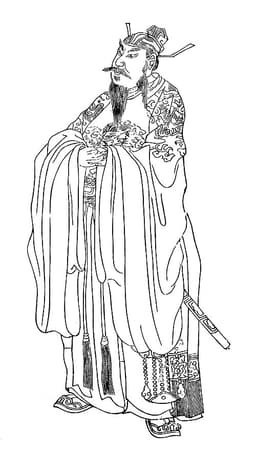
Xu Da
General · Medieval
74.9Total
Basic Information
Born
1592
1332
Died
1643
1385
Era
Modern
Medieval
Nationality
China
China
Occupation
Emperor
General
Civilization
Eastern
Eastern
Score Comparison
Military (10%)
85.0
88.0
Political (20%)
82.0
68.0
Influence (20%)
88.0
82.0
Legacy (20%)
65.0
72.0
Leadership (15%)
78.0
62.0
Strategy (15%)
76.0
80.8
TOTAL
78.3
74.9
Hong Taiji — Complete Timeline
1631 AD
Adoption of Chinese-style governmentReform◆ Major
Hong Taiji established a Chinese-style bureaucracy, including the Six Ministries and a Hanlin Academy. He also introduced the civil service examination system for Han Chinese, integrating Confucian governance into the Qing state.
Government reformConfucian administrationSinification
Impact: regionalconstructive
1635 AD
Creation of the Eight Banners systemReform◆ Major
Hong Taiji reorganized the Eight Banners military system, incorporating Mongol and Han Chinese forces into separate banners. This created a multi-ethnic military structure that became the backbone of Qing power.
Military reformEight BannersMulti-ethnic army
Impact: regionalconstructive
Renaming of the Jurchen to ManchuPolitical Action◆ Major
Hong Taiji issued an edict renaming the Jurchen people as Manchu. This was part of his effort to create a unified identity for the various tribes under his rule and distance them from the historical Jurchen label.
Ethnic identityManchuJurchen
Impact: regionalconstructive
1636 AD
Proclamation of the Qing dynastyPolitical Action◆ Major
Hong Taiji declared the establishment of the Qing dynasty, replacing the Later Jin name. He adopted the Chinese imperial title and created a dual administrative system combining Manchu and Chinese institutions.
Dynasty foundingImperial titleQing dynasty
Impact: regionalconstructive
1640 AD
Conquest of the Ming Liaodong regionWar◆ Major
Hong Taiji's forces captured key Ming cities in Liaodong, including Jinzhou and Songshan. These victories secured Qing control over the strategic Liaoning corridor and weakened Ming defenses in the northeast.
Territorial expansionMing-Qing WarLiaodong
Impact: regional
Xu Da — Complete Timeline
1368 AD
Capture of Dadu (Beijing)War
Xu Da led the Ming army in the capture of Dadu, the Yuan capital. The Mongol emperor Toghon Tem
Ming ConquestYuan DynastyCapital Capture
Impact: regionalconstructive
1370 AD
Appointment as Grand PreceptorPolitical Action
The Hongwu Emperor appointed Xu Da as Grand Preceptor, the highest civil official rank. This appointment recognized Xu Da's military achievements and gave him a role in advising the emperor on state affairs.
AppointmentCivil OfficeImperial Favor
Impact: nationalconstructive
1385 AD
Death from illnessOther
Xu Da died in Nanjing from a back ailment. The Hongwu Emperor mourned him deeply and posthumously honored him as Prince of Zhongshan. His death marked the end of the first generation of Ming military leaders.
DeathMing DynastyMilitary Leader
Impact: nationaltragic
Expert Analysis
Origins
Hong Taiji (1592–1643) was the eighth son of Nurhaci, the founder of the Later Jin dynasty. He inherited a confederation of Jurchen tribes and transformed it into a centralized state. Notably, he renamed his people from Jurchen to Manchu in 1635 to forge a new identity and distance them from their tribal past. Xu Da (1332–1385) was a peasant from Fengyang who joined the Red Turban Rebellion led by Zhu Yuanzhang. His military brilliance quickly elevated him to become the Ming dynasty's foremost general, instrumental in overthrowing the Mongol Yuan dynasty.
Rise to Power
Hong Taiji ascended to the Khanate in 1626 after Nurhaci's death. He faced internal rivals but consolidated power by centralizing authority and reducing the influence of other Beile (princes). He created the Eight Banners system, a unique military-social organization that integrated Manchu, Mongol, and Han Chinese forces under a unified command. This system became the backbone of Qing military power. Xu Da rose through the ranks of Zhu Yuanzhang's rebel army, distinguishing himself in battles against rival warlords. By 1367, he was appointed Grand Preceptor and commander of the northern expedition to capture the Yuan capital, Dadu (modern Beijing).
Leadership & Governance
Hong Taiji was a visionary leader who adopted Chinese-style government while preserving Manchu identity. He established a bureaucracy modeled on the Ming, created the Six Ministries, and promoted Confucian education. His military innovations included the use of artillery and combined-arms tactics. Xu Da was a pragmatic and disciplined general who emphasized logistics and morale. He treated conquered populations with restraint, which facilitated Ming consolidation. His governance of the northern frontier involved resettling soldiers as farmers (tuntian) to secure borders.
Triumph & Tragedy
Hong Taiji's greatest triumph was the Proclamation of the Qing dynasty in 1636, signaling his ambition to rule all of China. He conquered Liaodong, annexing Ming territory north of the Great Wall. However, he died suddenly in 1643 before he could launch the final conquest of Beijing. His son Shunzhi succeeded him, and the Qing entered the capital a year later. Xu Da's crowning achievement was the capture of Dadu in 1368, ending Mongol rule. He then campaigned in the northwest and northeast, securing Ming borders. Yet his later years were marred by suspicion from the Hongwu Emperor, who purged many generals. Xu Da died of an illness (possibly anthrax) in 1385, but his family was spared due to his loyalty.
Character & Destiny
Hong Taiji was astute, patient, and culturally adaptive. He learned Chinese, studied Confucian texts, and employed Han Chinese advisors. His destiny was to lay the foundation for the Qing conquest of China, but he never saw it completed. Xu Da was humble, honest, and fiercely loyal. Despite his immense prestige, he avoided political intrigue, a trait that saved him from the emperor's paranoia. His destiny was to be the architect of Ming reunification, but he died at 53, possibly from overwork or poison.
Legacy
Hong Taiji's legacy is immense: he created the Qing state, defined Manchu identity, and established the political and military systems that enabled the Qing to rule China for 268 years. His reforms shaped Chinese governance for centuries. Xu Da is revered as a folk hero and one of China's greatest generals. His campaigns are studied for their strategic brilliance. The Ming dynasty he helped found lasted 276 years, but his personal legacy is often overshadowed by the emperor he served.
Conclusion
Hong Taiji scores higher overall (78.0 vs 74.6) due to his superior political acumen, strategic vision, and lasting institutional impact. While Xu Da was a brilliant tactician, Hong Taiji's statecraft and cultural synthesis were more transformative. The Qing dynasty's longevity and integration of diverse peoples reflect Hong Taiji's genius. Xu Da's military achievements were crucial for the Ming, but his influence was more ephemeral. In the contest between emperor and general, the founder of a dynasty outweighs even the most glorious commander.
**Scores:** Hong Taiji: M=85, P=82, I=88, L=65, D=78, S=76, T=78. Xu Da: M=88, P=68, I=82, L=72, D=62, S=81, T=75.
Rankings
🥇
Hong TaijiLeader
Mil: 85.0Pol: 82.0Inf: 88.0
78.3
🥈
Xu Da
Mil: 88.0Pol: 68.0Inf: 82.0
74.9
+3.4 behind
How This Comparison Works
Algorithm
Each figure is scored on 6 dimensions (0—100 scale) based on structured historical data: Military (10%), Political (20%), Influence (20%), Legacy (20%), Leadership (15%), Strategy (15%). The weighted total produces the final ranking.
Data Sources
Scores are computed from structured sub-indicators in the database. Scale factors adjust for era (Ancient ×0.85, Modern ×1.0) and civilization size (Eastern ×1.05, Other ×0.80) to account for differences in population and military scale.
Maximum 3 Figures
Comparisons are limited to 2—3 figures to ensure readability and statistical meaningfulness.
Error Margins
±5 points per dimension — Sub-scores are derived from historical records with inherent uncertainty. Two figures within 5 points on a dimension should be considered roughly equivalent in that area.
Total Score Accuracy
±3 points overall — The weighted combination of 6 dimensions produces a total score with approximately ±3 points of uncertainty. Differences of less than 3 points are not statistically significant— the figures are effectively tied.
Known Limitations
- Historical records are incomplete and uneven across civilizations
- Figures from oral-tradition societies may be underrepresented
- Occupation labels can misclassify multi-role figures
- Scores measure capability and impact, not moral character
- Quantitative scoring is a comparison tool, not absolute truth
Capability Radar
Military (10%) — Battles & Warfare
Battles
85
95
Win Rate
80
95
Expansion
90
95
Political (20%) — Governance & Reform
Reform
90
50
Diplomacy
85
65
Economy
80
55
Influence (20%) — Cultural & Global Reach
Cultural
80
70
Global
75
80
Legacy (20%) — Historical Impact
Historical
85
85
Longevity
80
75
Leadership (15%) — Power & Stability
Tenure
75
60
Stability
70
70
Strategy (15%) — Tactics & Innovation
Strategy
90
92
Tactics
85
90
Reform
90
70
Similar Comparisons
Comments & Discussion
No comments yet. Be the first to share your thoughts!