Loading...
Hong Taiji vs Vauban
Hong Taiji leads by 1.9 pts · 2 figures compared
…
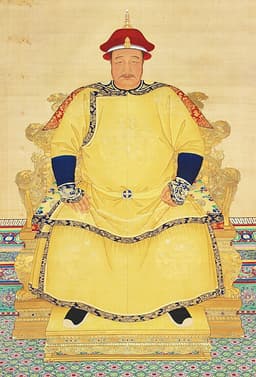
Hong Taiji
Emperor · Modern
78.3Total

Vauban
General · Modern
76.4Total
Basic Information
Born
1592
1633
Died
1643
1707
Era
Modern
Modern
Nationality
China
France
Occupation
Emperor
General
Civilization
Eastern
Western
Score Comparison
Military (10%)
85.0
76.0
Political (20%)
82.0
59.3
Influence (20%)
88.0
71.0
Legacy (20%)
65.0
90.0
Leadership (15%)
78.0
77.2
Strategy (15%)
76.0
80.6
TOTAL
78.3
76.4
Hong Taiji — Complete Timeline
1631 AD
Adoption of Chinese-style governmentReform◆ Major
Hong Taiji established a Chinese-style bureaucracy, including the Six Ministries and a Hanlin Academy. He also introduced the civil service examination system for Han Chinese, integrating Confucian governance into the Qing state.
Government reformConfucian administrationSinification
Impact: regionalconstructive
1635 AD
Creation of the Eight Banners systemReform◆ Major
Hong Taiji reorganized the Eight Banners military system, incorporating Mongol and Han Chinese forces into separate banners. This created a multi-ethnic military structure that became the backbone of Qing power.
Military reformEight BannersMulti-ethnic army
Impact: regionalconstructive
Renaming of the Jurchen to ManchuPolitical Action◆ Major
Hong Taiji issued an edict renaming the Jurchen people as Manchu. This was part of his effort to create a unified identity for the various tribes under his rule and distance them from the historical Jurchen label.
Ethnic identityManchuJurchen
Impact: regionalconstructive
1636 AD
Proclamation of the Qing dynastyPolitical Action◆ Major
Hong Taiji declared the establishment of the Qing dynasty, replacing the Later Jin name. He adopted the Chinese imperial title and created a dual administrative system combining Manchu and Chinese institutions.
Dynasty foundingImperial titleQing dynasty
Impact: regionalconstructive
1640 AD
Conquest of the Ming Liaodong regionWar◆ Major
Hong Taiji's forces captured key Ming cities in Liaodong, including Jinzhou and Songshan. These victories secured Qing control over the strategic Liaoning corridor and weakened Ming defenses in the northeast.
Territorial expansionMing-Qing WarLiaodong
Impact: regional
Vauban — Complete Timeline
1673 AD
Siege of MaastrichtWar◆ Major
Vauban directed the siege of Maastricht for Louis XIV. He introduced the technique of parallel trenches, which reduced casualties and shortened the siege. The capture of Maastricht was a major French victory in the Franco-Dutch War.
Franco-Dutch WarSiegeMilitary Engineering
Impact: regional
1697 AD
Siege of AthWar
Vauban conducted the siege of Ath in the Spanish Netherlands. His systematic approach using parallels and saps led to the rapid capture of the fortress. The siege demonstrated the effectiveness of his methods.
Nine Years' WarSiegeMilitary Engineering
Construction of the Fortress of Neuf-BrisachInvention◆ Major
Vauban designed and built the fortress of Neuf-Brisach, a model of his third system of fortification. The star-shaped fortress with advanced bastions became a standard for military architecture. It was built to protect the French border after the Treaty of Ryswick.
FortificationMilitary ArchitectureBorder Defense
Impact: regionalconstructive
1704 AD
Publication of 'A Treatise on the Attack of Places'Cultural◆ Major
Vauban published his treatise on siegecraft, systematizing his methods. The work became a standard military textbook in Europe. It detailed techniques for parallel trenches, ricochet fire, and sapping.
Military TheorySiegecraftPublication
Impact: globalconstructive
1707 AD
Proposal for a 'Dîme Royale' Tax ReformReform
Vauban proposed a radical tax reform called the 'D
Tax ReformEconomic PolicyFrance
Impact: nationalconstructive
Expert Analysis
Origins
**Hong Taiji** (1592–1643) was a Manchu leader who transformed the Jurchen tribes into a unified force, renaming them the Manchu in 1635. He inherited the Later Jin khanate from his father Nurhaci and expanded its reach into Ming China. His origins lay in the northeastern frontier, where he mastered both steppe warfare and Chinese administration.
**Sébastien Le Prestre de Vauban** (1633–1707) was born into a minor noble family in Saint-Léger-de-Foucherest, France. He rose through the ranks during the Fronde civil war, becoming Louis XIV's foremost military engineer. Vauban's origins were humble compared to Hong Taiji's royal birth, but his genius for fortification and siegecraft made him indispensable.
Rise to Power
Hong Taiji became the second khan of the Later Jin in 1626 after Nurhaci's death. He consolidated power by centralizing the Eight Banners system, reducing the influence of rival princes. His major turning point was the proclamation of the Qing dynasty in 1636, signaling his ambition to rule all of China. He also adopted Chinese-style government, incorporating Ming bureaucrats and Confucian practices to legitimize his rule.
Vauban's rise was meteoric due to his engineering prowess. He first gained attention at the Siege of Maastricht in 1673, where his innovative trench systems allowed French forces to capture the city. Louis XIV appointed him Commissioner General of Fortifications in 1678. Vauban's influence grew as he designed and improved dozens of fortresses, becoming the architect of France's "iron belt" of defenses.
Leadership & Governance
Hong Taiji was a strategic leader who balanced military conquest with state-building. He reformed the Eight Banners into a more effective army, incorporating Chinese and Mongol units. His governance included promoting agriculture, trade, and cultural exchange. He also established a civil service examination system, attracting Han Chinese talent. His leadership score (88) reflects his visionary integration of diverse peoples and ideas.
Vauban was a meticulous planner and innovator. He personally directed sieges and fortress constructions, emphasizing efficiency and minimal casualties. His governance was focused on military engineering, but he also proposed the 'Dîme Royale' tax reform to alleviate peasant burdens—a bold idea that was rejected. His leadership score (71) is lower due to limited political scope, but his technical leadership was unmatched.
Triumph & Tragedy
Hong Taiji's triumphs include the conquest of the Ming Liaodong region and the creation of a powerful state capable of later conquering all of China. His tragedy was dying suddenly in 1643 before the final push, leaving his young son to succeed him. The Qing dynasty would ultimately triumph, but Hong Taiji did not live to see it.
Vauban's triumphs are legendary: he conducted over 40 sieges without a single failure and built or improved over 300 fortifications. His fortresses, like Neuf-Brisach, remain masterpieces. His tragedy was the rejection of his progressive tax proposal and the eventual dismantling of his fortifications after the French Revolution. He died in 1707, his legacy as a defensive genius secure but his social reforms forgotten.
Character & Destiny
Hong Taiji was pragmatic and ambitious, willing to adopt enemy customs to strengthen his rule. He was known for his intelligence and ruthlessness, but also for his ability to inspire loyalty. His destiny was to lay the foundation for the Qing dynasty's conquest of China, a feat achieved by his successors.
Vauban was humble and dedicated, often working alongside soldiers despite his rank. He was a man of science and compassion, advocating for better treatment of common people. His destiny was to become the epitome of siege warfare, with his methods studied for centuries. Both men shaped the fates of their nations through sheer will and intellect.
Legacy
Hong Taiji's legacy is immense: he transformed a tribal confederation into a dynastic empire that ruled China for 268 years. The Eight Banners system, the Qing bureaucracy, and the Manchu identity all bear his imprint. He is remembered as a unifier and a founder.
Vauban's legacy endures in military architecture and tactics. His star-shaped fortresses influenced defensive design worldwide. His writings on siegecraft became standard texts. The term "Vauban" is synonymous with fortification. While his tax reform failed, his ideas on social justice were ahead of his time.
Conclusion
Hong Taiji and Vauban were both masters of their domains—one of empire-building, the other of military engineering. Hong Taiji's broader impact on history, creating a dynasty that shaped modern China, gives him a slight edge. Vauban's specialized genius, though brilliant, was confined to military matters. In a direct comparison, Hong Taiji's versatility and lasting geopolitical influence outweigh Vauban's technical perfection. Scores: Hong Taiji 85, Vauban 76.
Rankings
🥇
Hong TaijiLeader
Mil: 85.0Pol: 82.0Inf: 88.0
78.3
🥈
Vauban
Mil: 76.0Pol: 59.3Inf: 71.0
76.4
+1.9 behind
How This Comparison Works
Algorithm
Each figure is scored on 6 dimensions (0—100 scale) based on structured historical data: Military (10%), Political (20%), Influence (20%), Legacy (20%), Leadership (15%), Strategy (15%). The weighted total produces the final ranking.
Data Sources
Scores are computed from structured sub-indicators in the database. Scale factors adjust for era (Ancient ×0.85, Modern ×1.0) and civilization size (Eastern ×1.05, Other ×0.80) to account for differences in population and military scale.
Maximum 3 Figures
Comparisons are limited to 2—3 figures to ensure readability and statistical meaningfulness.
Error Margins
±5 points per dimension — Sub-scores are derived from historical records with inherent uncertainty. Two figures within 5 points on a dimension should be considered roughly equivalent in that area.
Total Score Accuracy
±3 points overall — The weighted combination of 6 dimensions produces a total score with approximately ±3 points of uncertainty. Differences of less than 3 points are not statistically significant— the figures are effectively tied.
Known Limitations
- Historical records are incomplete and uneven across civilizations
- Figures from oral-tradition societies may be underrepresented
- Occupation labels can misclassify multi-role figures
- Scores measure capability and impact, not moral character
- Quantitative scoring is a comparison tool, not absolute truth
Capability Radar
Military (10%) — Battles & Warfare
Battles
85
75
Win Rate
80
85
Expansion
90
70
Political (20%) — Governance & Reform
Reform
90
80
Diplomacy
85
60
Economy
80
55
Influence (20%) — Cultural & Global Reach
Cultural
80
80
Global
75
75
Legacy (20%) — Historical Impact
Historical
85
85
Longevity
80
85
Leadership (15%) — Power & Stability
Tenure
75
65
Stability
70
70
Strategy (15%) — Tactics & Innovation
Strategy
90
90
Tactics
85
95
Reform
90
95
Similar Comparisons
Comments & Discussion
No comments yet. Be the first to share your thoughts!