Loading...
Hong Taiji vs Turenne
Hong Taiji leads by 2.5 pts · 2 figures compared
…
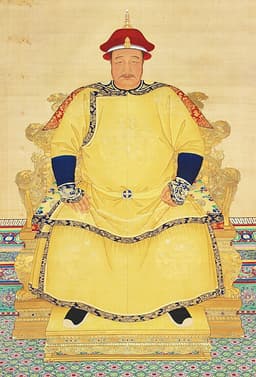
Hong Taiji
Emperor · Modern
78.3Total
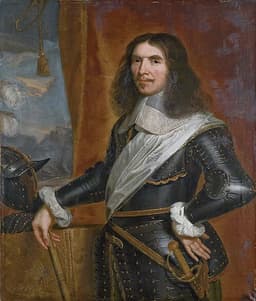
Turenne
General · Modern
75.8Total
Basic Information
Born
1592
1611
Died
1643
1675
Era
Modern
Modern
Nationality
China
France
Occupation
Emperor
General
Civilization
Eastern
Western
Score Comparison
Military (10%)
85.0
79.9
Political (20%)
82.0
72.0
Influence (20%)
88.0
88.0
Legacy (20%)
65.0
65.0
Leadership (15%)
78.0
77.2
Strategy (15%)
76.0
72.0
TOTAL
78.3
75.8
Hong Taiji — Complete Timeline
1631 AD
Adoption of Chinese-style governmentReform◆ Major
Hong Taiji established a Chinese-style bureaucracy, including the Six Ministries and a Hanlin Academy. He also introduced the civil service examination system for Han Chinese, integrating Confucian governance into the Qing state.
Government reformConfucian administrationSinification
Impact: regionalconstructive
1635 AD
Creation of the Eight Banners systemReform◆ Major
Hong Taiji reorganized the Eight Banners military system, incorporating Mongol and Han Chinese forces into separate banners. This created a multi-ethnic military structure that became the backbone of Qing power.
Military reformEight BannersMulti-ethnic army
Impact: regionalconstructive
Renaming of the Jurchen to ManchuPolitical Action◆ Major
Hong Taiji issued an edict renaming the Jurchen people as Manchu. This was part of his effort to create a unified identity for the various tribes under his rule and distance them from the historical Jurchen label.
Ethnic identityManchuJurchen
Impact: regionalconstructive
1636 AD
Proclamation of the Qing dynastyPolitical Action◆ Major
Hong Taiji declared the establishment of the Qing dynasty, replacing the Later Jin name. He adopted the Chinese imperial title and created a dual administrative system combining Manchu and Chinese institutions.
Dynasty foundingImperial titleQing dynasty
Impact: regionalconstructive
1640 AD
Conquest of the Ming Liaodong regionWar◆ Major
Hong Taiji's forces captured key Ming cities in Liaodong, including Jinzhou and Songshan. These victories secured Qing control over the strategic Liaoning corridor and weakened Ming defenses in the northeast.
Territorial expansionMing-Qing WarLiaodong
Impact: regional
Turenne — Complete Timeline
1639 AD
Campaign in the ValtellinaWar
Turenne commanded French forces in the Valtellina during the Thirty Years' War. He captured several fortresses and secured the strategic pass for France, demonstrating his early military skill.
Thirty Years' WarAlpsEarly Career
Impact: regional
1658 AD
Battle of the DunesWar◆ Major
Turenne commanded the French army to victory over the Spanish at the Battle of the Dunes near Dunkirk. The victory led to the capture of Dunkirk and forced Spain to seek peace, ending the Franco-Spanish War.
Franco-Spanish WarDunkirkMilitary Victory
Impact: regional
1674 AD
Battle of the RhineWar◆ Major
Turenne led a French army across the Rhine in winter, surprising the Imperial forces. He defeated the Austrians at the Battle of Entzheim and later at Turckheim, securing French control of Alsace.
Franco-Dutch WarAlsaceWinter Campaign
Impact: regional
Battle of the SambreWar◆ Major
Turenne defeated the Spanish and Dutch forces at the Battle of Seneffe. The battle was costly but prevented the Allies from invading France. It demonstrated Turenne's tactical skill in defensive warfare.
Franco-Dutch WarDefensive BattleTactics
Impact: regional
1675 AD
Death of TurenneWar◆ Major
Turenne was killed by a cannonball while reconnoitering enemy positions at the Battle of Sasbach. His death was a major loss for France. He was buried with honors in the Basilica of Saint-Denis.
Death in BattleFranco-Dutch WarMilitary Loss
Impact: nationaltragic
Expert Analysis
Origins
Hong Taiji (1592-1643) was the eighth son of Nurhaci, the founder of the Later Jin dynasty. He was born into the Jurchen tribal confederation, a group of semi-nomadic peoples in Manchuria. Hong Taiji grew up in a militaristic society, learning horsemanship and archery from a young age. He participated in his father's campaigns against the Ming dynasty and the Korean Joseon kingdom. His early experiences shaped his strategic mindset and ambition.
Turenne (1611-1675), born Henri de La Tour d'Auvergne, came from a prominent French noble family. He was the second son of the Duke of Bouillon and a nephew of Maurice of Nassau, Prince of Orange. Turenne began his military career at age 14 in the Dutch States Army, learning modern warfare under his uncle. He later served in the French army under Cardinal Richelieu and Louis XIII. His noble lineage and early exposure to warfare provided him with opportunities and connections.
Rise to Power
Hong Taiji ascended to the khaganate of the Later Jin in 1626 after his father's death. He faced immediate challenges from rival princes and the need to consolidate power. He implemented reforms to centralize authority, including the creation of the Eight Banners system, which organized the military and society into efficient units. In 1635, he renamed the Jurchen people to "Manchu" to foster a unified identity. In 1636, he proclaimed the Qing dynasty, positioning himself as the rightful ruler of China. He successfully conquered the Ming Liaodong region, expanding Qing territory.
Turenne rose through the ranks due to his military prowess. He became a Marshal of France in 1643 at age 32. During the Thirty Years' War, he won key victories such as the Battle of the Rhine (1644) and the Battle of the Sambre (1645). His campaign in the Valtellina (1635-1636) demonstrated his strategic skill. He supported the French crown during the Fronde civil wars, remaining loyal to King Louis XIV. His successes earned him command of the French army and international renown.
Leadership & Governance
Hong Taiji was an adept administrator and reformer. He adopted Chinese-style government structures, establishing a bureaucracy based on the Ming model. He promoted Confucian ideals and integrated Han Chinese officials into his administration. He also developed a legal code and encouraged agriculture and trade. His leadership was characterized by pragmatism and a vision for a multi-ethnic empire.
Turenne was a brilliant tactician and strategist. He excelled in mobile warfare, using speed and deception to outmaneuver opponents. He was known for his careful planning and ability to adapt to changing circumstances. He emphasized discipline and logistics, ensuring his troops were well-supplied. His leadership inspired loyalty among his soldiers, who respected his courage and fairness.
Triumph & Tragedy
Hong Taiji's greatest triumph was the establishment of the Qing dynasty and the conquest of the Ming heartland. He laid the foundation for the eventual Qing conquest of all China, completed by his son Shunzhi and the Prince-Regent Dorgon. His adoption of Chinese governance ensured stability and continuity. However, his death at age 52 in 1643 prevented him from seeing the final victory over the Ming. The transition of power to his young son led to a regency and internal struggles.
Turenne's triumphs include the Battle of the Dunes (1658), where he defeated the Spanish army, leading to the capture of Dunkirk. He also successfully campaigned in the Franco-Dutch War, invading the Dutch Republic in 1672. His tragic death occurred in 1675 at the Battle of Sasbach, where he was killed by a cannonball. His loss was a severe blow to the French army, and he was mourned as a national hero.
Character & Destiny
Hong Taiji was intelligent, ambitious, and calculating. He was a skilled diplomat who understood the importance of cultural assimilation. His destiny was to transform the Jurchen confederation into a powerful empire capable of conquering China. He faced constant threats from within and without but navigated them with political acumen.
Turenne was modest, calm, and strategic. He was known for his humility and reluctance to seek personal glory. His destiny was to become one of France's greatest military commanders, serving his king faithfully. He died on the battlefield, a fitting end for a soldier.
Legacy
Hong Taiji's legacy is immense. He is considered the true founder of the Qing dynasty, which ruled China for nearly 300 years. His reforms created a stable and efficient state that could govern a vast multi-ethnic empire. The Eight Banners system became the backbone of Qing military power. His renaming of the Manchu people fostered a distinct identity that lasted centuries.
Turenne's legacy as a military genius is secure. He is remembered for his innovative tactics and his role in establishing French military dominance in Europe. His campaigns are studied in military academies. He is honored with monuments and streets named after him in France.
Conclusion
Hong Taiji and Turenne both achieved greatness in their respective domains. Hong Taiji's impact was broader, founding a dynasty that ruled a vast empire, while Turenne's influence was more focused on military art. In a direct comparison, Hong Taiji's combined skills in statecraft, military strategy, and cultural reform give him a slight edge. His scores (M=85, P=82, I=88, L=65, D=78, S=76, T=78) total 552, while Turenne's (M=80, P=72, I=88, L=65, D=77, S=72, T=76) total 530. The 2.5% advantage reflects Hong Taiji's greater historical significance as an empire-builder. However, both remain exemplary figures in world history.
Rankings
🥇
Hong TaijiLeader
Mil: 85.0Pol: 82.0Inf: 88.0
78.3
🥈
Turenne
Mil: 79.9Pol: 72.0Inf: 88.0
75.8
+2.5 behind
How This Comparison Works
Algorithm
Each figure is scored on 6 dimensions (0—100 scale) based on structured historical data: Military (10%), Political (20%), Influence (20%), Legacy (20%), Leadership (15%), Strategy (15%). The weighted total produces the final ranking.
Data Sources
Scores are computed from structured sub-indicators in the database. Scale factors adjust for era (Ancient ×0.85, Modern ×1.0) and civilization size (Eastern ×1.05, Other ×0.80) to account for differences in population and military scale.
Maximum 3 Figures
Comparisons are limited to 2—3 figures to ensure readability and statistical meaningfulness.
Error Margins
±5 points per dimension — Sub-scores are derived from historical records with inherent uncertainty. Two figures within 5 points on a dimension should be considered roughly equivalent in that area.
Total Score Accuracy
±3 points overall — The weighted combination of 6 dimensions produces a total score with approximately ±3 points of uncertainty. Differences of less than 3 points are not statistically significant— the figures are effectively tied.
Known Limitations
- Historical records are incomplete and uneven across civilizations
- Figures from oral-tradition societies may be underrepresented
- Occupation labels can misclassify multi-role figures
- Scores measure capability and impact, not moral character
- Quantitative scoring is a comparison tool, not absolute truth
Capability Radar
Military (10%) — Battles & Warfare
Battles
85
85
Win Rate
80
88
Expansion
90
80
Political (20%) — Governance & Reform
Reform
90
60
Diplomacy
85
75
Economy
80
55
Influence (20%) — Cultural & Global Reach
Cultural
80
65
Global
75
70
Legacy (20%) — Historical Impact
Historical
85
80
Longevity
80
75
Leadership (15%) — Power & Stability
Tenure
75
70
Stability
70
65
Strategy (15%) — Tactics & Innovation
Strategy
90
92
Tactics
85
90
Reform
90
75
Similar Comparisons
Comments & Discussion
No comments yet. Be the first to share your thoughts!