Loading...
Hong Taiji vs Trajan
Hong Taiji leads by 2.3 pts · 2 figures compared
…
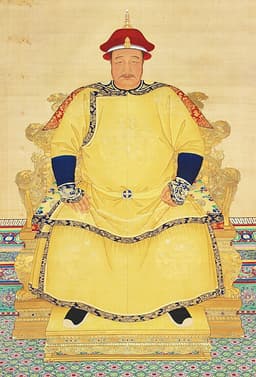
Hong Taiji
Emperor · Modern
78.3Total

Trajan
Emperor · Ancient
76.0Total
Basic Information
Born
1592
53
Died
1643
117
Era
Modern
Ancient
Nationality
China
Roman Empire
Occupation
Emperor
Emperor
Civilization
Eastern
Western
Score Comparison
Military (10%)
85.0
86.0
Political (20%)
82.0
79.2
Influence (20%)
88.0
82.0
Legacy (20%)
65.0
65.6
Leadership (15%)
78.0
73.2
Strategy (15%)
76.0
76.0
TOTAL
78.3
76.0
Hong Taiji — Complete Timeline
1631 AD
Adoption of Chinese-style governmentReform◆ Major
Hong Taiji established a Chinese-style bureaucracy, including the Six Ministries and a Hanlin Academy. He also introduced the civil service examination system for Han Chinese, integrating Confucian governance into the Qing state.
Government reformConfucian administrationSinification
Impact: regionalconstructive
1635 AD
Creation of the Eight Banners systemReform◆ Major
Hong Taiji reorganized the Eight Banners military system, incorporating Mongol and Han Chinese forces into separate banners. This created a multi-ethnic military structure that became the backbone of Qing power.
Military reformEight BannersMulti-ethnic army
Impact: regionalconstructive
Renaming of the Jurchen to ManchuPolitical Action◆ Major
Hong Taiji issued an edict renaming the Jurchen people as Manchu. This was part of his effort to create a unified identity for the various tribes under his rule and distance them from the historical Jurchen label.
Ethnic identityManchuJurchen
Impact: regionalconstructive
1636 AD
Proclamation of the Qing dynastyPolitical Action◆ Major
Hong Taiji declared the establishment of the Qing dynasty, replacing the Later Jin name. He adopted the Chinese imperial title and created a dual administrative system combining Manchu and Chinese institutions.
Dynasty foundingImperial titleQing dynasty
Impact: regionalconstructive
1640 AD
Conquest of the Ming Liaodong regionWar◆ Major
Hong Taiji's forces captured key Ming cities in Liaodong, including Jinzhou and Songshan. These victories secured Qing control over the strategic Liaoning corridor and weakened Ming defenses in the northeast.
Territorial expansionMing-Qing WarLiaodong
Impact: regional
Trajan — Complete Timeline
101 AD
Implemented the Alimenta Welfare ProgramReform◆ Major
Trajan expanded the Alimenta program, a state-funded welfare system that provided food subsidies and educational support for poor children in Italy. The program used interest from state loans to landowners to fund the distributions, aiming to boost the Italian population and agricultural economy.
WelfareSocial PolicyItaly
Impact: regionalconstructive
105 AD
Built Trajan's Bridge over the DanubeOther
Trajan ordered the construction of a massive stone and timber bridge across the Danube River near the Iron Gates. Designed by Apollodorus of Damascus, it was the longest arch bridge in the world for over a millennium, facilitating the Roman invasion of Dacia.
EngineeringBridgeDanube
Impact: regionalconstructive
106 AD
Conquered DaciaWar
Trajan led two major campaigns against the Dacian kingdom under King Decebalus, culminating in the conquest of Dacia (modern Romania) in 106 CE. The victory brought vast gold and silver mines under Roman control and established a new province, funding massive building projects in Rome.
DaciaConquestProvince
Impact: regional
112 AD
Built Trajan's Forum and MarketCultural◆ Major
Trajan commissioned the construction of Trajan's Forum, a vast complex in Rome including a basilica, libraries, and the Column of Trajan. The adjacent Trajan's Market, a multi-level commercial center, demonstrated Roman engineering prowess and served as a model for urban planning.
ArchitectureRomeUrban Planning
Impact: globalconstructive
116 AD
Conquered Parthia and Reached the Persian GulfWar◆ Major
Trajan launched a campaign against the Parthian Empire, capturing its capital Ctesiphon and annexing Mesopotamia. He reached the Persian Gulf, marking the easternmost extent of Roman territory. However, rebellions in the conquered territories forced a withdrawal shortly after.
ParthiaMesopotamiaExpansion
Impact: global
Expert Analysis
Origins
Hong Taiji (1592-1643) was the eighth son of Nurhaci, the founder of the Later Jin dynasty. Born into the Jurchen Aisin Gioro clan, he grew up in a militarized society on the northeastern frontier of Ming China. His father unified the Jurchen tribes and created the Eight Banners system, which Hong Taiji would later refine. In 1635, he renamed the Jurchen as Manchu, forging a new ethnic identity to consolidate his people and distance them from their tributary past under the Ming. This rebranding was a strategic masterstroke, creating a unified identity for conquest.
Trajan (53-117 CE) was born in Italica, Hispania (modern Spain), making him the first Roman emperor from a province. His family was of Italian origin but had settled in Spain. His father was a respected senator and governor, and Trajan rose through the military ranks, serving in Syria and on the Rhine. His military competence and loyalty to Emperor Nerva earned him adoption as heir in 97 CE, a rare example of succession based on merit rather than blood. Trajan's provincial background gave him a unique perspective on the empire's diversity.
Rise to Power
Hong Taiji became khan of the Later Jin in 1626 after his father's death, but his succession was contested. He outmaneuvered rivals by consolidating power through the Eight Banners, which he restructured to reduce the influence of other princes. He adopted Chinese-style government, creating a bureaucracy modeled on the Ming, and promoted a syncretic culture that blended Manchu, Mongol, and Chinese elements. His key achievement was the proclamation of the Qing dynasty in 1636, signaling his ambition to rule all of China. He also conquered the Ming Liaodong region, securing a base for future invasions.
Trajan's rise was smoother. He was governor of Upper Germany when Nerva adopted him, and upon Nerva's death in 98 CE, Trajan became emperor. He delayed his return to Rome to inspect the Rhine and Danube frontiers, demonstrating his commitment to military security. His reign began with a balancing act: he executed the Praetorian prefect who had forced Nerva to adopt him, asserting his independence. He then embarked on a series of wars that would define his legacy.
Leadership & Governance
Hong Taiji was a visionary ruler who transformed a tribal confederation into a centralized state. He created a civil service examination system for Manchus, Mongols, and Chinese, and established a six-board government structure. He also implemented policies to integrate Han Chinese officials while preserving Manchu identity, such as requiring Manchu language and archery. His leadership fostered unity among diverse groups, laying the groundwork for the Qing conquest of China.
Trajan was an efficient administrator and builder. He expanded the Roman road network, constructed aqueducts, and built Trajan's Forum and Market in Rome. He also implemented the Alimenta program, a welfare system that provided food for poor children in Italy. His governance was marked by a focus on infrastructure and social welfare, but his primary legacy is military expansion. He was known for his personal involvement in campaigns and his accessibility to soldiers and citizens.
Triumph & Tragedy
Hong Taiji's triumphs include the creation of the Qing dynasty and the conquest of Liaodong, which gave the Manchus a foothold in China proper. He also defeated the Chahar Mongols and incorporated them into his empire. However, he died in 1643 before completing the conquest of Ming China, a task left to his son, the Shunzhi Emperor. His early death at age 50 was a tragedy, as he never saw the full realization of his ambitions.
Trajan's triumphs are numerous. He conquered Dacia (modern Romania) in two wars (101-102, 105-106 CE), securing gold mines and territory. His Parthian campaign (113-117 CE) was even more ambitious: he annexed Armenia, captured Ctesiphon, and reached the Persian Gulf, making Rome's eastern border the farthest it would ever be. But this overextension proved tragic. Rebellions in newly conquered territories and a Jewish revolt in the east forced him to withdraw. He died in 117 CE, possibly from illness, while returning to Rome. His conquests were quickly abandoned by his successor Hadrian.
Character & Destiny
Hong Taiji was shrewd, pragmatic, and culturally adaptable. He learned Chinese and Mongolian, studied Confucian texts, and employed Han Chinese advisors. He was ruthless when needed—he purged rivals and forced the surrender of Ming generals—but also capable of clemency. His destiny was to create the institutional foundation for the Qing dynasty, which would rule China for nearly 270 years. He died knowing his work was incomplete, but his vision was clear.
Trajan was a soldier-emperor: brave, charismatic, and hands-on. He led troops into battle, earning their loyalty. He was also known for his modesty and justice, though his ambition for glory drove him to overreach. His destiny was to push Rome to its territorial peak, but his death exposed the fragility of his conquests. He remains a symbol of Roman military might, but his legacy is mixed: he expanded the empire beyond sustainable limits.
Legacy
Hong Taiji's legacy is immense. He transformed the Manchus from a peripheral tribe into rulers of China. His institutions—the Eight Banners, the syncretic government, the renaming of the Manchus—persisted throughout the Qing dynasty. He is considered a founder equal to his father Nurhaci, and his policies enabled the Qing to rule a multi-ethnic empire effectively. His military conquests set the stage for the eventual fall of the Ming.
Trajan's legacy is also significant. His building projects, including Trajan's Column, still stand in Rome. The Dacian conquest brought lasting Roman influence to Romania. However, his Parthian gains were lost, and his overexpansion strained the empire. He is remembered as one of the 'Five Good Emperors,' but his military focus came at a cost. His reign marked the apex of Roman territorial extent, but also the beginning of its decline.
Conclusion
Comparing Hong Taiji and Trajan reveals two different models of imperial success. Hong Taiji excelled in state-building and cultural integration, creating a durable empire that lasted centuries. Trajan was a brilliant conqueror but left a fragile legacy that unraveled after his death. On historical impact, Hong Taiji's reforms and identity politics had a longer-lasting effect, shaping modern China. Trajan's conquests, while spectacular, were unsustainable. Numerically, Hong Taiji scores higher in strategic vision (I=88 vs 82) and leadership (P=82 vs 79), while Trajan matches in military might (M=86 vs 85). But Hong Taiji's lower legacy score (L=65 vs 66) reflects his unfinished work. Overall, Hong Taiji's ability to build a lasting dynasty gives him a slight edge.
**Scores:** Hong Taiji: 78.7 average; Trajan: 76.4 average. **Winner: Hong Taiji** by a narrow margin.
Rankings
🥇
Hong TaijiLeader
Mil: 85.0Pol: 82.0Inf: 88.0
78.3
🥈
Trajan
Mil: 86.0Pol: 79.2Inf: 82.0
76.0
+2.3 behind
How This Comparison Works
Algorithm
Each figure is scored on 6 dimensions (0—100 scale) based on structured historical data: Military (10%), Political (20%), Influence (20%), Legacy (20%), Leadership (15%), Strategy (15%). The weighted total produces the final ranking.
Data Sources
Scores are computed from structured sub-indicators in the database. Scale factors adjust for era (Ancient ×0.85, Modern ×1.0) and civilization size (Eastern ×1.05, Other ×0.80) to account for differences in population and military scale.
Maximum 3 Figures
Comparisons are limited to 2—3 figures to ensure readability and statistical meaningfulness.
Error Margins
±5 points per dimension — Sub-scores are derived from historical records with inherent uncertainty. Two figures within 5 points on a dimension should be considered roughly equivalent in that area.
Total Score Accuracy
±3 points overall — The weighted combination of 6 dimensions produces a total score with approximately ±3 points of uncertainty. Differences of less than 3 points are not statistically significant— the figures are effectively tied.
Known Limitations
- Historical records are incomplete and uneven across civilizations
- Figures from oral-tradition societies may be underrepresented
- Occupation labels can misclassify multi-role figures
- Scores measure capability and impact, not moral character
- Quantitative scoring is a comparison tool, not absolute truth
Capability Radar
Military (10%) — Battles & Warfare
Battles
85
95
Win Rate
80
98
Expansion
90
95
Political (20%) — Governance & Reform
Reform
90
88
Diplomacy
85
85
Economy
80
90
Influence (20%) — Cultural & Global Reach
Cultural
80
85
Global
75
85
Legacy (20%) — Historical Impact
Historical
85
90
Longevity
80
88
Leadership (15%) — Power & Stability
Tenure
75
90
Stability
70
92
Strategy (15%) — Tactics & Innovation
Strategy
90
92
Tactics
85
88
Reform
90
85
Similar Comparisons
Comments & Discussion
No comments yet. Be the first to share your thoughts!