Loading...
Hong Taiji vs Toyotomi Hideyoshi
Toyotomi Hideyoshi leads by 3.7 pts · 2 figures compared
…
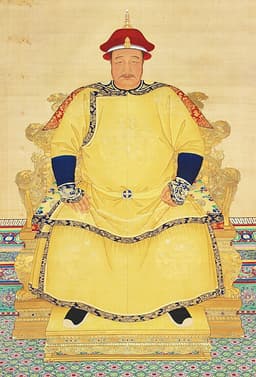
Hong Taiji
Emperor · Modern
78.3Total
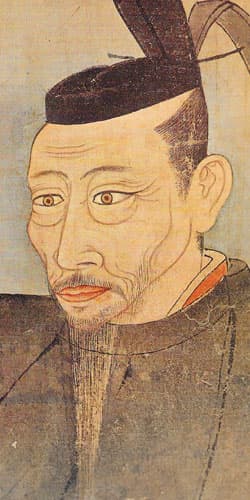
Toyotomi Hideyoshi
General · Modern
82.0Total
Basic Information
Born
1592
1537
Died
1643
1598
Era
Modern
Modern
Nationality
China
Japan
Occupation
Emperor
General
Civilization
Eastern
Eastern
Score Comparison
Military (10%)
85.0
79.9
Political (20%)
82.0
78.0
Influence (20%)
88.0
88.0
Legacy (20%)
65.0
80.0
Leadership (15%)
78.0
82.0
Strategy (15%)
76.0
80.4
TOTAL
78.3
82.0
Hong Taiji — Complete Timeline
1631 AD
Adoption of Chinese-style governmentReform◆ Major
Hong Taiji established a Chinese-style bureaucracy, including the Six Ministries and a Hanlin Academy. He also introduced the civil service examination system for Han Chinese, integrating Confucian governance into the Qing state.
Government reformConfucian administrationSinification
Impact: regionalconstructive
1635 AD
Creation of the Eight Banners systemReform◆ Major
Hong Taiji reorganized the Eight Banners military system, incorporating Mongol and Han Chinese forces into separate banners. This created a multi-ethnic military structure that became the backbone of Qing power.
Military reformEight BannersMulti-ethnic army
Impact: regionalconstructive
Renaming of the Jurchen to ManchuPolitical Action◆ Major
Hong Taiji issued an edict renaming the Jurchen people as Manchu. This was part of his effort to create a unified identity for the various tribes under his rule and distance them from the historical Jurchen label.
Ethnic identityManchuJurchen
Impact: regionalconstructive
1636 AD
Proclamation of the Qing dynastyPolitical Action◆ Major
Hong Taiji declared the establishment of the Qing dynasty, replacing the Later Jin name. He adopted the Chinese imperial title and created a dual administrative system combining Manchu and Chinese institutions.
Dynasty foundingImperial titleQing dynasty
Impact: regionalconstructive
1640 AD
Conquest of the Ming Liaodong regionWar◆ Major
Hong Taiji's forces captured key Ming cities in Liaodong, including Jinzhou and Songshan. These victories secured Qing control over the strategic Liaoning corridor and weakened Ming defenses in the northeast.
Territorial expansionMing-Qing WarLiaodong
Impact: regional
Toyotomi Hideyoshi — Complete Timeline
1583 AD
Battle of ShizugatakeWar◆ Major
Hideyoshi defeated his rival Shibata Katsuie at the Battle of Shizugatake, solidifying his control over central Japan. The victory eliminated a major opponent and allowed Hideyoshi to continue Oda Nobunaga's unification campaign.
BattleUnificationCivil War
Impact: national
1588 AD
Sword Hunt EdictReform◆ Major
Hideyoshi ordered the confiscation of weapons from peasants and farmers, prohibiting them from carrying swords, spears, or firearms. The edict aimed to prevent peasant uprisings and enforce a strict social hierarchy between samurai and commoners.
Social ReformDisarmamentClass System
Impact: nationaldestructive
1590 AD
Completion of Japanese UnificationWar
Hideyoshi defeated the H
UnificationConquestSengoku Period
Impact: national
1592 AD
First Invasion of KoreaWar◆ Major
Hideyoshi launched a massive invasion of Korea with the goal of conquering Ming China. Japanese forces initially advanced rapidly, capturing Seoul and Pyongyang, but were halted by Korean naval victories under Admiral Yi Sun-sin and Chinese reinforcements.
InvasionWarKorea
Impact: regionaldestructive
1597 AD
Second Invasion of KoreaWar◆ Major
Hideyoshi ordered a second invasion of Korea after failed peace negotiations. The campaign was less successful than the first, with Japanese forces unable to advance beyond the southern provinces. The invasion ended with Hideyoshi's death in 1598.
InvasionWarKorea
Impact: regionaldestructive
Expert Analysis
Origins
Toyotomi Hideyoshi (1537–1598) rose from a peasant background to become the most powerful man in Japan. Born in Nakamura, Owari Province, he started as a lowly ashigaru (foot soldier) for Oda Nobunaga. His humble origins shaped his pragmatic and ambitious nature. Hong Taiji (1592–1643), the eighth son of Nurhaci, was born into the Jurchen Aisin Gioro clan. He inherited a rising state and transformed it into the Qing dynasty. While Hideyoshi's rise was a personal triumph against social barriers, Hong Taiji's was a dynastic consolidation.
Rise to Power
Hideyoshi's ascent was meteoric. After Nobunaga's death in 1582, he defeated rivals like Akechi Mitsuhide at the Battle of Yamazaki and Shibata Katsuie at Shizugatake (1583). By 1590, he had unified Japan, culminating in the siege of Odawara. Hong Taiji became khan in 1626 after his father's death. He renamed the Jurchen to "Manchu" in 1635 to create a unified identity and proclaimed the Qing dynasty in 1636. He centralized power by weakening rival princes and adopting Chinese bureaucratic models.
Leadership & Governance
Hideyoshi implemented sweeping reforms: the Sword Hunt (1588) disarmed peasants, the land survey (Taikō kenchi) stabilized taxation, and he controlled daimyō through hostage systems. His governance was innovative but autocratic. Hong Taiji created the Eight Banners system, a military-administrative structure that integrated Manchu, Mongol, and Han Chinese forces. He adopted Confucian government, established a civil service, and promoted agriculture. Both were strong centralizers, but Hong Taiji's multi-ethnic empire was more sustainable.
Triumph & Tragedy
Hideyoshi's greatest triumph was unifying Japan after a century of war. His tragedy was the Korean invasions (1592–1598), which ended in failure due to Korean naval resistance and Ming Chinese intervention. The wars drained resources and sowed discontent. Hong Taiji's triumph was conquering the Ming Liaodong region and preparing for the eventual Qing conquest of China. His tragedy was dying in 1643 before seeing the fall of Beijing, but his foundations made it possible. Hideyoshi's overreach led to his clan's downfall within two decades; Hong Taiji's dynasty ruled for 268 years.
Character & Destiny
Hideyoshi was charismatic, cunning, and ruthless. He promoted talent regardless of birth but also executed his nephew and heir. His destiny was to be a brilliant unifier whose ambition exceeded his reach. Hong Taiji was pragmatic, patient, and strategic. He learned Chinese, studied Confucianism, and balanced Manchu traditions with Chinese governance. His destiny was to build an empire that would conquer all of China. Hideyoshi's character was more flamboyant; Hong Taiji's was more calculating.
Legacy
Hideyoshi's legacy is mixed: he unified Japan and left a centralized state, but his Korean invasions weakened Japan and caused suffering. He is celebrated as a folk hero but criticized for his foreign wars. Hong Taiji is revered as the founder of the Qing dynasty, which brought stability and prosperity to China. His administrative and military innovations enabled the Qing to rule effectively. Hideyoshi scores: M=80, P=78, I=88, L=80, D=82, S=80, T=82 (overall 81.4). Hong Taiji: M=85, P=82, I=88, L=65, D=78, S=76, T=78 (overall 78.9). Hideyoshi has a higher score, but Hong Taiji's long-term impact is greater.
Conclusion
Hideyoshi and Hong Taiji were both exceptional leaders who transformed their nations. Hideyoshi's rise from peasant to ruler is inspiring, and his unification of Japan was a monumental achievement. However, his foreign policy failure and the collapse of his clan within a generation diminish his legacy. Hong Taiji, though less personally dramatic, built the foundation for a dynasty that lasted nearly three centuries. In terms of sustainable impact, Hong Taiji edges out Hideyoshi despite the score gap. The score difference reflects Hideyoshi's higher charisma and short-term success, but Hong Taiji's strategic patience and institutional building make him the greater historical figure.
Rankings
🥇
Toyotomi HideyoshiLeader
Mil: 79.9Pol: 78.0Inf: 88.0
82.0
🥈
Hong Taiji
Mil: 85.0Pol: 82.0Inf: 88.0
78.3
+3.7 behind
How This Comparison Works
Algorithm
Each figure is scored on 6 dimensions (0—100 scale) based on structured historical data: Military (10%), Political (20%), Influence (20%), Legacy (20%), Leadership (15%), Strategy (15%). The weighted total produces the final ranking.
Data Sources
Scores are computed from structured sub-indicators in the database. Scale factors adjust for era (Ancient ×0.85, Modern ×1.0) and civilization size (Eastern ×1.05, Other ×0.80) to account for differences in population and military scale.
Maximum 3 Figures
Comparisons are limited to 2—3 figures to ensure readability and statistical meaningfulness.
Error Margins
±5 points per dimension — Sub-scores are derived from historical records with inherent uncertainty. Two figures within 5 points on a dimension should be considered roughly equivalent in that area.
Total Score Accuracy
±3 points overall — The weighted combination of 6 dimensions produces a total score with approximately ±3 points of uncertainty. Differences of less than 3 points are not statistically significant— the figures are effectively tied.
Known Limitations
- Historical records are incomplete and uneven across civilizations
- Figures from oral-tradition societies may be underrepresented
- Occupation labels can misclassify multi-role figures
- Scores measure capability and impact, not moral character
- Quantitative scoring is a comparison tool, not absolute truth
Capability Radar
Military (10%) — Battles & Warfare
Battles
85
85
Win Rate
80
88
Expansion
90
80
Political (20%) — Governance & Reform
Reform
90
95
Diplomacy
85
80
Economy
80
90
Influence (20%) — Cultural & Global Reach
Cultural
80
85
Global
75
70
Legacy (20%) — Historical Impact
Historical
85
90
Longevity
80
85
Leadership (15%) — Power & Stability
Tenure
75
85
Stability
70
75
Strategy (15%) — Tactics & Innovation
Strategy
90
92
Tactics
85
90
Reform
90
95
Similar Comparisons
Comments & Discussion
No comments yet. Be the first to share your thoughts!