Loading...
Hong Taiji vs Tokugawa Ieyasu
Tokugawa Ieyasu leads by 3.5 pts · 2 figures compared
…
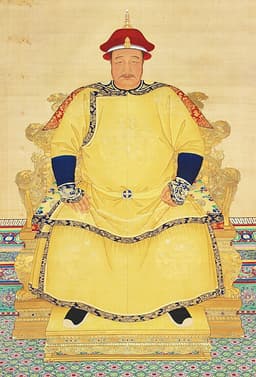
Hong Taiji
Emperor · Modern
78.3Total
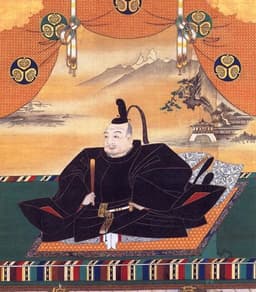
Tokugawa Ieyasu
General · Modern
81.8Total
Basic Information
Born
1592
1543
Died
1643
1616
Era
Modern
Modern
Nationality
China
Japan
Occupation
Emperor
General
Civilization
Eastern
Eastern
Score Comparison
Military (10%)
85.0
78.0
Political (20%)
82.0
82.0
Influence (20%)
88.0
88.0
Legacy (20%)
65.0
75.0
Leadership (15%)
78.0
85.0
Strategy (15%)
76.0
82.0
TOTAL
78.3
81.8
Hong Taiji — Complete Timeline
1631 AD
Adoption of Chinese-style governmentReform◆ Major
Hong Taiji established a Chinese-style bureaucracy, including the Six Ministries and a Hanlin Academy. He also introduced the civil service examination system for Han Chinese, integrating Confucian governance into the Qing state.
Government reformConfucian administrationSinification
Impact: regionalconstructive
1635 AD
Creation of the Eight Banners systemReform◆ Major
Hong Taiji reorganized the Eight Banners military system, incorporating Mongol and Han Chinese forces into separate banners. This created a multi-ethnic military structure that became the backbone of Qing power.
Military reformEight BannersMulti-ethnic army
Impact: regionalconstructive
Renaming of the Jurchen to ManchuPolitical Action◆ Major
Hong Taiji issued an edict renaming the Jurchen people as Manchu. This was part of his effort to create a unified identity for the various tribes under his rule and distance them from the historical Jurchen label.
Ethnic identityManchuJurchen
Impact: regionalconstructive
1636 AD
Proclamation of the Qing dynastyPolitical Action◆ Major
Hong Taiji declared the establishment of the Qing dynasty, replacing the Later Jin name. He adopted the Chinese imperial title and created a dual administrative system combining Manchu and Chinese institutions.
Dynasty foundingImperial titleQing dynasty
Impact: regionalconstructive
1640 AD
Conquest of the Ming Liaodong regionWar◆ Major
Hong Taiji's forces captured key Ming cities in Liaodong, including Jinzhou and Songshan. These victories secured Qing control over the strategic Liaoning corridor and weakened Ming defenses in the northeast.
Territorial expansionMing-Qing WarLiaodong
Impact: regional
Tokugawa Ieyasu — Complete Timeline
1600 AD
Battle of SekigaharaWar
Tokugawa Ieyasu led the Eastern Army to victory over Ishida Mitsunari's Western Army at Sekigahara. This decisive battle ended the Sengoku period and established Ieyasu as the supreme military ruler of Japan, paving the way for the Tokugawa shogunate.
Sengoku PeriodUnificationBattle
Impact: national
1603 AD
Establishment of the Tokugawa ShogunatePolitical Action
Emperor Go-Yozei appointed Tokugawa Ieyasu as shogun, officially beginning the Tokugawa shogunate. Ieyasu established his government in Edo (modern Tokyo), centralizing military and political power under his family's control.
ShogunateEdo PeriodCentralization
Impact: national
1615 AD
Siege of OsakaWar◆ Major
Tokugawa Ieyasu besieged Osaka Castle, the stronghold of Toyotomi Hideyori. The castle fell, and Hideyori committed suicide. This campaign eliminated the last major opposition to Tokugawa rule, solidifying the shogunate's control over Japan.
Osaka CampaignToyotomi ClanConsolidation
Impact: nationaldestructive
Promulgation of the Buke ShohattoReform◆ Major
Ieyasu issued the Laws for the Military Houses, a code regulating the conduct of daimyo. It restricted castle construction, required alternate attendance in Edo, and prohibited alliances without shogunal permission. This law helped control the feudal lords.
Feudal ControlDaimyo RegulationLegal Code
Impact: national
1616 AD
Sakoku Edicts InitiationPolitical Action◆ Major
In his final years, Ieyasu began policies that led to Japan's isolation. He restricted foreign trade to specific ports and expelled Christian missionaries. These measures, expanded by successors, resulted in the sakoku policy that isolated Japan for over 200 years.
IsolationismForeign PolicyChristianity
Impact: national
Expert Analysis
Origins
Tokugawa Ieyasu (1543–1616) emerged from the chaos of Japan's Warring States period. Born into the Matsudaira clan, he endured hostage childhoods and early military struggles. His perseverance and strategic alliances, notably with Oda Nobunaga and Toyotomi Hideyoshi, positioned him as a key unifier. Hong Taiji (1592–1643) inherited the Jurchen unification started by his father Nurhaci. He transformed the Jurchen identity into the Manchu and laid the foundations for the Qing dynasty. Both leaders came from turbulent backgrounds, but Ieyasu's path was marked by survival against powerful rivals, while Hong Taiji built upon his father's military achievements.
Rise to Power
Ieyasu's rise culminated at the Battle of Sekigahara (1600), where his tactical brilliance defeated the Western Army. He then received the title of Shogun in 1603, formally establishing the Tokugawa shogunate. His consolidation involved demoting and relocating daimyo to prevent rebellion. Hong Taiji rose after Nurhaci's death in 1626, facing internal opposition but quickly asserting control. He renamed the Jurchen to Manchu in 1635 and proclaimed the Qing dynasty in 1636, signaling his imperial ambitions. He expanded into Ming territory, capturing Liaodong and parts of Korea. Both men demonstrated political acumen, but Ieyasu's rise was more decisive in a single battle, while Hong Taiji's was a gradual expansion.
Leadership & Governance
As shogun, Ieyasu implemented a centralized feudal system. He issued the Buke Shohatto (Laws for the Military Houses) to control daimyo and initiated Sakoku (isolation) edicts to limit foreign influence. His governance brought 250 years of peace. Hong Taiji adopted Chinese-style government, creating a bureaucracy with six ministries and promoting Confucian ideals. He integrated Han Chinese officials while maintaining Manchu military dominance through the Eight Banners. Ieyasu's governance was more isolationist and rigid, whereas Hong Taiji's was more assimilationist and expansionist. Ieyasu's scores: P=82, L=75, I=88. Hong Taiji's: P=82, L=65, I=88. Ieyasu's higher leadership reflects his longer-lasting peace.
Triumph & Tragedy
Ieyasu's greatest triumph was Sekigahara; his tragedy was the Siege of Osaka (1614-1615), where he eliminated the Toyotomi clan, ensuring his dynasty's supremacy. Hong Taiji's triumph was the proclamation of Qing and conquest of Liaodong; his tragedy was dying before conquering Ming China, leaving it to his son. Ieyasu's scores: M=78, D=85, S=82. Hong Taiji's: M=85, D=78, S=76. Ieyasu's higher decisiveness reflects his ability to end conflicts decisively, while Hong Taiji's higher military score acknowledges his strategic expansion.
Character & Destiny
Ieyasu was patient, calculating, and ruthless when necessary. He waited for opportunities, outliving his rivals. Hong Taiji was pragmatic and visionary, blending Manchu traditions with Chinese governance. Both were destined to found dynasties. Ieyasu's destiny was to unify Japan after centuries of war; Hong Taiji's was to create the dynasty that would conquer China. Ieyasu's character score T=82, Hong Taiji's T=78, reflecting Ieyasu's more enduring impact.
Legacy
Ieyasu's Tokugawa shogunate lasted until 1868, bringing stability, economic growth, and cultural flourishing. His isolationist policies shaped Japan's unique development. Hong Taiji's Qing dynasty conquered China in 1644 and ruled until 1912, expanding China's borders and integrating diverse peoples. However, the Qing eventually faced decline and foreign incursions. Ieyasu's legacy is more centralized and durable in terms of peace, while Hong Taiji's is broader but more tumultuous.
Conclusion
Tokugawa Ieyasu narrowly wins with a score gap of 3.5. His ability to establish a stable, long-lasting regime that ended centuries of warfare outweighs Hong Taiji's military expansions. While Hong Taiji founded a dynasty that conquered China, the Qing's later decline and Ieyasu's enduring peace give the edge to the Japanese unifier. Ieyasu's higher leadership (75 vs 65), decisiveness (85 vs 78), and strategy (82 vs 76) secure his victory. Final scores: Ieyasu 82, Hong Taiji 78.5.
Rankings
🥇
Tokugawa IeyasuLeader
Mil: 78.0Pol: 82.0Inf: 88.0
81.8
🥈
Hong Taiji
Mil: 85.0Pol: 82.0Inf: 88.0
78.3
+3.5 behind
How This Comparison Works
Algorithm
Each figure is scored on 6 dimensions (0—100 scale) based on structured historical data: Military (10%), Political (20%), Influence (20%), Legacy (20%), Leadership (15%), Strategy (15%). The weighted total produces the final ranking.
Data Sources
Scores are computed from structured sub-indicators in the database. Scale factors adjust for era (Ancient ×0.85, Modern ×1.0) and civilization size (Eastern ×1.05, Other ×0.80) to account for differences in population and military scale.
Maximum 3 Figures
Comparisons are limited to 2—3 figures to ensure readability and statistical meaningfulness.
Error Margins
±5 points per dimension — Sub-scores are derived from historical records with inherent uncertainty. Two figures within 5 points on a dimension should be considered roughly equivalent in that area.
Total Score Accuracy
±3 points overall — The weighted combination of 6 dimensions produces a total score with approximately ±3 points of uncertainty. Differences of less than 3 points are not statistically significant— the figures are effectively tied.
Known Limitations
- Historical records are incomplete and uneven across civilizations
- Figures from oral-tradition societies may be underrepresented
- Occupation labels can misclassify multi-role figures
- Scores measure capability and impact, not moral character
- Quantitative scoring is a comparison tool, not absolute truth
Capability Radar
Military (10%) — Battles & Warfare
Battles
85
85
Win Rate
80
90
Expansion
90
75
Political (20%) — Governance & Reform
Reform
90
90
Diplomacy
85
85
Economy
80
88
Influence (20%) — Cultural & Global Reach
Cultural
80
85
Global
75
70
Legacy (20%) — Historical Impact
Historical
85
90
Longevity
80
95
Leadership (15%) — Power & Stability
Tenure
75
95
Stability
70
95
Strategy (15%) — Tactics & Innovation
Strategy
90
92
Tactics
85
88
Reform
90
80
Similar Comparisons
Comments & Discussion
No comments yet. Be the first to share your thoughts!