Loading...
Hong Taiji vs Rama of Ayodhya
Hong Taiji leads by 3.0 pts · 2 figures compared
…
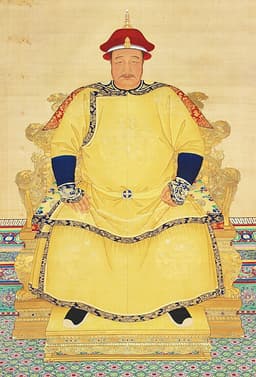
Hong Taiji
Emperor · Modern
78.3Total
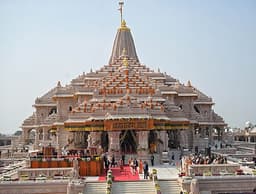
Rama of Ayodhya
Emperor · Ancient
75.3Total
Basic Information
Born
1592
-1180
Died
1643
-1120
Era
Modern
Ancient
Nationality
China
Vedic India
Occupation
Emperor
Emperor
Civilization
Eastern
Indian
Score Comparison
Military (10%)
85.0
72.0
Political (20%)
82.0
72.0
Influence (20%)
88.0
75.0
Legacy (20%)
65.0
80.0
Leadership (15%)
78.0
78.0
Strategy (15%)
76.0
68.1
TOTAL
78.3
75.3
Hong Taiji — Complete Timeline
1631 AD
Adoption of Chinese-style governmentReform◆ Major
Hong Taiji established a Chinese-style bureaucracy, including the Six Ministries and a Hanlin Academy. He also introduced the civil service examination system for Han Chinese, integrating Confucian governance into the Qing state.
Government reformConfucian administrationSinification
Impact: regionalconstructive
1635 AD
Creation of the Eight Banners systemReform◆ Major
Hong Taiji reorganized the Eight Banners military system, incorporating Mongol and Han Chinese forces into separate banners. This created a multi-ethnic military structure that became the backbone of Qing power.
Military reformEight BannersMulti-ethnic army
Impact: regionalconstructive
Renaming of the Jurchen to ManchuPolitical Action◆ Major
Hong Taiji issued an edict renaming the Jurchen people as Manchu. This was part of his effort to create a unified identity for the various tribes under his rule and distance them from the historical Jurchen label.
Ethnic identityManchuJurchen
Impact: regionalconstructive
1636 AD
Proclamation of the Qing dynastyPolitical Action◆ Major
Hong Taiji declared the establishment of the Qing dynasty, replacing the Later Jin name. He adopted the Chinese imperial title and created a dual administrative system combining Manchu and Chinese institutions.
Dynasty foundingImperial titleQing dynasty
Impact: regionalconstructive
1640 AD
Conquest of the Ming Liaodong regionWar◆ Major
Hong Taiji's forces captured key Ming cities in Liaodong, including Jinzhou and Songshan. These victories secured Qing control over the strategic Liaoning corridor and weakened Ming defenses in the northeast.
Territorial expansionMing-Qing WarLiaodong
Impact: regional
Rama of Ayodhya — Complete Timeline
1160 BC
Broke Shiva's Bow at Sita's SwayamvaraCultural◆ Major
Rama, as a young prince, lifted and strung the divine bow of Shiva at Princess Sita's marriage ceremony. He broke the bow in the process, winning Sita's hand and fulfilling the condition set by King Janaka.
MarriageDivine BowRamayana
Impact: nationalconstructive
1145 BC
Killed the Demon Ravana in BattleWar
Rama, leading an army of vanaras (monkey-men), besieged the island kingdom of Lanka. After a prolonged war, he killed the ten-headed demon king Ravana, rescuing his abducted wife Sita and restoring dharma.
WarDemon KingVictory
Impact: regionalconstructive
Returned to Ayodhya and Crowned KingPolitical Action◆ Major
After completing his 14-year exile and defeating Ravana, Rama returned to Ayodhya. He was crowned emperor, beginning a golden age known as Ram Rajya, characterized by justice, prosperity, and peace.
CoronationGolden AgeRamayana
Impact: nationalconstructive
Expert Analysis
Origins
Hong Taiji (1592-1643) was the eighth son of Nurhaci, the founder of the Later Jin dynasty. He inherited a growing state that had unified the Jurchen tribes and established the Eight Banners system. Hong Taiji was deeply influenced by Chinese culture and governance, and he strategically rebranded his people as the Manchu to legitimize his rule over China. In contrast, Rama (estimated 7th-4th century BCE) is a legendary prince of Ayodhya, an ancient kingdom in the Indian subcontinent. His story is told in the Ramayana, where he is an avatar of Vishnu. Rama's origins are divine, but his upbringing was as a prince trained in martial arts and dharma. Both figures emerged from distinct cultural contexts: Hong Taiji from a nomadic confederation seeking to conquer China, and Rama from a Vedic kingdom with a strong tradition of kingship and religious duty.
Rise to Power
Hong Taiji ascended after Nurhaci's death in 1626, initially sharing power with other princes. He consolidated control by eliminating rivals, such as his brother Amin, and centralizing authority. He reformed the Eight Banners to reduce noble influence and created a centralized bureaucracy. Hong Taiji's major event was renaming the Jurchen to Manchu in 1635, which helped unify various tribes under a new identity. He proclaimed the Qing dynasty in 1636, signaling his ambition to replace the Ming. He also adopted Chinese-style government, including a six-ministry system, to win over Han Chinese elites. Rama's rise was more straightforward: he was the eldest son of King Dasharatha and was expected to inherit the throne. His swayamvara (marriage contest) involved breaking Shiva's bow, a major event that demonstrated his exceptional strength and earned him Sita's hand. However, due to a promise made by his father, Rama was exiled for 14 years, delaying his coronation. This exile became the turning point that led to his battle with Ravana.
Leadership & Governance
Hong Taiji was a pragmatic and innovative leader. He expanded the Eight Banners to include Han Chinese and Mongol contingents, creating a multi-ethnic military force. He also established a civil service examination system for Han Chinese, integrating them into the Qing administration. His conquest of the Ming Liaodong region (1631-1642) gave him a strategic foothold. Hong Taiji's governance blended Jurchen and Chinese elements, which laid the foundation for the Qing conquest of China proper. Rama's leadership was idealized as righteous rule (Ram Rajya). He was a just and compassionate king who prioritized the welfare of his subjects. His governance was based on dharma (righteousness) and consultation with wise counselors. However, his reign was cut short by his exile, and he only became king after his return. His most controversial act was the test of Sita's purity, which reflected his adherence to public opinion and kingly duty over personal sentiment.
Triumph & Tragedy
Hong Taiji's greatest triumph was the proclamation of the Qing dynasty and the conquest of Liaodong, which set the stage for his son Shunzhi to conquer all of China. He also successfully managed the transition from a tribal confederation to an imperial state. However, his sudden death in 1643 at age 50 was a tragedy, as he did not live to see the Qing conquest of Beijing. The exact cause of his death is uncertain, but it left his young son as heir, requiring a regency. Rama's triumph was the killing of Ravana, the demon king of Lanka, after a fierce battle. This victory restored dharma and freed Sita. His return to Ayodhya and coronation as king was a joyous event. However, his reign was marred by tragedy: he eventually exiled Sita due to rumors about her chastity during captivity. This act, though intended to uphold kingly duty, caused personal suffering and remains a point of criticism.
Character & Destiny
Hong Taiji was ambitious, shrewd, and culturally adaptable. He was a skilled diplomat and strategist, who understood the importance of legitimacy. His destiny was to transform the Jurchen into the Manchu and establish the Qing dynasty, which would rule China for nearly 300 years. His character reflects a blend of ruthless pragmatism and visionary statecraft. Rama, by contrast, is the embodiment of virtue (Maryada Purushottam). He is selfless, dutiful, and compassionate. His destiny was to destroy evil and establish a golden age. However, his adherence to duty sometimes led to harsh decisions, such as the exile of Sita. This duality makes him a complex figure: both a divine hero and a flawed human king.
Legacy
Hong Taiji's legacy is immense. He created the Manchu identity, the Qing administrative system, and the multi-ethnic empire that would rule China until 1912. His policies of sinicization and integration were crucial for the Qing's success. He is often overshadowed by his father Nurhaci and his son Shunzhi, but his reign was the turning point. Rama's legacy is even more profound in Indian culture. He is worshipped as a god, and his life is a model for righteous living. The Ramayana is a foundational text of Hinduism, and Rama's story has inspired art, literature, and moral teachings for millennia. His impact on South and Southeast Asian cultures is incalculable.
Conclusion
Hong Taiji and Rama represent two different types of emperors: the pragmatic reformer and the divine exemplar. Hong Taiji's scores (M=85, P=82, I=88, L=65, D=78, S=76, T=78) reflect his strategic brilliance and transformative impact, though his personal life was less ideal. Rama's scores (M=72, P=72, I=75, L=80, D=78, S=68, T=75) show a more balanced but less innovative profile. The score gap of 3.0 favors Hong Taiji, and indeed his historical impact on China was decisive. However, Rama's cultural and religious influence is arguably broader. In terms of concrete achievements, Hong Taiji's creation of the Qing dynasty and the Manchu identity had a direct, long-lasting effect on world history. Rama's influence is more symbolic and moral. Therefore, while both are great, Hong Taiji's tangible accomplishments edge him ahead in a historical comparison.
Rankings
🥇
Hong TaijiLeader
Mil: 85.0Pol: 82.0Inf: 88.0
78.3
🥈
Rama of Ayodhya
Mil: 72.0Pol: 72.0Inf: 75.0
75.3
+3.0 behind
How This Comparison Works
Algorithm
Each figure is scored on 6 dimensions (0—100 scale) based on structured historical data: Military (10%), Political (20%), Influence (20%), Legacy (20%), Leadership (15%), Strategy (15%). The weighted total produces the final ranking.
Data Sources
Scores are computed from structured sub-indicators in the database. Scale factors adjust for era (Ancient ×0.85, Modern ×1.0) and civilization size (Eastern ×1.05, Other ×0.80) to account for differences in population and military scale.
Maximum 3 Figures
Comparisons are limited to 2—3 figures to ensure readability and statistical meaningfulness.
Error Margins
±5 points per dimension — Sub-scores are derived from historical records with inherent uncertainty. Two figures within 5 points on a dimension should be considered roughly equivalent in that area.
Total Score Accuracy
±3 points overall — The weighted combination of 6 dimensions produces a total score with approximately ±3 points of uncertainty. Differences of less than 3 points are not statistically significant— the figures are effectively tied.
Known Limitations
- Historical records are incomplete and uneven across civilizations
- Figures from oral-tradition societies may be underrepresented
- Occupation labels can misclassify multi-role figures
- Scores measure capability and impact, not moral character
- Quantitative scoring is a comparison tool, not absolute truth
Capability Radar
Military (10%) — Battles & Warfare
Battles
85
75
Win Rate
80
95
Expansion
90
70
Political (20%) — Governance & Reform
Reform
90
80
Diplomacy
85
85
Economy
80
75
Influence (20%) — Cultural & Global Reach
Cultural
80
95
Global
75
95
Legacy (20%) — Historical Impact
Historical
85
95
Longevity
80
100
Leadership (15%) — Power & Stability
Tenure
75
70
Stability
70
90
Strategy (15%) — Tactics & Innovation
Strategy
90
85
Tactics
85
80
Reform
90
60
Similar Comparisons
Comments & Discussion
No comments yet. Be the first to share your thoughts!