Loading...
Hong Taiji vs Mustafa Kemal Ataturk
Mustafa Kemal Ataturk leads by 1.7 pts · 2 figures compared
…
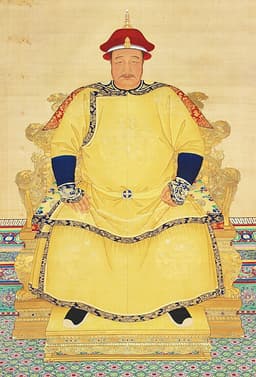
Hong Taiji
Emperor · Modern
78.3Total
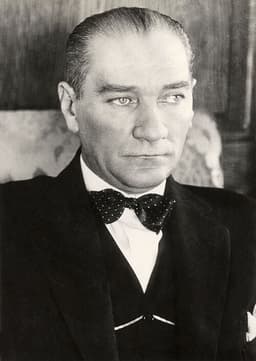
Mustafa Kemal Ataturk
Politician · Modern
80.0Total
Basic Information
Born
1592
1881
Died
1643
1938
Era
Modern
Modern
Nationality
China
Turkey
Occupation
Emperor
Politician
Civilization
Eastern
Middle Eastern
Score Comparison
Military (10%)
85.0
75.0
Political (20%)
82.0
85.0
Influence (20%)
88.0
75.0
Legacy (20%)
65.0
90.0
Leadership (15%)
78.0
80.0
Strategy (15%)
76.0
65.0
TOTAL
78.3
80.0
Hong Taiji — Complete Timeline
1631 AD
Adoption of Chinese-style governmentReform◆ Major
Hong Taiji established a Chinese-style bureaucracy, including the Six Ministries and a Hanlin Academy. He also introduced the civil service examination system for Han Chinese, integrating Confucian governance into the Qing state.
Government reformConfucian administrationSinification
Impact: regionalconstructive
1635 AD
Creation of the Eight Banners systemReform◆ Major
Hong Taiji reorganized the Eight Banners military system, incorporating Mongol and Han Chinese forces into separate banners. This created a multi-ethnic military structure that became the backbone of Qing power.
Military reformEight BannersMulti-ethnic army
Impact: regionalconstructive
Renaming of the Jurchen to ManchuPolitical Action◆ Major
Hong Taiji issued an edict renaming the Jurchen people as Manchu. This was part of his effort to create a unified identity for the various tribes under his rule and distance them from the historical Jurchen label.
Ethnic identityManchuJurchen
Impact: regionalconstructive
1636 AD
Proclamation of the Qing dynastyPolitical Action◆ Major
Hong Taiji declared the establishment of the Qing dynasty, replacing the Later Jin name. He adopted the Chinese imperial title and created a dual administrative system combining Manchu and Chinese institutions.
Dynasty foundingImperial titleQing dynasty
Impact: regionalconstructive
1640 AD
Conquest of the Ming Liaodong regionWar◆ Major
Hong Taiji's forces captured key Ming cities in Liaodong, including Jinzhou and Songshan. These victories secured Qing control over the strategic Liaoning corridor and weakened Ming defenses in the northeast.
Territorial expansionMing-Qing WarLiaodong
Impact: regional
Mustafa Kemal Ataturk — Complete Timeline
1915 AD
Battle of GallipoliWar
As a colonel, Mustafa Kemal commanded Ottoman forces at Gallipoli, successfully repelling Allied landings. His leadership at critical points like Chunuk Bair made him a national hero and laid the foundation for his political career.
World War IOttoman EmpireMilitary Victory
Impact: regional
1919 AD
Turkish War of IndependenceWar
Kemal organized and led the Turkish National Movement against the Allied occupation of Anatolia and the Treaty of S
Independence WarNational MovementAnkara
Impact: nationalconstructive
1922 AD
Abolition of the SultanatePolitical Action◆ Major
The Grand National Assembly of Turkey, under Kemal's leadership, abolished the Ottoman Sultanate, ending 600 years of imperial rule. This severed the link with the old regime and paved the way for the proclamation of the Republic.
SultanateRepublicPolitical Reform
Impact: nationalprogressive
1923 AD
Proclamation of the Republic of TurkeyPolitical Action
Kemal declared Turkey a republic, becoming its first president. He moved the capital to Ankara and initiated a series of radical reforms to modernize and secularize the state, including the adoption of a new legal code and the Latin alphabet.
RepublicModernizationSecularism
Impact: globalprogressive
1925 AD
Adoption of the Hat LawReform◆ Major
Kemal introduced the Hat Law, banning the fez and encouraging Western-style hats. This was part of his broader cultural revolution to secularize and Westernize Turkish society, symbolizing the break with Ottoman traditions.
Cultural ReformSecularismWesternization
Impact: nationalprogressive
1934 AD
Granting of Women's SuffrageReform◆ Major
Kemal's government granted women the right to vote and stand for election in national elections, ahead of many European countries. This reform was part of his commitment to gender equality and modernization of Turkish society.
Women's RightsSuffrageModernization
Impact: nationalprogressive
Expert Analysis
Origins
Mustafa Kemal Ataturk (1881–1938) was born in Salonica, Ottoman Empire, to a modest family. He pursued a military career, graduating from the Ottoman Military Academy. Hong Taiji (1592–1643) was born as the eighth son of Nurhaci, founder of the Later Jin dynasty, in the Jurchen tribal confederation. He grew up in a warrior culture, participating in his father's campaigns to unify the Jurchen tribes.
Rise to Power
Ataturk rose to prominence during World War I, particularly at the Battle of Gallipoli (1915), where he repelled Allied forces. After the Ottoman defeat, he led the Turkish National Movement against the Allied occupation, culminating in the Turkish War of Independence (1919–1923). He established the Grand National Assembly and secured the Treaty of Lausanne. Hong Taiji succeeded his father in 1626, inheriting a unified Jurchen state. He consolidated power by centralizing authority, reducing the influence of rival princes, and expanding the Eight Banners system. In 1636, he proclaimed the Qing dynasty, renaming his people Manchu to foster a new identity.
Leadership & Governance
Ataturk became the first President of Turkey in 1923, implementing radical reforms to modernize the nation. He abolished the sultanate (1922) and caliphate (1924), adopted a secular legal system based on Swiss and Italian models, replaced the Arabic script with the Latin alphabet, and granted women suffrage. His policies aimed at Westernization and secularism. Hong Taiji adopted Chinese-style government structures, establishing a centralized bureaucracy, promoting Confucian scholarship, and integrating Chinese officials. He created the Eight Banners system as a military and administrative framework, and his conquest of Liaodong provided resources for future expansion. However, he maintained Manchu dominance through ethnic segregation policies.
Triumph & Tragedy
Ataturk's greatest triumph was the foundation of a sovereign, modern Turkey. He successfully transitioned from a multi-ethnic empire to a nation-state. His tragic aspect includes the forced population exchange with Greece and authoritarian measures against dissent. Hong Taiji's triumphs include the conquest of Ming territories and the establishment of the Qing dynasty, which ruled China for over 260 years. His tragedy lies in dying suddenly at age 51, before completing the conquest of China, and his harsh treatment of conquered populations.
Character & Destiny
Ataturk was visionary, determined, and pragmatic. His scores: M=75, P=85, I=75, L=90, D=80, S=65, T=80. He is remembered as the 'Father of the Turks.' Hong Taiji was strategic, adaptable, and ruthless. His scores: M=85, P=82, I=88, L=65, D=78, S=76, T=78. He masterfully blended Manchu and Chinese elements to create a durable dynasty.
Legacy
Ataturk's legacy is profound: he transformed Turkey into a secular, modern republic. His reforms are still debated but remain foundational. Hong Taiji's legacy is the Qing dynasty, which peaked under his successors. He is credited with creating the political and military structures that enabled the Qing conquest of China.
Conclusion
Both figures were transformative founders. Ataturk scores higher in Leadership (90 vs 65) and Diplomacy (80 vs 78), reflecting his nation-building success. Hong Taiji scores higher in Military (85 vs 75) and Influence (88 vs 75). The overall score gap is 1.7 in favor of Ataturk, who reshaped a society from empire to republic. Hong Taiji's empire-building was impressive but relied on conquest and assimilation. Thus, Ataturk edges ahead as the more impactful leader in terms of long-term societal transformation.
Rankings
🥇
Mustafa Kemal AtaturkLeader
Mil: 75.0Pol: 85.0Inf: 75.0
80.0
🥈
Hong Taiji
Mil: 85.0Pol: 82.0Inf: 88.0
78.3
+1.7 behind
How This Comparison Works
Algorithm
Each figure is scored on 6 dimensions (0—100 scale) based on structured historical data: Military (10%), Political (20%), Influence (20%), Legacy (20%), Leadership (15%), Strategy (15%). The weighted total produces the final ranking.
Data Sources
Scores are computed from structured sub-indicators in the database. Scale factors adjust for era (Ancient ×0.85, Modern ×1.0) and civilization size (Eastern ×1.05, Other ×0.80) to account for differences in population and military scale.
Maximum 3 Figures
Comparisons are limited to 2—3 figures to ensure readability and statistical meaningfulness.
Error Margins
±5 points per dimension — Sub-scores are derived from historical records with inherent uncertainty. Two figures within 5 points on a dimension should be considered roughly equivalent in that area.
Total Score Accuracy
±3 points overall — The weighted combination of 6 dimensions produces a total score with approximately ±3 points of uncertainty. Differences of less than 3 points are not statistically significant— the figures are effectively tied.
Known Limitations
- Historical records are incomplete and uneven across civilizations
- Figures from oral-tradition societies may be underrepresented
- Occupation labels can misclassify multi-role figures
- Scores measure capability and impact, not moral character
- Quantitative scoring is a comparison tool, not absolute truth
Capability Radar
Military (10%) — Battles & Warfare
Battles
85
85
Win Rate
80
90
Expansion
90
60
Political (20%) — Governance & Reform
Reform
90
98
Diplomacy
85
85
Economy
80
75
Influence (20%) — Cultural & Global Reach
Cultural
80
90
Global
75
80
Legacy (20%) — Historical Impact
Historical
85
95
Longevity
80
85
Leadership (15%) — Power & Stability
Tenure
75
85
Stability
70
70
Strategy (15%) — Tactics & Innovation
Strategy
90
85
Tactics
85
88
Reform
90
80
Similar Comparisons
Comments & Discussion
No comments yet. Be the first to share your thoughts!