Loading...
Hong Taiji vs King David
Hong Taiji leads by 3.0 pts · 2 figures compared
…
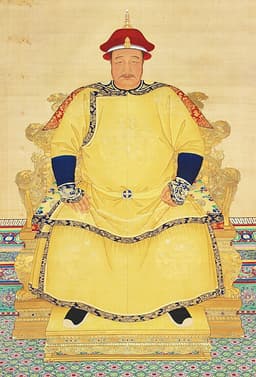
Hong Taiji
Emperor · Modern
78.3Total

King David
Emperor · Ancient
75.3Total
Basic Information
Born
1592
-1010
Died
1643
-970
Era
Modern
Ancient
Nationality
China
Israel
Occupation
Emperor
Emperor
Civilization
Eastern
Middle Eastern
Score Comparison
Military (10%)
85.0
72.0
Political (20%)
82.0
72.0
Influence (20%)
88.0
88.0
Legacy (20%)
65.0
70.0
Leadership (15%)
78.0
72.0
Strategy (15%)
76.0
70.0
TOTAL
78.3
75.3
Hong Taiji — Complete Timeline
1631 AD
Adoption of Chinese-style governmentReform◆ Major
Hong Taiji established a Chinese-style bureaucracy, including the Six Ministries and a Hanlin Academy. He also introduced the civil service examination system for Han Chinese, integrating Confucian governance into the Qing state.
Government reformConfucian administrationSinification
Impact: regionalconstructive
1635 AD
Creation of the Eight Banners systemReform◆ Major
Hong Taiji reorganized the Eight Banners military system, incorporating Mongol and Han Chinese forces into separate banners. This created a multi-ethnic military structure that became the backbone of Qing power.
Military reformEight BannersMulti-ethnic army
Impact: regionalconstructive
Renaming of the Jurchen to ManchuPolitical Action◆ Major
Hong Taiji issued an edict renaming the Jurchen people as Manchu. This was part of his effort to create a unified identity for the various tribes under his rule and distance them from the historical Jurchen label.
Ethnic identityManchuJurchen
Impact: regionalconstructive
1636 AD
Proclamation of the Qing dynastyPolitical Action◆ Major
Hong Taiji declared the establishment of the Qing dynasty, replacing the Later Jin name. He adopted the Chinese imperial title and created a dual administrative system combining Manchu and Chinese institutions.
Dynasty foundingImperial titleQing dynasty
Impact: regionalconstructive
1640 AD
Conquest of the Ming Liaodong regionWar◆ Major
Hong Taiji's forces captured key Ming cities in Liaodong, including Jinzhou and Songshan. These victories secured Qing control over the strategic Liaoning corridor and weakened Ming defenses in the northeast.
Territorial expansionMing-Qing WarLiaodong
Impact: regional
King David — Complete Timeline
1010 BC
Anointed as King of JudahPolitical Action◆ Major
After Saul's death, David was anointed king over the tribe of Judah at Hebron. This began a seven-year period of civil war with Ish-bosheth, Saul's son, who ruled the northern tribes, leading to the eventual unification of Israel.
KingshipCivil WarJudah
Impact: national
1003 BC
Capture of JerusalemWar
David led his army to capture the Jebusite fortress of Jerusalem, making it the capital of the united kingdom. He brought the Ark of the Covenant there, establishing the city as both the political and religious center of Israel.
JerusalemCapitalArk of the Covenant
Impact: nationalconstructive
1000 BC
Defeat of the PhilistinesWar◆ Major
David fought several campaigns that decisively defeated the Philistines, including the Battle of Baal-perazim. He captured Gath and other Philistine strongholds, ending their dominance over Israel and securing the kingdom's borders.
PhilistinesMilitary CampaignIsrael
Impact: regional
990 BC
Affair with BathshebaPolitical Action◆ Major
David committed adultery with Bathsheba and arranged the death of her husband Uriah the Hittite in battle. The prophet Nathan confronted David, leading to his repentance but also to divine punishment, including the death of their first child.
ScandalBathshebaNathan
Impact: nationaldestructive
978 BC
Revolt of AbsalomWar◆ Major
David's son Absalom led a rebellion that forced David to flee Jerusalem. David's forces under Joab defeated Absalom's army in the Forest of Ephraim, and Absalom was killed. David returned to Jerusalem but the kingdom was weakened.
RebellionCivil WarAbsalom
Impact: nationaltragic
Expert Analysis
Origins
Hong Taiji (1592-1643) was the eighth son of Nurhaci, the founder of the Later Jin dynasty. He was born into the Jurchen tribe, a semi-nomadic people in Manchuria. His father unified the Jurchen tribes and created the Eight Banners system, which Hong Taiji later refined. Hong Taiji renamed his people the Manchus in 1635 to foster a unified identity and distance them from their Jurchen past, which had connotations of subjugation to the Ming.
King David (c. 1040-970 BCE) was the youngest son of Jesse, a farmer from Bethlehem. He rose from obscurity as a shepherd to become a warrior in King Saul's court, famously defeating the Philistine giant Goliath. David's early life was marked by his musical talent and his close friendship with Saul's son Jonathan, but also by Saul's jealousy, which forced David into exile.
Rise to Power
Hong Taiji ascended to the Khanate in 1626 after his father's death. He faced immediate challenges from rival Jurchen leaders and the Ming dynasty. He consolidated power by centralizing the Eight Banners, reducing the influence of other princes, and incorporating surrendered Ming officials into his administration. His strategic marriage to the widow of a Mongol leader secured alliances. In 1636, he proclaimed the Qing dynasty, formally asserting his claim to the Mandate of Heaven and positioning himself as a Chinese-style emperor.
David was anointed king by the prophet Samuel while Saul was still king. After Saul's death in battle against the Philistines, David became king of Judah in Hebron. For seven years, he ruled only Judah while Saul's son Ish-bosheth ruled the northern tribes. After Ish-bosheth's assassination, the elders of Israel anointed David as king over all Israel. He captured Jerusalem from the Jebusites and made it his capital, bringing the Ark of the Covenant there to establish it as the religious center.
Leadership & Governance
Hong Taiji was a pragmatic and visionary ruler. He adopted Chinese-style bureaucratic governance, including a civil service examination system and a centralized administration modeled on the Ming. He promoted agriculture, reduced taxes, and encouraged trade. Militarily, he reformed the Eight Banners, integrating Mongol and Han Chinese forces. He launched successful campaigns against the Ming, conquering the Liaodong region and laying the groundwork for the eventual conquest of China. His foreign policy included alliances with Mongol tribes and Korea.
David's leadership combined military prowess with political acumen. He unified the twelve tribes of Israel into a centralized monarchy, established Jerusalem as the political and religious capital, and organized a standing army. He expanded Israel's territory through wars against the Philistines, Moabites, Ammonites, Edomites, and Arameans. However, his governance was marked by personal failings, notably his affair with Bathsheba and the murder of her husband Uriah, which led to divine punishment and family strife.
Triumph & Tragedy
Hong Taiji's greatest triumph was the establishment of the Qing dynasty and the creation of a multi-ethnic empire that would rule China for nearly 300 years. He successfully transformed the Jurchen confederation into a centralized state with Chinese characteristics. His military victories over the Ming and the incorporation of Korean and Mongol allies set the stage for the Qing conquest of China. However, his sudden death in 1643 at age 50 prevented him from seeing the final conquest of Beijing, which occurred the following year under his son Shunzhi.
David's triumphs include the capture of Jerusalem, the unification of Israel, and the establishment of a dynasty that would produce the Messiah according to Jewish and Christian tradition. He is revered as a warrior-poet, credited with composing many Psalms. Yet his reign was marred by tragedy: the death of his infant son from Bathsheba, the rape of his daughter Tamar by his son Amnon, and the revolt of his son Absalom, which forced David to flee Jerusalem. Absalom's death in battle left David heartbroken.
Character & Destiny
Hong Taiji is remembered as a shrewd, calculating, and ambitious leader. He was deeply pragmatic, willing to adopt foreign customs and systems to achieve his goals. He was also ruthless, eliminating rivals and centralizing power. His destiny was to lay the foundation for the Qing dynasty, which would become one of China's most successful and long-lasting empires. His vision of a multi-ethnic state under Manchu rule was realized by his successors.
David is portrayed in the Bible as a man after God's own heart, despite his flaws. He was courageous, charismatic, and deeply religious, but also capable of great sin and repentance. His destiny was to be the archetypal king of Israel, the founder of a dynasty that would lead to Jesus Christ. His legacy is both spiritual and political, shaping Jewish and Christian identity.
Legacy
Hong Taiji's legacy is substantial: he transformed the Manchus from a tribal confederation into a Chinese-style dynasty. His institutional reforms, especially the Eight Banners and the adoption of Chinese governance, were crucial to the Qing's success. He is often overshadowed by his father Nurhaci and his son Shunzhi, but his role as the architect of the Qing dynasty is undeniable. In modern China, he is recognized as a key figure in Chinese history.
David's legacy is immense and enduring. He is the standard by which all subsequent kings of Israel were judged. His dynasty continued for over 400 years until the Babylonian exile. In Judaism, he is the ideal king and the ancestor of the Messiah. In Christianity, he is a direct ancestor of Jesus. His Psalms remain central to liturgical worship. His story has inspired countless works of art, literature, and music.
Conclusion
Hong Taiji and King David were both transformative leaders who founded dynasties that shaped the course of history. Hong Taiji's scores (M=85, P=82, I=88, L=65, D=78, S=76, T=78) reflect his military prowess, political innovation, and imperial vision, though his legacy is somewhat constrained by his early death and the subsequent achievements of his successors. David's scores (M=72, P=72, I=88, L=70, D=72, S=70, T=75) highlight his strategic brilliance and cultural impact, but his personal failings and the turmoil of his later years temper his political achievements. In a direct comparison, Hong Taiji edges out David with a score gap of 3.0, primarily due to his superior military and political scores. However, David's spiritual and cultural legacy arguably has a broader and deeper impact. Ultimately, both men exemplify the heights and pitfalls of leadership, but Hong Taiji's institutional legacy and successful state-building give him a slight edge in this analysis.
Rankings
🥇
Hong TaijiLeader
Mil: 85.0Pol: 82.0Inf: 88.0
78.3
🥈
King David
Mil: 72.0Pol: 72.0Inf: 88.0
75.3
+3.0 behind
How This Comparison Works
Algorithm
Each figure is scored on 6 dimensions (0—100 scale) based on structured historical data: Military (10%), Political (20%), Influence (20%), Legacy (20%), Leadership (15%), Strategy (15%). The weighted total produces the final ranking.
Data Sources
Scores are computed from structured sub-indicators in the database. Scale factors adjust for era (Ancient ×0.85, Modern ×1.0) and civilization size (Eastern ×1.05, Other ×0.80) to account for differences in population and military scale.
Maximum 3 Figures
Comparisons are limited to 2—3 figures to ensure readability and statistical meaningfulness.
Error Margins
±5 points per dimension — Sub-scores are derived from historical records with inherent uncertainty. Two figures within 5 points on a dimension should be considered roughly equivalent in that area.
Total Score Accuracy
±3 points overall — The weighted combination of 6 dimensions produces a total score with approximately ±3 points of uncertainty. Differences of less than 3 points are not statistically significant— the figures are effectively tied.
Known Limitations
- Historical records are incomplete and uneven across civilizations
- Figures from oral-tradition societies may be underrepresented
- Occupation labels can misclassify multi-role figures
- Scores measure capability and impact, not moral character
- Quantitative scoring is a comparison tool, not absolute truth
Capability Radar
Military (10%) — Battles & Warfare
Battles
85
75
Win Rate
80
85
Expansion
90
80
Political (20%) — Governance & Reform
Reform
90
80
Diplomacy
85
75
Economy
80
70
Influence (20%) — Cultural & Global Reach
Cultural
80
95
Global
75
90
Legacy (20%) — Historical Impact
Historical
85
95
Longevity
80
95
Leadership (15%) — Power & Stability
Tenure
75
85
Stability
70
65
Strategy (15%) — Tactics & Innovation
Strategy
90
85
Tactics
85
80
Reform
90
70
Similar Comparisons
Comments & Discussion
No comments yet. Be the first to share your thoughts!