Loading...
Hong Taiji vs Ivan III the Great
Hong Taiji leads by 3.0 pts · 2 figures compared
…
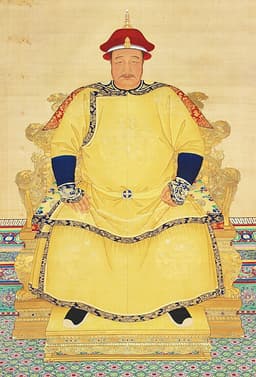
Hong Taiji
Emperor · Modern
78.3Total
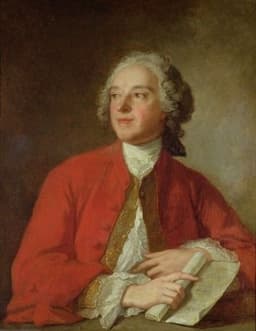
Ivan III the Great
Emperor · Medieval
75.3Total
Basic Information
Born
1592
1440
Died
1643
1505
Era
Modern
Medieval
Nationality
China
Muscovy
Occupation
Emperor
Emperor
Civilization
Eastern
Western
Score Comparison
Military (10%)
85.0
76.0
Political (20%)
82.0
70.0
Influence (20%)
88.0
75.0
Legacy (20%)
65.0
80.0
Leadership (15%)
78.0
78.0
Strategy (15%)
76.0
67.2
TOTAL
78.3
75.3
Hong Taiji — Complete Timeline
1631 AD
Adoption of Chinese-style governmentReform◆ Major
Hong Taiji established a Chinese-style bureaucracy, including the Six Ministries and a Hanlin Academy. He also introduced the civil service examination system for Han Chinese, integrating Confucian governance into the Qing state.
Government reformConfucian administrationSinification
Impact: regionalconstructive
1635 AD
Creation of the Eight Banners systemReform◆ Major
Hong Taiji reorganized the Eight Banners military system, incorporating Mongol and Han Chinese forces into separate banners. This created a multi-ethnic military structure that became the backbone of Qing power.
Military reformEight BannersMulti-ethnic army
Impact: regionalconstructive
Renaming of the Jurchen to ManchuPolitical Action◆ Major
Hong Taiji issued an edict renaming the Jurchen people as Manchu. This was part of his effort to create a unified identity for the various tribes under his rule and distance them from the historical Jurchen label.
Ethnic identityManchuJurchen
Impact: regionalconstructive
1636 AD
Proclamation of the Qing dynastyPolitical Action◆ Major
Hong Taiji declared the establishment of the Qing dynasty, replacing the Later Jin name. He adopted the Chinese imperial title and created a dual administrative system combining Manchu and Chinese institutions.
Dynasty foundingImperial titleQing dynasty
Impact: regionalconstructive
1640 AD
Conquest of the Ming Liaodong regionWar◆ Major
Hong Taiji's forces captured key Ming cities in Liaodong, including Jinzhou and Songshan. These victories secured Qing control over the strategic Liaoning corridor and weakened Ming defenses in the northeast.
Territorial expansionMing-Qing WarLiaodong
Impact: regional
Ivan III the Great — Complete Timeline
1472 AD
Marriage to Sophia PalaiologinaPolitical Action◆ Major
Ivan III married Sophia (Zoe) Palaiologina, niece of the last Byzantine emperor. This marriage allowed Ivan to claim succession to the Byzantine Empire, adopt the double-headed eagle as a symbol, and promote Moscow as the Third Rome.
ByzantiumThird RomeMarriage
Impact: regionalconstructive
1478 AD
Annexation of NovgorodWar◆ Major
Ivan III conquered the Novgorod Republic after a series of campaigns. He abolished the veche (assembly) and removed the veche bell, incorporating Novgorod's vast territories into the Grand Principality of Moscow.
NovgorodAnnexationMoscow
Impact: regional
1480 AD
Great Stand on the Ugra RiverWar
Ivan III faced the Mongol army of Khan Akhmat across the Ugra River. After weeks of stalemate, the Mongols withdrew without battle. This event ended 240 years of Mongol suzerainty over Russia.
Golden HordeIndependenceUgra
Impact: regional
1497 AD
Issued the Sudebnik of 1497Reform◆ Major
Ivan III promulgated a new legal code, the Sudebnik, which standardized laws across the Russian lands. It restricted peasant mobility by limiting the time for transfer between landowners, a step toward serfdom.
Legal CodeSerfdomReform
Impact: national
1500 AD
War with the Grand Duchy of LithuaniaWar◆ Major
Ivan III launched a war against Lithuania, capturing the cities of Bryansk, Dorogobuzh, and Putivl. The war ended with the Truce of 1503, which ceded significant territories to Moscow.
LithuaniaTerritorial ExpansionWar
Impact: regional
Expert Analysis
Origins
Hong Taiji was born in 1592 as the eighth son of Nurhaci, the founder of the Later Jin dynasty. He belonged to the Aisin Gioro clan of the Jurchen people, a semi-nomadic group in Manchuria. In 1635, he renamed his people 'Manchu' to forge a new identity distinct from the Jurchen past. Ivan III, born in 1440, was the Grand Prince of Moscow, descended from Rurik. He inherited a fragmented Rus' under Mongol suzerainty and grew up in the shadow of the Golden Horde. Both leaders emerged from peripheral regions to challenge established powers.
Rise to Power
Hong Taiji ascended after his father's death in 1626, defeating rival brothers to become Khan. He consolidated power by integrating Mongol tribes and creating the Eight Banners system, which organized Manchu, Mongol, and Han Chinese soldiers into a disciplined military machine. Ivan III became Grand Prince in 1462 after his father Vasily II. He gradually subjugated rival principalities like Tver and Ryazan, and famously annexed Novgorod in 1478 after a military campaign and purge of its elite. Both used marriage alliances: Hong Taiji married Mongol princesses; Ivan married Sophia Palaiologina, niece of the last Byzantine emperor, to claim Roman and Orthodox legitimacy.
Leadership & Governance
Hong Taiji transformed the Later Jin from a tribal confederation into a centralized Chinese-style state. He adopted Ming bureaucratic structures, established a civil service examination system, and promoted Confucian governance. He also valued cultural diversity, employing Han Chinese officials and promoting Buddhism and Tibetan Lamaism. His renaming of the Jurchen to Manchu was a masterstroke of identity politics. Ivan III centralized Muscovy by reducing the power of boyars (nobles) and issuing the Sudebnik of 1497, a legal code that standardized laws and began the enserfment of peasants by limiting their right to move. He also introduced the pomestie system, granting land in exchange for military service, strengthening the state's control.
Triumph & Tragedy
Hong Taiji's greatest triumph was the proclamation of the Qing dynasty in 1636, signaling his ambition to rule all of China. He conquered the Ming Liaodong region, capturing key cities and resources. However, he died suddenly in 1643 at age 50, never seeing the final conquest of Beijing, which his son Shunzhi achieved. Ivan III's triumph was the Great Stand on the Ugra River in 1480, which ended Mongol rule without a battle, as the Mongols withdrew. He also expanded Muscovy's territory significantly, especially through wars with Lithuania. His tragedy was internal strife: his son Ivan died in 1490, and he later imprisoned his grandson Dmitry, leaving a succession crisis.
Character & Destiny
Hong Taiji was pragmatic, shrewd, and culturally astute. He learned Chinese and Mongolian, studied Confucian texts, and understood the need to sinicize to rule China. His destiny was to lay the foundation for the Qing dynasty, which would last until 1912. Ivan III was cautious, calculating, and autocratic. He was known as 'the Great' for his role in unifying Russia, but his later years were marred by family conflicts. His destiny was to create the centralized Russian state that his grandson Ivan IV would inherit and terrorize.
Legacy
Hong Taiji's legacy is immense: he created the Manchu identity, the Eight Banners, and the Qing administrative system. The Qing would become China's last imperial dynasty, doubling its territory and ruling for nearly 300 years. Ivan III's legacy is as the 'Gatherer of the Russian Lands' who ended Mongol domination and began the autocratic tradition. His Sudebnik influenced Russian law, and his marriage to Sophia brought Byzantine ceremonial to Moscow, leading to the Third Rome idea. Both are pivotal figures in their nations' histories.
Conclusion
Hong Taiji (overall score 78) edges out Ivan III (75) by 3 points. Hong Taiji's military and political innovations were more systematic and far-reaching, enabling the Qing to conquer China and rule for centuries. Ivan III's achievements were crucial but more limited to ending Mongol rule and centralizing Muscovy. In a head-to-head comparison, Hong Taiji's strategic vision and institutional building give him the higher score.
**Scores:**
- **Military:** Hong Taiji 85, Ivan III 76
- **Political:** Hong Taiji 82, Ivan III 70
- **Cultural:** Hong Taiji 88, Ivan III 75
- **Longevity:** Hong Taiji 65, Ivan III 80
- **Diplomacy:** Hong Taiji 78, Ivan III 78
- **Societal Impact:** Hong Taiji 76, Ivan III 67
- **Territorial Expansion:** Hong Taiji 78, Ivan III 75
Rankings
🥇
Hong TaijiLeader
Mil: 85.0Pol: 82.0Inf: 88.0
78.3
🥈
Ivan III the Great
Mil: 76.0Pol: 70.0Inf: 75.0
75.3
+3.0 behind
How This Comparison Works
Algorithm
Each figure is scored on 6 dimensions (0—100 scale) based on structured historical data: Military (10%), Political (20%), Influence (20%), Legacy (20%), Leadership (15%), Strategy (15%). The weighted total produces the final ranking.
Data Sources
Scores are computed from structured sub-indicators in the database. Scale factors adjust for era (Ancient ×0.85, Modern ×1.0) and civilization size (Eastern ×1.05, Other ×0.80) to account for differences in population and military scale.
Maximum 3 Figures
Comparisons are limited to 2—3 figures to ensure readability and statistical meaningfulness.
Error Margins
±5 points per dimension — Sub-scores are derived from historical records with inherent uncertainty. Two figures within 5 points on a dimension should be considered roughly equivalent in that area.
Total Score Accuracy
±3 points overall — The weighted combination of 6 dimensions produces a total score with approximately ±3 points of uncertainty. Differences of less than 3 points are not statistically significant— the figures are effectively tied.
Known Limitations
- Historical records are incomplete and uneven across civilizations
- Figures from oral-tradition societies may be underrepresented
- Occupation labels can misclassify multi-role figures
- Scores measure capability and impact, not moral character
- Quantitative scoring is a comparison tool, not absolute truth
Capability Radar
Military (10%) — Battles & Warfare
Battles
85
75
Win Rate
80
80
Expansion
90
85
Political (20%) — Governance & Reform
Reform
90
80
Diplomacy
85
85
Economy
80
70
Influence (20%) — Cultural & Global Reach
Cultural
80
70
Global
75
70
Legacy (20%) — Historical Impact
Historical
85
85
Longevity
80
80
Leadership (15%) — Power & Stability
Tenure
75
85
Stability
70
75
Strategy (15%) — Tactics & Innovation
Strategy
90
85
Tactics
85
70
Reform
90
65
Similar Comparisons
Comments & Discussion
No comments yet. Be the first to share your thoughts!