Loading...
This comparison has not been analyzed yet.
One-time AI generation (~1 minute). Scores and timeline are already available below.
Hojo Ujimasa vs Omar Torrijos
Omar Torrijos leads by 2.5 pts · 2 figures compared
…
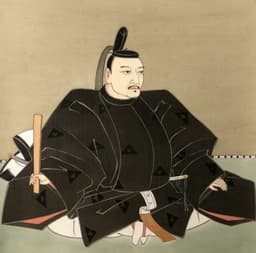
Hojo Ujimasa
General · Modern
55.6Total

Omar Torrijos
General · Modern
58.1Total
Basic Information
Born
1538
1929
Died
1590
—
Era
Modern
Modern
Nationality
Japan
Panama
Occupation
General
General
Civilization
Eastern
Western
Score Comparison
Military (10%)
70.0
10.2
Political (20%)
45.0
78.0
Influence (20%)
54.9
72.0
Legacy (20%)
47.5
52.0
Leadership (15%)
68.0
72.0
Strategy (15%)
60.7
35.7
TOTAL
55.6
58.1
Hojo Ujimasa — Complete Timeline
1590 AD
Resisted Toyotomi HideyoshiWar◆ Major
Ujimasa led the Hojo clan in resisting Toyotomi Hideyoshi's campaign to unify Japan. He fortified Odawara Castle and refused to submit, leading to a prolonged siege.
ResistanceHojoHideyoshi
Impact: national
Siege of Odawara CastleWar◆ Major
Ujimasa was besieged at Odawara Castle by Toyotomi Hideyoshi's massive army. After a three-month siege, he surrendered, ending the Hojo clan's independence.
SiegeSurrenderHojo
Impact: nationaldestructive
Death by seppukuOther◆ Major
After surrendering Odawara Castle, Ujimasa was forced to commit seppuku by Toyotomi Hideyoshi. His death marked the end of the Hojo clan's rule in the Kanto region.
SeppukuHojoHideyoshi
Impact: regionaltragic
Omar Torrijos — Complete Timeline
1968 AD
1968 Panamanian coup d'étatPolitical Action◆ Major
Torrijos, as a lieutenant colonel, co-led a military coup that overthrew President Arnulfo Arias. The National Guard took power, and Torrijos emerged as the de facto leader of Panama, establishing a military government.
CoupMilitary RulePanama
Impact: nationaldestructive
1969 AD
Implementation of agrarian reformReform
Torrijos initiated an agrarian reform program that redistributed land to peasant families. The reform aimed to reduce rural poverty and inequality, but its implementation was uneven and faced opposition from large landowners.
Land ReformSocial PolicyRural Development
Impact: nationalprogressive
1977 AD
Negotiation of the Torrijos-Carter TreatiesPolitical Action
Torrijos negotiated treaties with U.S. President Jimmy Carter that established the gradual transfer of the Panama Canal from U.S. to Panamanian control by 1999. The treaties were ratified by Panama in a 1977 referendum and by the U.S. Senate in 1978.
Panama CanalTreatySovereignty
Impact: globalconstructive
1981 AD
Death in plane crashOther◆ Major
Torrijos died when his De Havilland Twin Otter aircraft crashed in the mountains of Penonom
DeathAccidentConspiracy
Impact: nationaltragic
This comparison has not been analyzed yet.
One-time AI generation (~1 minute). Scores and timeline are already available below.
Rankings
🥇
Omar TorrijosLeader
Mil: 10.2Pol: 78.0Inf: 72.0
58.1
🥈
Hojo Ujimasa
Mil: 70.0Pol: 45.0Inf: 54.9
55.6
+2.5 behind
How This Comparison Works
Algorithm
Each figure is scored on 6 dimensions (0—100 scale) based on structured historical data: Military (10%), Political (20%), Influence (20%), Legacy (20%), Leadership (15%), Strategy (15%). The weighted total produces the final ranking.
Data Sources
Scores are computed from structured sub-indicators in the database. Scale factors adjust for era (Ancient ×0.85, Modern ×1.0) and civilization size (Eastern ×1.05, Other ×0.80) to account for differences in population and military scale.
Maximum 3 Figures
Comparisons are limited to 2—3 figures to ensure readability and statistical meaningfulness.
Error Margins
±5 points per dimension — Sub-scores are derived from historical records with inherent uncertainty. Two figures within 5 points on a dimension should be considered roughly equivalent in that area.
Total Score Accuracy
±3 points overall — The weighted combination of 6 dimensions produces a total score with approximately ±3 points of uncertainty. Differences of less than 3 points are not statistically significant— the figures are effectively tied.
Known Limitations
- Historical records are incomplete and uneven across civilizations
- Figures from oral-tradition societies may be underrepresented
- Occupation labels can misclassify multi-role figures
- Scores measure capability and impact, not moral character
- Quantitative scoring is a comparison tool, not absolute truth
Capability Radar
Military (10%) — Battles & Warfare
Battles
55
5
Win Rate
50
5
Expansion
60
5
Political (20%) — Governance & Reform
Reform
55
70
Diplomacy
50
85
Economy
60
60
Influence (20%) — Cultural & Global Reach
Cultural
40
50
Global
20
65
Legacy (20%) — Historical Impact
Historical
45
65
Longevity
30
55
Leadership (15%) — Power & Stability
Tenure
65
65
Stability
55
55
Strategy (15%) — Tactics & Innovation
Strategy
65
15
Tactics
60
10
Reform
55
20
Similar Comparisons
Comments & Discussion
No comments yet. Be the first to share your thoughts!