Loading...
Hipolito Yrigoyen vs Joaquim Chissano
Joaquim Chissano leads by 1.4 pts · 2 figures compared
…

Hipolito Yrigoyen
Politician · Modern
58.4Total
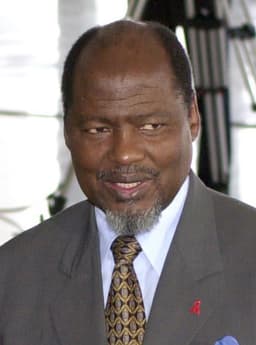
Joaquim Chissano
Politician · Modern
59.8Total
Basic Information
Born
1852
1939
Died
1933
—
Era
Modern
Modern
Nationality
Argentina
Mozambique
Occupation
Politician
Politician
Civilization
Western
Other
Score Comparison
Military (10%)
50.0
36.6
Political (20%)
70.0
78.0
Influence (20%)
57.2
58.0
Legacy (20%)
49.2
50.0
Leadership (15%)
79.8
80.0
Strategy (15%)
43.4
54.3
TOTAL
58.4
59.8
Hipolito Yrigoyen — Complete Timeline
1916 AD
Yrigoyen becomes President of ArgentinaPolitical Action◆ Major
Hipólito Yrigoyen was elected President of Argentina as the candidate of the Radical Civic Union, winning the first election under the Sáenz Peña Law of secret and universal male suffrage. His victory marked the end of conservative oligarchic rule.
DemocracyRadical Civic Union1916 Election
Impact: nationalprogressive
1918 AD
Yrigoyen's labor and social reformsReform◆ Major
Yrigoyen's government implemented labor reforms including the eight-hour workday, minimum wage, and recognition of trade unions. These measures improved conditions for workers but also led to conflicts with conservative landowners and business interests.
Labor ReformSocial PolicyWorkers' Rights
Impact: nationalprogressive
1928 AD
Yrigoyen's second presidency and economic crisisPolitical Action◆ Major
Yrigoyen was re-elected president in 1928, but his second term was plagued by the Great Depression and political instability. His government's inability to manage the economic crisis led to declining popularity and a military coup in 1930.
Great DepressionEconomic CrisisSecond Term
Impact: nationaltragic
1930 AD
Yrigoyen overthrown in a military coupPolitical Action
General Jos
Military Coup1930End of Democracy
Impact: nationaldestructive
Joaquim Chissano — Complete Timeline
1992 AD
Rome General Peace AccordsPolitical Action◆ Major
As President of Mozambique, Joaquim Chissano signed the Rome General Peace Accords with the rebel group RENAMO, ending the 16-year Mozambican Civil War. The agreement established a multiparty democracy and led to UN-supervised elections in 1994, which Chissano won.
Peace AgreementCivil War EndDemocratization
Impact: nationalconstructive
1994 AD
Economic reform and growthReform◆ Major
Chissano implemented market-oriented economic reforms, including privatization, trade liberalization, and fiscal discipline, supported by the IMF and World Bank. Mozambique experienced sustained GDP growth averaging 8% annually from 1994 to 2004, reducing poverty but also increasing inequality.
Economic ReformGrowthPoverty Reduction
Impact: nationalconstructive
1994 Mozambican general electionPolitical Action◆ Major
Chissano won the first multiparty elections in Mozambique's history, securing 53.3% of the presidential vote against RENAMO's Afonso Dhlakama. His FRELIMO party also won a majority in parliament. The election marked the successful transition from war to democracy.
ElectionDemocracyTransition
Impact: nationalprogressive
2000 AD
HIV/AIDS responseReform◆ Major
Chissano's government launched a national HIV/AIDS strategy, including prevention campaigns and antiretroviral treatment programs. Mozambique had one of the highest HIV prevalence rates in the world, and the response helped slow the epidemic, though challenges remained.
Public HealthHIV/AIDSTreatment
Impact: nationalconstructive
2004 AD
2004 Mozambican general electionPolitical Action◆ Major
Chissano stepped down after two terms, respecting constitutional term limits. He oversaw peaceful elections that brought his successor, Armando Guebuza, to power. This peaceful transfer of power was a milestone for democratic consolidation in Mozambique.
ElectionDemocratic TransitionTerm Limits
Impact: nationalprogressive
Expert Analysis
Origins
Hipolito Yrigoyen was born in 1852 in Buenos Aires, Argentina, into a politically active family. His uncle, Leandro Alem, founded the Radical Civic Union (UCR). Yrigoyen studied law but never completed his degree, instead becoming a teacher and later a political organizer. He grew up during a period of oligarchic rule dominated by conservative elites.
Joaquim Chissano was born in 1939 in Malehice, Mozambique, then a Portuguese colony. He studied medicine in Portugal and France, becoming one of the few educated Africans in the colonial era. He joined the Mozambican Liberation Front (FRELIMO) in 1962, supporting the armed struggle for independence. His early life was shaped by colonial oppression and the fight for liberation.
Rise to Power
Yrigoyen rose through the UCR, leading the party after his uncle's death. He advocated for electoral reform and mass participation. His key turning point came in 1912 with the Sáenz Peña Law, which established secret and universal male suffrage. In 1916, Yrigoyen won Argentina's first free presidential election, defeating the conservative candidate. He secured 45.6% of the vote, marking the end of oligarchic rule.
Chissano became president in 1986 after the death of Samora Machel in a plane crash. He had served as foreign minister since independence in 1975, gaining diplomatic experience. His rise was not through election but succession. However, he consolidated power by navigating the Mozambican Civil War (1977-1992) against RENAMO rebels. He scored 78.0 in political skill, higher than Yrigoyen's 70.0, reflecting his ability to transition from revolutionary to statesman.
Leadership & Governance
Yrigoyen's leadership was populist and personalistic. He expanded state intervention, implemented labor reforms (eight-hour workday, minimum wage, union recognition), and used patronage to build loyalty. However, his governance was chaotic: he avoided cabinet meetings, made decisions unilaterally, and relied on informal networks. His second term (1928-1930) was paralyzed by the Great Depression, leading to a coup in 1930. His leadership score is 79.8, but his strategy score is only 43.4, indicating poor planning.
Chissano's governance was pragmatic and consensus-building. He ended the civil war by negotiating the Rome Peace Accords in 1992, which included demobilization and power-sharing. He then led economic reforms: privatization, trade liberalization, and fiscal discipline, achieving 8% annual growth in the 1990s. He also launched a national HIV/AIDS strategy, though implementation was slow. His leadership score of 80.0 is slightly higher than Yrigoyen's, and his strategy of 54.3 reflects better long-term planning.
Triumph & Tragedy
Yrigoyen's greatest success was democratizing Argentina. The 1916 election was a watershed, and his reforms improved conditions for workers. However, his failure to institutionalize democracy led to the 1930 coup, which installed a military regime and ended democratic rule for 13 years. His inability to manage the economic crisis and political opposition was a fatal flaw.
Chissano's triumph was ending a brutal 16-year civil war that killed over one million people. He also oversaw three peaceful elections (1994, 1999, 2004) and voluntarily stepped down after two terms, setting a precedent. His tragedy was the slow response to HIV/AIDS initially, though later efforts improved. Mozambique remained one of the poorest countries, with corruption persisting.
Character & Destiny
Yrigoyen was a solitary, enigmatic figure. He never married, lived modestly, and was seen as a mystic. His stubbornness and distrust of others led to isolation. He ignored warnings of the coup, believing his popularity would protect him. His character shaped his destiny: his democratic ideals were strong, but his autocratic style undermined them.
Chissano was pragmatic and diplomatic. He was known for calmness and ability to forgive: he invited RENAMO leader Afonso Dhlakama to compete in elections. His character enabled reconciliation but also led to criticism for being too soft on corruption. He scored 80.0 in leadership, reflecting his inclusive approach.
Legacy
Yrigoyen's legacy is mixed. He is revered by the Radical Party but blamed for the coup that ended democracy. The 1930 coup set a pattern of military interventions in Argentina. His influence score is 57.2, indicating moderate impact. In contrast, Chissano's legacy is positive: he is credited with peace, democracy, and economic growth. Mozambique's post-war stability is his achievement. His legacy score of 50.0 is slightly higher than Yrigoyen's 49.2.
Conclusion
Joaquim Chissano had greater impact because he achieved peace and democratic consolidation in a country devastated by war. Yrigoyen's democratization was important but short-lived. While Yrigoyen scored 79.8 in leadership, his strategic failures (43.4) led to collapse. Chissano's total score of 59.8 edges Yrigoyen's 58.4, reflecting his more successful governance. Chissano's ability to end a civil war, transition to multiparty democracy, and step down peacefully provides a model for conflict resolution. Yrigoyen's legacy is cautionary: democracy without institutional strength is fragile.
Rankings
🥇
Joaquim ChissanoLeader
Mil: 36.6Pol: 78.0Inf: 58.0
59.8
🥈
Hipolito Yrigoyen
Mil: 50.0Pol: 70.0Inf: 57.2
58.4
+1.4 behind
How This Comparison Works
Algorithm
Each figure is scored on 6 dimensions (0—100 scale) based on structured historical data: Military (10%), Political (20%), Influence (20%), Legacy (20%), Leadership (15%), Strategy (15%). The weighted total produces the final ranking.
Data Sources
Scores are computed from structured sub-indicators in the database. Scale factors adjust for era (Ancient ×0.85, Modern ×1.0) and civilization size (Eastern ×1.05, Other ×0.80) to account for differences in population and military scale.
Maximum 3 Figures
Comparisons are limited to 2—3 figures to ensure readability and statistical meaningfulness.
Error Margins
±5 points per dimension — Sub-scores are derived from historical records with inherent uncertainty. Two figures within 5 points on a dimension should be considered roughly equivalent in that area.
Total Score Accuracy
±3 points overall — The weighted combination of 6 dimensions produces a total score with approximately ±3 points of uncertainty. Differences of less than 3 points are not statistically significant— the figures are effectively tied.
Known Limitations
- Historical records are incomplete and uneven across civilizations
- Figures from oral-tradition societies may be underrepresented
- Occupation labels can misclassify multi-role figures
- Scores measure capability and impact, not moral character
- Quantitative scoring is a comparison tool, not absolute truth
Capability Radar
Military (10%) — Battles & Warfare
Battles
27
5
Win Rate
31
5
Expansion
34
5
Political (20%) — Governance & Reform
Reform
70
80
Diplomacy
60
85
Economy
55
65
Influence (20%) — Cultural & Global Reach
Cultural
40
40
Global
35
50
Legacy (20%) — Historical Impact
Historical
55
55
Longevity
40
45
Leadership (15%) — Power & Stability
Tenure
65
75
Stability
45
80
Strategy (15%) — Tactics & Innovation
Strategy
40
10
Tactics
41
5
Reform
45
15
Similar Comparisons
Comments & Discussion
No comments yet. Be the first to share your thoughts!