Loading...
This comparison has not been analyzed yet.
One-time AI generation (~1 minute). Scores and timeline are already available below.
Himanta Biswa Sarma vs Salim Ahmed Salim
Himanta Biswa Sarma leads by 1.3 pts · 2 figures compared
…

Himanta Biswa Sarma
Politician · Modern
53.7Total
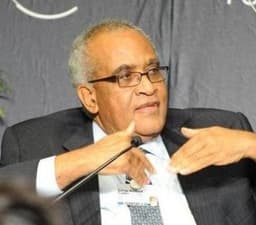
Salim Ahmed Salim
Politician · Modern
52.4Total
Basic Information
Born
1969
1942
Died
—
—
Era
Modern
Modern
Nationality
India
Tanzania
Occupation
Politician
Politician
Civilization
Indian
Other
Score Comparison
Military (10%)
55.0
24.8
Political (20%)
68.0
53.8
Influence (20%)
48.6
60.0
Legacy (20%)
40.0
50.0
Leadership (15%)
65.7
72.0
Strategy (15%)
60.0
35.5
TOTAL
53.7
52.4
Himanta Biswa Sarma — Complete Timeline
2015 AD
Joined Bharatiya Janata PartyPolitical Action◆ Major
Himanta Biswa Sarma left the Indian National Congress and joined the BJP, citing differences with Congress leadership. This move significantly strengthened the BJP in Assam and led to his rise as a key leader.
Party SwitchBJPAssam
Impact: national
2019 AD
Implementation of the National Register of Citizens (NRC) update in AssamPolitical Action◆ Major
As a senior minister in the Assam government, Sarma oversaw the final publication of the updated NRC, which excluded 1.9 million people. This process aimed to identify illegal immigrants but faced criticism for errors.
NRCImmigrationAssam
Impact: regional
2021 AD
Elected Chief Minister of AssamPolitical Action◆ Major
Sarma became Chief Minister of Assam after the BJP-led alliance won the state elections. He succeeded Sarbananda Sonowal and focused on infrastructure, health, and education.
Chief MinisterAssamBJP
Impact: nationalconstructive
Salim Ahmed Salim — Complete Timeline
1969 AD
Appointed Tanzania's Ambassador to ChinaPolitical Action◆ Major
Salim Ahmed Salim was appointed Tanzania's ambassador to China, strengthening diplomatic ties between the two countries. He played a key role in fostering the Tanzania-China relationship, including support for the TAZARA railway project.
DiplomacyChinaTAZARA
Impact: regionalconstructive
1970 AD
Served as UN AmbassadorPolitical Action◆ Major
Salim served as Tanzania's Permanent Representative to the United Nations from 1970 to 1980. He was a prominent voice for African liberation movements and anti-apartheid causes, chairing the UN Special Committee on Decolonization.
United NationsDiplomacyDecolonization
Impact: globalconstructive
1989 AD
Elected Secretary-General of OAUPolitical Action◆ Major
Salim was elected Secretary-General of the Organization of African Unity (OAU), serving from 1989 to 2001. He led the organization through the end of apartheid in South Africa and the transition to the African Union.
OAUAfrican UnityDiplomacy
Impact: globalconstructive
2001 AD
Oversaw Transition to African UnionPolitical Action◆ Major
As OAU Secretary-General, Salim oversaw the transition from the OAU to the African Union (AU) in 2001. He helped draft the AU's founding documents and facilitated the launch of the new continental body.
African UnionTransitionContinental Integration
Impact: globalconstructive
This comparison has not been analyzed yet.
One-time AI generation (~1 minute). Scores and timeline are already available below.
Rankings
🥇
Himanta Biswa SarmaLeader
Mil: 55.0Pol: 68.0Inf: 48.6
53.7
🥈
Salim Ahmed Salim
Mil: 24.8Pol: 53.8Inf: 60.0
52.4
+1.3 behind
How This Comparison Works
Algorithm
Each figure is scored on 6 dimensions (0—100 scale) based on structured historical data: Military (10%), Political (20%), Influence (20%), Legacy (20%), Leadership (15%), Strategy (15%). The weighted total produces the final ranking.
Data Sources
Scores are computed from structured sub-indicators in the database. Scale factors adjust for era (Ancient ×0.85, Modern ×1.0) and civilization size (Eastern ×1.05, Other ×0.80) to account for differences in population and military scale.
Maximum 3 Figures
Comparisons are limited to 2—3 figures to ensure readability and statistical meaningfulness.
Error Margins
±5 points per dimension — Sub-scores are derived from historical records with inherent uncertainty. Two figures within 5 points on a dimension should be considered roughly equivalent in that area.
Total Score Accuracy
±3 points overall — The weighted combination of 6 dimensions produces a total score with approximately ±3 points of uncertainty. Differences of less than 3 points are not statistically significant— the figures are effectively tied.
Known Limitations
- Historical records are incomplete and uneven across civilizations
- Figures from oral-tradition societies may be underrepresented
- Occupation labels can misclassify multi-role figures
- Scores measure capability and impact, not moral character
- Quantitative scoring is a comparison tool, not absolute truth
Capability Radar
Military (10%) — Battles & Warfare
Battles
42
27
Win Rate
45
29
Expansion
49
29
Political (20%) — Governance & Reform
Reform
40
55
Diplomacy
55
80
Economy
45
40
Influence (20%) — Cultural & Global Reach
Cultural
20
40
Global
10
60
Legacy (20%) — Historical Impact
Historical
25
55
Longevity
15
45
Leadership (15%) — Power & Stability
Tenure
35
60
Stability
30
65
Strategy (15%) — Tactics & Innovation
Strategy
56
36
Tactics
53
36
Reform
59
38
Similar Comparisons
Comments & Discussion
No comments yet. Be the first to share your thoughts!