Loading...
Hijikata Toshizo vs Husni al-Zaim
Hijikata Toshizo leads by 7.6 pts · 2 figures compared
…
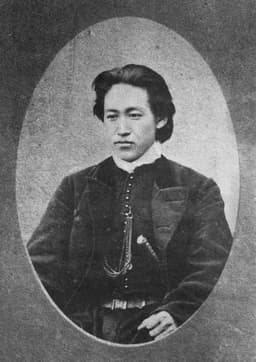
Hijikata Toshizo
General · Modern
43.2Total

Husni al-Zaim
General · Modern
35.6Total
Basic Information
Born
1835
1897
Died
1869
1949
Era
Modern
Modern
Nationality
Japan
Syria
Occupation
General
General
Civilization
Eastern
Middle Eastern
Score Comparison
Military (10%)
45.0
10.2
Political (20%)
26.4
30.8
Influence (20%)
55.7
48.6
Legacy (20%)
45.8
40.0
Leadership (15%)
33.5
35.4
Strategy (15%)
43.3
25.0
TOTAL
43.2
35.6
Hijikata Toshizo — Complete Timeline
1863 AD
Joined the ShinsengumiPolitical Action◆ Major
Hijikata Toshizo joined the newly formed Shinsengumi in Kyoto. He quickly became the vice-commander, known for his strict discipline and ruthless enforcement of the group's code. He helped establish the Shinsengumi as a feared police force.
ShinsengumiKyotoPolice
Impact: national
1864 AD
Ikedaya IncidentWar◆ Major
Hijikata led Shinsengumi forces in a raid on the Ikedaya Inn in Kyoto, where anti-shogunate plotters were meeting. The raid resulted in the deaths or capture of many plotters, thwarting a plan to burn Kyoto. This event cemented the Shinsengumi's reputation.
IkedayaRaidShinsengumi
Impact: nationaldestructive
1868 AD
Battle of Toba-FushimiWar◆ Major
Hijikata fought in the Battle of Toba-Fushimi as part of the shogunate forces. The Shinsengumi suffered heavy losses and were forced to retreat. This defeat marked the beginning of the end for the Tokugawa shogunate.
Boshin WarBattleDefeat
Impact: nationaldestructive
1869 AD
Battle of HakodateWar◆ Major
Hijikata fought in the Battle of Hakodate, the final battle of the Boshin War, as part of the Republic of Ezo forces. He was killed in action by a bullet while leading a charge. His death marked the end of the Shinsengumi and the last resistance to the Meiji Restoration.
Boshin WarBattleDeath
Impact: nationaltragic
Husni al-Zaim — Complete Timeline
1949 AD
Led the 1949 Syrian coup d'étatPolitical Action
Husni al-Zaim led the first military coup in Syria's history on March 30, 1949, overthrowing President Shukri al-Quwatli. He seized power with support from the military and intelligence services, establishing a short-lived dictatorship.
CoupMilitaryDictatorship
Impact: nationaldestructive
Became President of SyriaPolitical Action◆ Major
After the coup, al-Zaim appointed himself President of Syria and Prime Minister. He implemented reforms including land redistribution and women's suffrage, but his rule was marked by authoritarian measures and suppression of political opponents.
PresidencyReformAuthoritarianism
Impact: national
Recognized Israel and negotiated armisticePolitical Action◆ Major
Al-Zaim's government signed an armistice agreement with Israel in July 1949, ending the 1948 Arab-Israeli War for Syria. He also proposed a peace plan that included resettling Palestinian refugees, which was rejected by other Arab states.
IsraelArmisticePeace Plan
Impact: regional
Overthrown and executed in a counter-coupPolitical Action◆ Major
Husni al-Zaim was overthrown by a counter-coup led by Colonel Sami al-Hinnawi on August 14, 1949. He was captured and executed by firing squad the same day, ending his rule after only four and a half months.
Counter-coupExecutionOverthrow
Impact: nationaltragic
Expert Analysis
Origins
Hijikata Toshizo was born in 1835 in Hino, Japan, into a farmer's family. His father died when he was young, and he was raised by his mother and sister. He trained in the Tennen Rishin-ryu sword style and worked as a merchant before joining the Shinsengumi in 1863. Husni al-Zaim was born in 1897 in Aleppo, Syria, then part of the Ottoman Empire. He came from a military family and studied at the Ottoman Military Academy. After World War I, he served in the French Syrian army, rising through the ranks.
Rise to Power
Hijikata rose to prominence as the vice-commander of the Shinsengumi, a special police force in Kyoto. He was known for his strict enforcement of the "Kenmyo" code, which required members to follow orders without question. His role in the Ikedaya Incident of 1864, where Shinsengumi raided a meeting of anti-shogunate plotters, solidified his reputation. Husni al-Zaim rose to power by leading the first military coup in Syria's history on March 30, 1949, overthrowing President Shukri al-Quwatli. He had the support of the military and intelligence agencies.
Leadership & Governance
Hijikata's leadership was authoritarian and brutal. He enforced discipline through fear, ordering executions of members who violated rules. He led the Shinsengumi in battles, but his military score is only 45.0, reflecting limited strategic impact. Husni al-Zaim's governance was short-lived but ambitious. He implemented land redistribution, granted women's suffrage, and recognized Israel, scoring 30.8 in political influence.
Triumph & Tragedy
Hijikata's greatest success was the Ikedaya Incident, which prevented a plot to burn Kyoto. His failure came at the Battle of Toba-Fushimi in 1868, where the Shinsengumi suffered heavy losses, and he was killed at the Battle of Hakodate in 1869. Husni al-Zaim's triumph was becoming president and pushing reforms. His tragedy was being overthrown and executed after only five months in power.
Character & Destiny
Hijikata's ruthless character earned him the nickname "Demon Vice-Commander." His loyalty to the shogunate led to his death in a losing cause. Husni al-Zaim was ambitious but isolated, lacking popular support. His coup set a precedent for military interventions in Syria.
Legacy
Hijikata is remembered as a symbol of samurai loyalty, scoring 55.7 in influence. His story is popular in Japanese media. Husni al-Zaim's legacy is mixed; his coup destabilized Syria, but his reforms were later reversed. His influence score is 48.6.
Conclusion
Hijikata Toshizo has a higher total score of 43.2 compared to Husni al-Zaim's 35.6. While al-Zaim's coup had political impact, Hijikata's cultural legacy and military role were more enduring. Therefore, Hijikata had greater impact.
Rankings
🥇
Hijikata ToshizoLeader
Mil: 45.0Pol: 26.4Inf: 55.7
43.2
🥈
Husni al-Zaim
Mil: 10.2Pol: 30.8Inf: 48.6
35.6
+7.6 behind
How This Comparison Works
Algorithm
Each figure is scored on 6 dimensions (0—100 scale) based on structured historical data: Military (10%), Political (20%), Influence (20%), Legacy (20%), Leadership (15%), Strategy (15%). The weighted total produces the final ranking.
Data Sources
Scores are computed from structured sub-indicators in the database. Scale factors adjust for era (Ancient ×0.85, Modern ×1.0) and civilization size (Eastern ×1.05, Other ×0.80) to account for differences in population and military scale.
Maximum 3 Figures
Comparisons are limited to 2—3 figures to ensure readability and statistical meaningfulness.
Error Margins
±5 points per dimension — Sub-scores are derived from historical records with inherent uncertainty. Two figures within 5 points on a dimension should be considered roughly equivalent in that area.
Total Score Accuracy
±3 points overall — The weighted combination of 6 dimensions produces a total score with approximately ±3 points of uncertainty. Differences of less than 3 points are not statistically significant— the figures are effectively tied.
Known Limitations
- Historical records are incomplete and uneven across civilizations
- Figures from oral-tradition societies may be underrepresented
- Occupation labels can misclassify multi-role figures
- Scores measure capability and impact, not moral character
- Quantitative scoring is a comparison tool, not absolute truth
Capability Radar
Military (10%) — Battles & Warfare
Battles
25
5
Win Rate
30
5
Expansion
10
5
Political (20%) — Governance & Reform
Reform
5
20
Diplomacy
10
15
Economy
5
10
Influence (20%) — Cultural & Global Reach
Cultural
45
10
Global
20
10
Legacy (20%) — Historical Impact
Historical
40
20
Longevity
35
10
Leadership (15%) — Power & Stability
Tenure
15
10
Stability
10
5
Strategy (15%) — Tactics & Innovation
Strategy
25
10
Tactics
40
10
Reform
15
15
Similar Comparisons
Comments & Discussion
No comments yet. Be the first to share your thoughts!