Loading...
Heydar Aliyev vs Nikolai Valuev
Heydar Aliyev leads by 15.4 pts · 2 figures compared
…
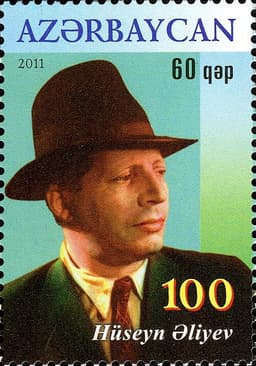
Heydar Aliyev
Politician · Modern
59.0Total

Nikolai Valuev
Politician · Modern
43.6Total
Basic Information
Born
1923
1973
Died
—
—
Era
Modern
Modern
Nationality
Azerbaijan
Russia
Occupation
Politician
Politician
Civilization
Eastern
Western
Score Comparison
Military (10%)
38.3
48.3
Political (20%)
70.0
26.4
Influence (20%)
62.0
54.1
Legacy (20%)
52.0
42.5
Leadership (15%)
78.0
41.5
Strategy (15%)
45.0
43.9
TOTAL
59.0
43.6
Heydar Aliyev — Complete Timeline
1993 AD
Became President of AzerbaijanPolitical Action◆ Major
Heydar Aliyev was elected President of Azerbaijan after a military coup ousted the previous government. He had previously served as a KGB general and First Secretary of the Communist Party of Azerbaijan. His presidency stabilized the country after the chaos of the post-Soviet period and the Nagorno-Karabakh war.
Rise to PowerPost-Soviet TransitionStabilization
Impact: national
1994 AD
Negotiated Ceasefire in Nagorno-KarabakhWar◆ Major
Aliyev brokered a ceasefire agreement with Armenia, ending the active phase of the Nagorno-Karabakh war. The ceasefire left Armenia in control of the disputed region and surrounding territories. Aliyev used the ceasefire to consolidate power and begin rebuilding the Azerbaijani military.
CeasefireNagorno-KarabakhConflict Resolution
Impact: regional
Signed 'Contract of the Century'Political Action◆ Major
Aliyev signed a major oil production sharing agreement with a consortium of international oil companies, known as the 'Contract of the Century.' The deal opened Azerbaijan's oil sector to foreign investment and laid the foundation for the country's economic growth. It was a key element of his economic strategy.
Oil AgreementForeign InvestmentEconomic Development
Impact: globalconstructive
1995 AD
Established Authoritarian RegimePolitical Action◆ Major
Aliyev consolidated authoritarian rule by suppressing political opposition, controlling the media, and rigging elections. He amended the constitution to extend presidential powers and ensure his continued rule. His regime was characterized by nepotism and corruption, but also provided stability.
AuthoritarianismPolitical RepressionCorruption
Impact: nationaldestructive
2003 AD
Appointed Son as Prime MinisterPolitical Action◆ Major
Heydar Aliyev appointed his son Ilham Aliyev as Prime Minister of Azerbaijan, setting the stage for a dynastic succession. Heydar's health was failing, and he stepped down as president later that year, with Ilham winning the subsequent election. This established the Aliyev family's political dynasty.
Dynastic SuccessionPolitical DynastyPower Transfer
Impact: national
Nikolai Valuev — Complete Timeline
2005 AD
Won the WBA heavyweight titleCultural◆ Major
Nikolai Valuev defeated John Ruiz by majority decision in Berlin to win the WBA heavyweight championship. At 7 feet 0 inches and over 300 pounds, he became the tallest and heaviest world champion in boxing history, holding the title until 2007.
BoxingHeavyweightChampion
Impact: globalconstructive
2007 AD
Lost the WBA title to Ruslan ChagaevCultural◆ Major
Valuev lost his WBA heavyweight title to Ruslan Chagaev by majority decision in Stuttgart, Germany. The defeat ended his first title reign and marked a setback in his boxing career, though he later regained the title in 2008.
BoxingDefeatTitle Loss
Impact: globaltragic
2008 AD
Regained the WBA heavyweight titleCultural◆ Major
Valuev defeated John Ruiz again by split decision in Berlin to reclaim the WBA heavyweight title. He held the belt until 2009, when he lost to David Haye by majority decision, after which he retired from boxing.
BoxingHeavyweightComeback
Impact: globalconstructive
2011 AD
Elected to the Russian State DumaPolitical Action
Valuev was elected as a member of the State Duma for the United Russia party, representing the Kemerovo region. He served on the Committee on Physical Culture, Sports, and Youth Affairs, using his fame to support sports legislation and youth programs.
PoliticsDumaUnited Russia
Impact: national
Expert Analysis
Origins
Heydar Aliyev was born on May 10, 1923, in Nakhchivan, Azerbaijan, then part of the Soviet Union. He grew up in a working-class family and studied at the Azerbaijan Industrial Institute. After graduating, he joined the Soviet security services, rising through the ranks of the KGB. His early career was marked by loyalty to the Soviet system, and he became the chairman of the KGB in Azerbaijan in 1967. Aliyev's background was deeply rooted in Soviet bureaucracy and intelligence.
Nikolai Valuev was born on August 21, 1973, in Leningrad (now Saint Petersburg), Russia. He grew up in a working-class family and showed early promise in sports, initially taking up athletics before switching to boxing. Valuev's exceptional height (7 feet 0 inches) and weight (over 300 pounds) made him a natural heavyweight. He turned professional in 1993 and quickly gained a reputation as a powerful puncher.
Rise to Power
Aliyev's rise to power began in the Soviet era. In 1969, he became the First Secretary of the Communist Party of Azerbaijan, effectively the leader of the republic. He held this position until 1982, when he was promoted to First Deputy Premier of the Soviet Union under Yuri Andropov. However, after Mikhail Gorbachev came to power, Aliyev was forced into retirement in 1987 due to corruption allegations. Following the collapse of the Soviet Union, Azerbaijan became independent. In 1993, amid a military coup and war with Armenia, Aliyev was invited back to lead the country. He was elected president in October 1993 with 98.8% of the vote in an election widely seen as flawed.
Valuev's rise to prominence came through boxing. He won the WBA heavyweight title on December 17, 2005, defeating John Ruiz by majority decision in Berlin. At 7 feet 0 inches and 323 pounds, he became the tallest and heaviest champion in history. He successfully defended the title twice before losing to Ruslan Chagaev on April 14, 2007. Valuev regained the WBA title on August 30, 2008, again defeating Ruiz by split decision. He held the belt until November 7, 2009, when he lost to David Haye.
Leadership & Governance
Aliyev's leadership style was authoritarian. He consolidated power by suppressing political opposition, controlling the media, and rigging elections. He amended the constitution to remove term limits and appointed his son Ilham Aliyev as prime minister in 2003, setting the stage for dynastic succession. Aliyev's governance focused on stability and economic development through oil exports. He signed the 'Contract of the Century' in 1994, a $7.4 billion oil production sharing agreement with international companies, which transformed Azerbaijan's economy. However, his regime was marked by corruption and human rights abuses.
Valuev's leadership was primarily as a sports figure, but he also served as a politician. He was elected to the Russian State Duma in 2011 for the United Russia party, representing the Kemerovo region. He served on the Committee on Physical Culture, Sports, and Youth Affairs. As a lawmaker, he focused on sports legislation and youth issues. His political influence was limited compared to Aliyev, scoring 26.4 in political impact versus Aliyev's 70.0.
Triumph & Tragedy
Aliyev's greatest triumph was negotiating the 1994 ceasefire in the Nagorno-Karabakh war, ending active hostilities. He also secured the 'Contract of the Century,' which brought billions in investment and made Azerbaijan a key energy exporter. His tragedy was the loss of Nagorno-Karabakh and surrounding territories to Armenian forces, with about 30,000 deaths and over a million displaced. Additionally, his authoritarian rule stifled democracy and led to a corrupt, dynastic system.
Valuev's triumph was becoming the WBA heavyweight champion twice and being the tallest champion in history. His tragedy was losing his title twice, first to Chagaev and then to Haye, and failing to unify the division. His political career was less impactful, with limited legislative achievements.
Character & Destiny
Aliyev was a shrewd and pragmatic leader, adept at navigating Soviet and post-Soviet politics. His KGB background gave him a secretive and controlling nature. He prioritized stability and his family's hold on power over democratic reforms. This character led to a dynasty that continues today. Historians assess Aliyev as a classic authoritarian who brought stability but at the cost of freedom.
Valuev was known for his physical dominance but also for being a gentle giant outside the ring. He was not a skilled boxer but relied on size and power. His political career was less about ideology and more about celebrity status. His destiny was to be a footnote in boxing history, remembered for his size rather than his skill.
Legacy
Aliyev's legacy is mixed. He is revered in Azerbaijan as a national founder who ended the war and brought oil wealth. However, his authoritarianism and dynastic succession have been criticized. His scores reflect this: Political 70.0, Influence 62.0, Legacy 52.0. The 'Contract of the Century' set Azerbaijan on a path of energy dependency, and his son Ilham continues his policies.
Valuev's legacy is primarily in boxing. He holds records for being the tallest and heaviest champion, but his reign was not considered dominant. His political legacy is minimal, scoring 26.4 in politics and 42.5 in legacy. He is remembered more as a curiosity than a great fighter.
Conclusion
Heydar Aliyev had a greater impact than Nikolai Valuev, as shown by his total score of 59.0 versus Valuev's 43.6. Aliyev shaped a nation's destiny through his political and strategic decisions, while Valuev's influence was confined to sports and a brief political stint. Aliyev's ability to secure a ceasefire, sign major oil deals, and establish a dynasty outweighs Valuev's athletic achievements. Although both had flaws, Aliyev's actions affected millions, securing his place as a significant historical figure.
Rankings
🥇
Heydar AliyevLeader
Mil: 38.3Pol: 70.0Inf: 62.0
59.0
🥈
Nikolai Valuev
Mil: 48.3Pol: 26.4Inf: 54.1
43.6
+15.4 behind
How This Comparison Works
Algorithm
Each figure is scored on 6 dimensions (0—100 scale) based on structured historical data: Military (10%), Political (20%), Influence (20%), Legacy (20%), Leadership (15%), Strategy (15%). The weighted total produces the final ranking.
Data Sources
Scores are computed from structured sub-indicators in the database. Scale factors adjust for era (Ancient ×0.85, Modern ×1.0) and civilization size (Eastern ×1.05, Other ×0.80) to account for differences in population and military scale.
Maximum 3 Figures
Comparisons are limited to 2—3 figures to ensure readability and statistical meaningfulness.
Error Margins
±5 points per dimension — Sub-scores are derived from historical records with inherent uncertainty. Two figures within 5 points on a dimension should be considered roughly equivalent in that area.
Total Score Accuracy
±3 points overall — The weighted combination of 6 dimensions produces a total score with approximately ±3 points of uncertainty. Differences of less than 3 points are not statistically significant— the figures are effectively tied.
Known Limitations
- Historical records are incomplete and uneven across civilizations
- Figures from oral-tradition societies may be underrepresented
- Occupation labels can misclassify multi-role figures
- Scores measure capability and impact, not moral character
- Quantitative scoring is a comparison tool, not absolute truth
Capability Radar
Military (10%) — Battles & Warfare
Battles
5
29
Win Rate
5
33
Expansion
10
37
Political (20%) — Governance & Reform
Reform
70
10
Diplomacy
75
15
Economy
70
10
Influence (20%) — Cultural & Global Reach
Cultural
55
30
Global
55
25
Legacy (20%) — Historical Impact
Historical
60
25
Longevity
50
20
Leadership (15%) — Power & Stability
Tenure
75
20
Stability
65
10
Strategy (15%) — Tactics & Innovation
Strategy
15
39
Tactics
10
43
Reform
20
45
Similar Comparisons
Comments & Discussion
No comments yet. Be the first to share your thoughts!