Loading...
This comparison has not been analyzed yet.
One-time AI generation (~1 minute). Scores and timeline are already available below.
Heungseon Daewongun vs Moise Tshombe
Heungseon Daewongun leads by 3.2 pts · 2 figures compared
…

Heungseon Daewongun
Politician · Modern
48.8Total
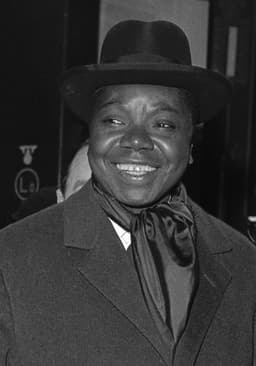
Moise Tshombe
Politician · Modern
45.6Total
Basic Information
Born
1820
1919
Died
1898
1969
Era
Modern
Modern
Nationality
Korea
DR Congo
Occupation
Politician
Politician
Civilization
Eastern
Other
Score Comparison
Military (10%)
13.5
21.2
Political (20%)
61.3
36.5
Influence (20%)
54.9
52.5
Legacy (20%)
46.7
42.5
Leadership (15%)
62.2
58.8
Strategy (15%)
35.3
54.8
TOTAL
48.8
45.6
Heungseon Daewongun — Complete Timeline
1864 AD
Regency for King GojongPolitical Action◆ Major
Heungseon Daewongun became regent for his young son King Gojong, effectively ruling Joseon. He implemented isolationist policies, suppressing Christianity and resisting foreign trade and influence.
RegencyIsolationismJoseon
Impact: national
1865 AD
Construction of Gyeongbokgung PalaceCultural◆ Major
Heungseon Daewongun initiated the reconstruction of Gyeongbokgung Palace, which had been destroyed during the Japanese invasions. The project drained state finances but restored a symbol of royal authority.
PalaceReconstructionArchitecture
Impact: nationalconstructive
1866 AD
French Campaign against KoreaWar◆ Major
In response to the persecution of Catholics, a French naval force attacked Ganghwa Island. Heungseon Daewongun's forces repelled the French, leading to a Korean victory and reinforcing isolationist policies.
FranceGanghwaVictory
Impact: regionalconstructive
Persecution of CatholicsPolitical Action◆ Major
Heungseon Daewongun ordered a widespread persecution of Roman Catholics in Joseon, executing thousands of converts and French missionaries. This led to the French campaign against Korea in 1866.
PersecutionChristianityFrance
Impact: nationaldestructive
Moise Tshombe — Complete Timeline
1960 AD
Declared Katanga SecessionPolitical Action◆ Major
Tshombe declared the independence of the mineral-rich Katanga province from the newly independent DR Congo. This secession triggered the Congo Crisis, with Tshombe's regime backed by Belgian mining interests and mercenaries.
SecessionCongo CrisisKatanga
Impact: regionaldestructive
1964 AD
Became Prime Minister of DR CongoPolitical Action◆ Major
Tshombe was appointed prime minister of the DR Congo by President Kasa-Vubu, tasked with ending the Simba rebellion. His return to national politics was controversial due to his role in the Katanga secession.
Prime MinisterCongo CrisisSimba Rebellion
Impact: national
1969 AD
Exiled and Died in AlgeriaPolitical Action
After being ousted from power, Tshombe went into exile in Spain. He was sentenced to death in absentia for treason. He died in Algeria under disputed circumstances, reportedly from a heart attack or poisoning.
ExileDeathCongo Crisis
Impact: nationaltragic
This comparison has not been analyzed yet.
One-time AI generation (~1 minute). Scores and timeline are already available below.
Rankings
🥇
Heungseon DaewongunLeader
Mil: 13.5Pol: 61.3Inf: 54.9
48.8
🥈
Moise Tshombe
Mil: 21.2Pol: 36.5Inf: 52.5
45.6
+3.2 behind
How This Comparison Works
Algorithm
Each figure is scored on 6 dimensions (0—100 scale) based on structured historical data: Military (10%), Political (20%), Influence (20%), Legacy (20%), Leadership (15%), Strategy (15%). The weighted total produces the final ranking.
Data Sources
Scores are computed from structured sub-indicators in the database. Scale factors adjust for era (Ancient ×0.85, Modern ×1.0) and civilization size (Eastern ×1.05, Other ×0.80) to account for differences in population and military scale.
Maximum 3 Figures
Comparisons are limited to 2—3 figures to ensure readability and statistical meaningfulness.
Error Margins
±5 points per dimension — Sub-scores are derived from historical records with inherent uncertainty. Two figures within 5 points on a dimension should be considered roughly equivalent in that area.
Total Score Accuracy
±3 points overall — The weighted combination of 6 dimensions produces a total score with approximately ±3 points of uncertainty. Differences of less than 3 points are not statistically significant— the figures are effectively tied.
Known Limitations
- Historical records are incomplete and uneven across civilizations
- Figures from oral-tradition societies may be underrepresented
- Occupation labels can misclassify multi-role figures
- Scores measure capability and impact, not moral character
- Quantitative scoring is a comparison tool, not absolute truth
Capability Radar
Military (10%) — Battles & Warfare
Battles
14
25
Win Rate
16
20
Expansion
21
15
Political (20%) — Governance & Reform
Reform
65
25
Diplomacy
30
35
Economy
35
20
Influence (20%) — Cultural & Global Reach
Cultural
40
25
Global
20
30
Legacy (20%) — Historical Impact
Historical
50
35
Longevity
30
20
Leadership (15%) — Power & Stability
Tenure
40
40
Stability
20
15
Strategy (15%) — Tactics & Innovation
Strategy
23
20
Tactics
29
25
Reform
26
10
Similar Comparisons
Comments & Discussion
No comments yet. Be the first to share your thoughts!