Loading...
Henry III vs Napoleon Bonaparte
Napoleon Bonaparte leads by 8.5 pts · 2 figures compared
…
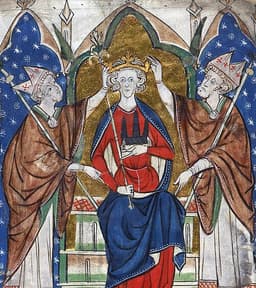
Henry III
Emperor · Medieval
62.4Total

Napoleon Bonaparte
General · Modern
70.9Total
Basic Information
Born
1016
1769
Died
1056
1821
Era
Medieval
Modern
Nationality
Holy Roman Empire
France
Occupation
Emperor
General
Civilization
Western
Western
Score Comparison
Military (10%)
65.0
94.0
Political (20%)
70.0
72.0
Influence (20%)
62.0
40.0
Legacy (20%)
52.0
80.0
Leadership (15%)
72.0
78.0
Strategy (15%)
60.7
90.0
TOTAL
62.4
70.9
Henry III — Complete Timeline
1039 AD
Election as King of GermanyPolitical Action◆ Major
Henry III was elected King of Germany in 1039 upon the death of his father Conrad II. He succeeded without opposition, inheriting a stable realm and continuing Salian rule.
SuccessionSalian Dynasty
Impact: regional
1041 AD
Campaigns in HungaryWar
Henry III led multiple campaigns against Hungary between 1041 and 1044 to enforce imperial suzerainty. He defeated King Samuel Aba at the Battle of M
Hungarian CampaignImperial Expansion
Impact: regional
1046 AD
Coronation as Holy Roman EmperorPolitical Action◆ Major
Pope Clement II crowned Henry III Holy Roman Emperor in Rome on December 25, 1046. This followed Henry's intervention in the papal schism, where he deposed three rival popes and installed Clement II.
CoronationPapal Intervention
Impact: regionalconstructive
Deposition of Three Rival PopesPolitical Action◆ Major
At the Synod of Sutri in December 1046, Henry III deposed Popes Benedict IX, Sylvester III, and Gregory VI, who were competing for the papacy. He then appointed Clement II, asserting imperial control over the Church.
Papal ReformImperial Authority
Impact: regionalconstructive
1049 AD
Council of MainzCultural
Henry III convened the Council of Mainz in 1049, which addressed Church reform, including simony and clerical marriage. The council strengthened the alliance between the Empire and the reform papacy under Leo IX.
Church ReformCouncil
Impact: regionalconstructive
Napoleon Bonaparte — Complete Timeline
1799 AD
Coup of 18 BrumaireOther◆ Major
Napoleon Bonaparte, with support from his brother Lucien and key political figures, overthrew the Directory in a bloodless coup. He established the Consulate with himself as First Consul, effectively becoming the ruler of France. This event ended the French Revolution's most unstable period.
French RevolutionCoupRise to Power
Impact: regional
1804 AD
Promulgation of the Napoleonic CodeOther◆ Major
Napoleon enacted the Civil Code of the French, known as the Napoleonic Code, a comprehensive set of laws that replaced the fragmented feudal legal systems. The code established legal equality, protected property rights, and secularized law. It became the basis for legal systems in many European and world countries.
Legal ReformNapoleonic CodeCivil Law
Impact: globalconstructive
1805 AD
Battle of AusterlitzWar◆ Major
Napoleon's Grande Arm
Napoleonic WarsBattleDecisive Victory
Impact: global
1812 AD
Invasion of RussiaWar◆ Major
Napoleon led the Grande Arm
Napoleonic WarsInvasionDisaster
Impact: globaldestructive
1815 AD
Battle of WaterlooWar◆ Major
Napoleon's French army was defeated by the combined forces of the Duke of Wellington's Anglo-Allied army and Gebhard Leberecht von Bl
Napoleonic WarsBattleFinal Defeat
Impact: globaldestructive
Expert Analysis
henry-iii-vs-napoleon-bonaparte
# The Emperor and the Conqueror: Two Visions of Power in the West
On Christmas Day 1046, a thirty-year-old German king knelt in St. Peter’s Basilica in Rome to receive the imperial crown from a pope he had personally chosen. Seven hundred and fifty-eight years later, on the same spot, a thirty-five-year-old Corsican general would seize that crown from the pope’s hands and place it on his own head. The contrast between Henry III and Napoleon Bonaparte is not merely one of ceremony—it reveals two fundamentally different conceptions of power, two eras, and two destinies that could hardly have diverged more sharply.
Origins
Henry III was born into certainty. His father, Conrad II, had founded the Salian dynasty of the Holy Roman Empire, and young Henry grew up in the shadow of a throne that was his by blood and divine right. The medieval world into which he was born in 1016 was one of sacred hierarchies, where kings ruled by God’s grace and the Church provided the only universal framework for authority. Henry learned statecraft as a birthright, and his education was that of a Christian prince: warfare, administration, and piety intertwined.
Napoleon Bonaparte, born in 1769 on the island of Corsica, one year after it passed from Genoa to French control, inherited nothing but ambition. His family was minor nobility, but his world was that of the Enlightenment, where old certainties were crumbling. The French Revolution, which erupted when he was twenty, would shatter the very concept of hereditary rule. Napoleon’s Corsican accent marked him as an outsider in French society, and his rise would depend not on birth but on genius—and on the chaos that made genius possible.
Rise to Power
Henry III’s path was laid before him. Elected King of Germany in 1039 upon his father’s death, he succeeded without opposition. The machinery of medieval kingship was slow and conservative; a king inherited alliances, obligations, and enemies. Henry’s early campaigns in Hungary between 1041 and 1044 were not bids for glory but assertions of traditional imperial suzerainty. He defeated King Samuel Aba and restored Hungary to nominal imperial control, but these were wars of consolidation, not conquest.
Napoleon’s rise was a rocket trajectory. A young artillery officer during the Revolution, he seized his moment at the Siege of Toulon in 1793, where his tactical brilliance drove the British from the harbor. By 1796 he commanded the Army of Italy, and his lightning campaign against the Austrians made him a national hero. Where Henry inherited a throne, Napoleon conquered a reputation. The Directory’s corruption and incompetence provided the opening; his coup of 18 Brumaire in 1799 made him First Consul, and by 1804 he was Emperor.
Leadership & Governance
The differences in their rule are stark. Henry III governed through the Church. His defining act came in 1046 at the Synod of Sutri, where he deposed three rival popes—Benedict IX, Sylvester III, and Gregory VI—who had turned the papacy into a spectacle of corruption. Henry appointed Clement II, a German reformer, and received the imperial crown. For a decade, he controlled the papacy directly, using it to push Church reform, convening the Council of Mainz in 1049 to combat simony and clerical marriage. His power was moral and institutional, rooted in the medieval synthesis of throne and altar.
Napoleon governed through law and war. The Napoleonic Code, promulgated in 1804, standardized French law across his empire, abolishing feudal privileges and establishing secular principles of property and civil rights. Where Henry reformed the Church, Napoleon subordinated it—his Concordat of 1801 with the Pope gave the state control over ecclesiastical appointments. His military genius, scoring 94 in strategy, created the Grande Armée, which marched from Madrid to Moscow. He redrew the map of Europe, installing his brothers on thrones and crushing the Holy Roman Empire that Henry had once led.
Triumph & Tragedy
Henry III’s triumph was the apogee of medieval imperial power. In 1046, he stood at the summit of Christendom, the arbiter of popes and kings. His tragedy was that this power was ephemeral. He died in 1056 at age thirty-nine, leaving a six-year-old son, Henry IV. The papacy, freed from imperial control, would soon launch the Investiture Controversy, humbling his son at Canossa. Henry III’s empire was a personal achievement that could not outlast him.
Napoleon’s triumphs were spectacular—Austerlitz in 1805, Jena in 1806, the destruction of the Prussian army. His tragedy was hubris. The invasion of Russia in 1812 cost half a million men. Exiled to Elba in 1814, he returned for the Hundred Days, only to meet final defeat at Waterloo in 1815. His political score of 75 reflects a ruler who could conquer but could not consolidate; his empire collapsed as quickly as it rose.
Character & Destiny
Henry III was a man of his age: devout, measured, and conservative. He believed in order, hierarchy, and reform from within. His leadership score of 77 reflects a ruler who commanded respect through piety and justice, not terror. He did not seek to destroy the old world but to purify it.
Napoleon was a man of the future: restless, brilliant, and ruthless. His military score of 94 and strategy of 93 reveal a mind that saw war as an art of annihilation. He believed in merit, not birth, and his marshals rose from the ranks. But his character—arrogant, impatient, insatiable—drove him to overreach. “I grew up on the field of battle,” he once said, “and a man such as I cares little for the lives of a million men.”
Legacy
Henry III’s legacy is subtle but profound. His intervention at Sutri paved the way for the Gregorian Reforms that transformed the medieval Church. His son’s humiliation at Canossa became a symbol of the limits of imperial power. His reign is remembered by historians, not the public—a score of 66.9 in legacy reflects a name known to specialists alone.
Napoleon’s legacy is inescapable. His legal code shapes civil law across Europe and beyond. His military campaigns are studied in every war college. His influence score of 82 and legacy of 78 reflect a man who changed the world—for better and worse. The Congress of Vienna that followed his defeat redrew Europe for a century, but the forces he unleashed—nationalism, meritocracy, modern warfare—could not be contained.
Conclusion
Standing in St. Peter’s on Christmas 1046, Henry III knelt before a pope he had appointed, embodying the medieval ideal that power flows from God through Church to Emperor. Standing in the same basilica in December 1804, Napoleon crowned himself, embodying the modern ideal that power flows from the self. One man inherited a world and tried to perfect it; the other shattered a world and tried to remake it. Both failed, but their failures illuminate the different weights of history. Henry III’s world of sacred order was already passing when he died; Napoleon’s world of secular ambition is still our own.
Rankings
🥇
Napoleon BonaparteLeader
Mil: 94.0Pol: 72.0Inf: 40.0
70.9
🥈
Henry III
Mil: 65.0Pol: 70.0Inf: 62.0
62.4
+8.5 behind
How This Comparison Works
Algorithm
Each figure is scored on 6 dimensions (0—100 scale) based on structured historical data: Military (10%), Political (20%), Influence (20%), Legacy (20%), Leadership (15%), Strategy (15%). The weighted total produces the final ranking.
Data Sources
Scores are computed from structured sub-indicators in the database. Scale factors adjust for era (Ancient ×0.85, Modern ×1.0) and civilization size (Eastern ×1.05, Other ×0.80) to account for differences in population and military scale.
Maximum 3 Figures
Comparisons are limited to 2—3 figures to ensure readability and statistical meaningfulness.
Error Margins
±5 points per dimension — Sub-scores are derived from historical records with inherent uncertainty. Two figures within 5 points on a dimension should be considered roughly equivalent in that area.
Total Score Accuracy
±3 points overall — The weighted combination of 6 dimensions produces a total score with approximately ±3 points of uncertainty. Differences of less than 3 points are not statistically significant— the figures are effectively tied.
Known Limitations
- Historical records are incomplete and uneven across civilizations
- Figures from oral-tradition societies may be underrepresented
- Occupation labels can misclassify multi-role figures
- Scores measure capability and impact, not moral character
- Quantitative scoring is a comparison tool, not absolute truth
Capability Radar
Military (10%) — Battles & Warfare
Battles
65
95
Win Rate
70
90
Expansion
60
95
Political (20%) — Governance & Reform
Reform
80
95
Diplomacy
85
80
Economy
70
85
Influence (20%) — Cultural & Global Reach
Cultural
55
85
Global
55
90
Legacy (20%) — Historical Impact
Historical
70
95
Longevity
60
90
Leadership (15%) — Power & Stability
Tenure
75
85
Stability
70
70
Strategy (15%) — Tactics & Innovation
Strategy
65
95
Tactics
60
98
Reform
55
92
Similar Comparisons
Comments & Discussion
CrownCrusher866/17/2026
Henry III may have had divine right, but he was basically a medieval yes-man who let the Church dictate his every move. Napoleon took power through sheer grit and brilliance—conquering half of Europe while Henry sat around anointing himself with holy oil. If you’re going to respect a leader, respect the one who actually earned his crown on the battlefield, not one who inherited it while kneeling to a puppet pope.
数据拆解师6/17/2026
数据不会说谎:亨利三世统治26年,领土扩张聊胜于无;拿破仑十年内征服了600,000平方英里,法典体系至今影响全球。更别提军费效率——拿破仑每支出1法郎平均换回2.5法郎战争红利,亨利三世却因慷慨馈赠教会导致国库空虚。所谓“神圣皇帝”不过是部活的赤字机器。
ClassicsProf_Athena6/17/2026
The real tragedy is that Henry III had potential but squandered it on piety, while Napoleon’s secular vision actually advanced civilization. Look at the Corpus Juris Civilis revival under Napoleon’s Code—that’s Hellenistic rationality reimagined. Henry’s reign was stuck in feudal mud, fighting over bishoprics. Napoleon gave Europe a blueprint for law and meritocracy. One man looked backward, the other forward. I’ll take the Corsican over the caretaker any day.
草鞋史官6/17/2026
说亨利三世“统一”,不过是对德意志诸侯的疲惫妥协;拿破仑却真刀真枪打出了意大利、荷兰、西伐利亚等卫星国。1273年亨利三世死后帝国立刻陷入大空位期,而1815年拿破仑倒台后,他的行政体系仍在法国运行了半个世纪。谁留下的脚印更深?看地图上那条莱茵同盟的残影就明白了。
Revisionist_Rebel6/17/2026
Stop romanticizing the conqueror. Napoleon’s “meritocracy” was a sham—he crowned himself emperor while his brothers got thrones. Henry III, at least, understood power flows through institutions, not personality cults. The Salian dynasty survived because Henry compromised with nobles; Napoleon’s empire collapsed because he couldn’t stop feeding his ego. Real legacy isn’t body counts or statues—it’s sustainable governance. Henry wins that race easily.