Loading...
Henry III of England vs Napoleon Bonaparte
Napoleon Bonaparte leads by 19.6 pts · 2 figures compared
…
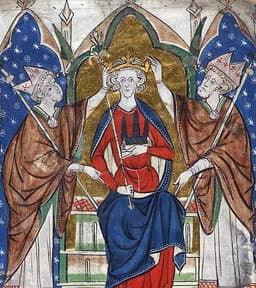
Henry III of England
Emperor · Medieval
51.3Total

Napoleon Bonaparte
General · Modern
70.9Total
Basic Information
Born
1207
1769
Died
1272
1821
Era
Medieval
Modern
Nationality
England
France
Occupation
Emperor
General
Civilization
Western
Western
Score Comparison
Military (10%)
50.0
94.0
Political (20%)
37.9
72.0
Influence (20%)
56.4
40.0
Legacy (20%)
47.5
80.0
Leadership (15%)
74.0
78.0
Strategy (15%)
35.7
90.0
TOTAL
51.3
70.9
Henry III of England — Complete Timeline
1245 AD
Rebuilding of Westminster AbbeyCultural◆ Major
Henry III began the rebuilding of Westminster Abbey in the Gothic style, dedicating it to Edward the Confessor. This project became a major architectural achievement and a symbol of royal piety and power.
ArchitectureReligionWestminster
Impact: nationalconstructive
1258 AD
Provisions of OxfordPolitical Action◆ Major
Under baronial pressure, Henry III agreed to the Provisions of Oxford, which established a council of barons to oversee royal governance. This reform limited royal power and created a precedent for parliamentary oversight.
ReformBaronial CouncilParliament
Impact: nationalconstructive
1264 AD
Second Barons' WarWar◆ Major
Henry III faced the Second Barons' War led by Simon de Montfort. He was captured at the Battle of Lewes, but later restored after the royalist victory at the Battle of Evesham, where de Montfort was killed.
Civil WarSimon de MontfortBattle
Impact: nationaldestructive
1265 AD
Battle of EveshamWar◆ Major
Royalist forces under Prince Edward defeated Simon de Montfort's army at the Battle of Evesham. De Montfort was killed, ending the baronial rebellion and restoring Henry III's full authority.
BattleBaronial RevoltRoyalist Victory
Impact: national
1266 AD
Dictum of KenilworthPolitical Action
Henry III issued the Dictum of Kenilworth, a compromise that allowed rebel barons to reclaim their lands by paying fines. This helped reconcile the kingdom after the Second Barons' War.
ReconciliationCompromise
Impact: nationalconstructive
Napoleon Bonaparte — Complete Timeline
1799 AD
Coup of 18 BrumaireOther◆ Major
Napoleon Bonaparte, with support from his brother Lucien and key political figures, overthrew the Directory in a bloodless coup. He established the Consulate with himself as First Consul, effectively becoming the ruler of France. This event ended the French Revolution's most unstable period.
French RevolutionCoupRise to Power
Impact: regional
1804 AD
Promulgation of the Napoleonic CodeOther◆ Major
Napoleon enacted the Civil Code of the French, known as the Napoleonic Code, a comprehensive set of laws that replaced the fragmented feudal legal systems. The code established legal equality, protected property rights, and secularized law. It became the basis for legal systems in many European and world countries.
Legal ReformNapoleonic CodeCivil Law
Impact: globalconstructive
1805 AD
Battle of AusterlitzWar◆ Major
Napoleon's Grande Arm
Napoleonic WarsBattleDecisive Victory
Impact: global
1812 AD
Invasion of RussiaWar◆ Major
Napoleon led the Grande Arm
Napoleonic WarsInvasionDisaster
Impact: globaldestructive
1815 AD
Battle of WaterlooWar◆ Major
Napoleon's French army was defeated by the combined forces of the Duke of Wellington's Anglo-Allied army and Gebhard Leberecht von Bl
Napoleonic WarsBattleFinal Defeat
Impact: globaldestructive
Expert Analysis
henry-iii-of-england-vs-napoleon-bonaparte
# The Emperor and the King: Two Visions of Power
On a June morning in 1815, Napoleon Bonaparte watched his Imperial Guard march toward the ridge of Mont-Saint-Jean, their bearskin caps silhouetted against the Belgian sky. He had staked everything on this single hammer blow. Six hundred miles away and six centuries earlier, another ruler had faced his own moment of truth. Henry III of England, captured by his own barons at the Battle of Lewes, sat in humiliating captivity while rebels dictated the terms of his kingdom. One man commanded the most feared army in Europe; the other could barely command his own court. Yet both believed themselves chosen by God and history. What separated them was not ambition—both had that in abundance—but the raw materials of their eras, the nature of power in their time, and the fatal interplay between character and circumstance.
Origins
Napoleon Bonaparte was born in 1769 on the rocky island of Corsica, a place that had been French for barely a year. His family were minor nobility, speaking Italian-accented French, outsiders in a nation that would one day bow to him. The French Revolution shattered the old world just as he came of age, creating opportunities unimaginable under the Bourbon monarchy. A young artillery officer could rise not by birth but by brilliance. Napoleon’s Corsican resentment of French authority paradoxically fueled his desire to master it.
Henry III inherited the English throne at age nine in 1216, during the chaos of the First Barons’ War. His father, King John, had died disgraced, having lost the crown jewels in the Wash and signed Magna Carta under duress. Young Henry was crowned with a simple golden circlet—the real crown had been lost—in Gloucester, not Westminster. His regents, William Marshal and Hubert de Burgh, rebuilt the kingdom from ruin. Henry grew up in a world where royal authority was fragile, where the memory of civil war was fresh, and where the barons believed they had the right to hold the king accountable.
Rise to Power
Napoleon’s ascent was a rocket trajectory. In 1793, at age twenty-four, he drove the British out of Toulon with a brilliant artillery placement. By 1796, he commanded the Army of Italy, where his lightning campaigns forced Austria to sue for peace. His 1798 Egyptian expedition, though ultimately a strategic failure, made him a legend. Returning to a France weary of revolutionary chaos, he seized power in the coup of 18 Brumaire in 1799. He was thirty years old. Every step was earned by victory, by audacity, by the cold calculation that risk was the price of greatness.
Henry III grew into power slowly, painfully. He assumed personal rule in 1227 at age twenty, but his early reign was a series of disastrous foreign adventures. His 1230 campaign in France failed; his 1242 expedition at Taillebourg ended in humiliation. Henry was no coward—he fought at the Battle of Lewes with personal courage—but he lacked the military genius that defined Napoleon. His power came not from conquest but from the slow, grinding work of patronage, marriage alliances, and the careful management of fractious nobles. In the medieval world, a king could not simply conquer; he had to persuade, bargain, and sometimes beg.
Leadership & Governance
Here the contrast is stark. Napoleon ruled through the Napoleonic Code (1804), a legal system that enshrined meritocracy, protected property, and centralized authority. He created the Bank of France, reformed education, and built roads and canals. His governance was efficient, rational, and utterly dependent on his personal will. He appointed prefects who answered directly to him, suppressed dissent, and controlled the press. When he conquered a territory, he imposed French law, French administration, and French culture. It was empire as a machine.
Henry III governed through the medieval apparatus of counsel and consent. The Provisions of Oxford (1258) forced him to accept a council of fifteen barons who would oversee royal appointments and finances. It was a constitutional revolution—the first time in English history that a king’s power was formally limited by written agreement. Henry resisted, fought, and eventually regained authority, but the principle survived. His rebuilding of Westminster Abbey (beginning in 1245) was his greatest cultural achievement, a Gothic masterpiece dedicated to Edward the Confessor that would house English coronations for centuries. But his governance was reactive, defensive, shaped by the constant need to negotiate with men who held swords and castles.
Triumph & Tragedy
Napoleon’s greatest moment was Austerlitz, December 2, 1805, where he destroyed the combined armies of Russia and Austria in a single day. “I have fought sixty battles,” he later said, “and I have learned nothing that I did not know at Austerlitz.” His tragedy was Moscow, 1812, where the Russian winter swallowed his Grande Armée—over 400,000 men lost. Then came Leipzig (1813), exile to Elba, and finally Waterloo (1815), where his genius met the Duke of Wellington’s grim defense and the Prussian arrival that sealed his fate.
Henry III’s triumph was the restoration of royal authority after the Second Barons’ War. At the Battle of Evesham (1265), his son Prince Edward crushed Simon de Montfort’s rebellion. De Montfort was killed, his body mutilated. Henry returned to London, his throne secure. But his tragedy was the war itself—the humiliation of capture at Lewes (1264), the sight of his kingdom torn apart by men who had once sworn fealty to him. Unlike Napoleon, Henry died in his bed (1272), having reigned fifty-six years. But he died knowing his son would be a greater king.
Character & Destiny
Napoleon was a creature of the Enlightenment and the Revolution—rational, ambitious, and utterly convinced of his own destiny. “Impossible is a word to be found only in the dictionary of fools,” he declared. His character drove him to ever-greater gambles, until the odds finally turned against him. He could not stop because he could not imagine stopping. His destiny was to burn bright and fast, to remake Europe in his image, and then to fall.
Henry III was a medieval man of deep piety and stubbornness. He wept easily, commissioned beautiful art, and quarreled with his barons over trivial matters of protocol. He was not a military genius, but he was a survivor. His character—pious, persistent, politically clumsy—shaped a reign of slow adaptation rather than dramatic transformation. He preserved the monarchy through compromise and patience, where Napoleon would have charged.
Legacy
Napoleon left the Napoleonic Code, the model of the modern state, and the legend of the self-made emperor. His influence is everywhere in modern Europe—from the metric system to the structure of French government. But his legacy is also a warning: genius unchecked by wisdom leads to ruin.
Henry III left Westminster Abbey, one of the great buildings of the world, and the precedent of constitutional limits on royal power. The Provisions of Oxford were overturned, but their spirit lived on in the English Parliament. He was a mediocre king who presided over a transformative century, a man who lost battles but helped birth a system that would outlast empires.
Conclusion
Standing at Waterloo, Napoleon asked his generals, “What would I not give to have Wellington’s army for an hour?” Henry III, captured at Lewes, might have asked the same of his own barons. Both men wanted what every ruler wants: to command, to endure, to be remembered. Napoleon seized the world and lost it. Henry held his kingdom and passed it on. In the end, the question is not who was greater—the scores speak to that—but what each reveals about the nature of power. Napoleon shows us its terrible beauty, its intoxicating danger. Henry shows us its patience, its compromises, its quiet victories. History needs both the emperor and the king.
Rankings
🥇
Napoleon BonaparteLeader
Mil: 94.0Pol: 72.0Inf: 40.0
70.9
🥈
Henry III of England
Mil: 50.0Pol: 37.9Inf: 56.4
51.3
+19.6 behind
How This Comparison Works
Algorithm
Each figure is scored on 6 dimensions (0—100 scale) based on structured historical data: Military (10%), Political (20%), Influence (20%), Legacy (20%), Leadership (15%), Strategy (15%). The weighted total produces the final ranking.
Data Sources
Scores are computed from structured sub-indicators in the database. Scale factors adjust for era (Ancient ×0.85, Modern ×1.0) and civilization size (Eastern ×1.05, Other ×0.80) to account for differences in population and military scale.
Maximum 3 Figures
Comparisons are limited to 2—3 figures to ensure readability and statistical meaningfulness.
Error Margins
±5 points per dimension — Sub-scores are derived from historical records with inherent uncertainty. Two figures within 5 points on a dimension should be considered roughly equivalent in that area.
Total Score Accuracy
±3 points overall — The weighted combination of 6 dimensions produces a total score with approximately ±3 points of uncertainty. Differences of less than 3 points are not statistically significant— the figures are effectively tied.
Known Limitations
- Historical records are incomplete and uneven across civilizations
- Figures from oral-tradition societies may be underrepresented
- Occupation labels can misclassify multi-role figures
- Scores measure capability and impact, not moral character
- Quantitative scoring is a comparison tool, not absolute truth
Capability Radar
Military (10%) — Battles & Warfare
Battles
25
95
Win Rate
20
90
Expansion
10
95
Political (20%) — Governance & Reform
Reform
40
95
Diplomacy
30
80
Economy
30
85
Influence (20%) — Cultural & Global Reach
Cultural
50
85
Global
30
90
Legacy (20%) — Historical Impact
Historical
45
95
Longevity
40
90
Leadership (15%) — Power & Stability
Tenure
80
85
Stability
25
70
Strategy (15%) — Tactics & Innovation
Strategy
20
95
Tactics
15
98
Reform
10
92
Similar Comparisons
Comments & Discussion
CorsicanThunder6/17/2026
Comparing Henry III to Napoleon is like comparing a pond to a tidal wave. Napoleon's rise from Corsican outsider to Emperor through sheer military genius—like Austerlitz or the astonishing 1796 Italian campaign—rewrote the rules of power. Henry inherited a shaky throne as a child and spent his reign bickering with barons. Both wanted control, but Napoleon earned it through conquest; Henry fumbled it through weakness. Give me the self-made titan over a birthright squanderer any day.