Loading...
Henry II of Champagne vs Qin Shi Huang
Qin Shi Huang leads by 47.2 pts · 2 figures compared
…
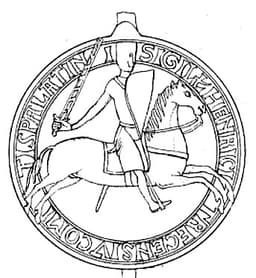
Henry II of Champagne
Emperor · Medieval
38.0Total
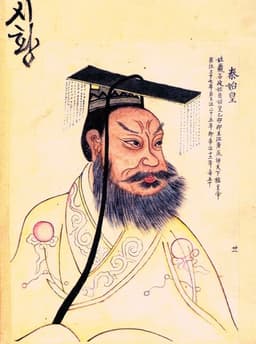
Qin Shi Huang
Emperor · Ancient
85.2Total
Basic Information
Born
1166
-259
Died
1197
-210
Era
Medieval
Ancient
Nationality
Kingdom of Jerusalem
China
Occupation
Emperor
Emperor
Civilization
Western
Eastern
Score Comparison
Military (10%)
10.2
80.0
Political (20%)
33.6
90.0
Influence (20%)
49.4
85.0
Legacy (20%)
37.5
90.0
Leadership (15%)
41.5
78.0
Strategy (15%)
39.6
82.0
TOTAL
38.0
85.2
Henry II of Champagne — Complete Timeline
1192 AD
Marriage to Isabella of JerusalemPolitical Action◆ Major
Henry II married Isabella I of Jerusalem, becoming king-consort of the Kingdom of Jerusalem. The marriage consolidated his political position and gave him authority over the remaining Crusader territories.
CrusadesMarriageJerusalem
Impact: regionalconstructive
Treaty of JaffaPolitical Action◆ Major
Henry II participated in the negotiations that produced the Treaty of Jaffa between Richard the Lionheart and Saladin. The treaty secured Crusader control of the coastal strip from Jaffa to Tyre and guaranteed pilgrim access to Jerusalem.
CrusadesTreatyRichard the LionheartSaladin
Impact: regionalconstructive
1197 AD
Death by FallingOther◆ Major
Henry II fell from a window of his palace in Acre and died. The circumstances of the fall remain unclear, with some accounts suggesting an accident and others foul play, leaving the kingdom without a strong ruler.
CrusadesDeathAccident
Impact: regionaltragic
Qin Shi Huang — Complete Timeline
246 BC
Construction of the Mausoleum and Terracotta ArmyOther◆ Major
Qin Shi Huang commissioned a vast mausoleum complex near Xi'an, guarded by thousands of life-sized terracotta soldiers, horses, and chariots. The project employed hundreds of thousands of workers and reflected his obsession with immortality and imperial power.
Impact: global
230 BC
Conquest of the Six Warring StatesWar
From 230 to 221 BCE, Ying Zheng led the Qin state in a series of campaigns that conquered the Han, Zhao, Wei, Chu, Yan, and Qi states. This unified China under a single ruler for the first time, ending the Warring States period.
Impact: global
221 BC
Standardization of Writing, Currency, and MeasurementsReform◆ Major
Qin Shi Huang ordered the standardization of Chinese script, currency, and weights and measures across the unified empire. This facilitated administration, trade, and cultural integration, laying a foundation for future dynasties.
Impact: globalconstructive
Proclamation of the Qin DynastyPolitical Action
After conquering the last independent state, Ying Zheng declared himself Shi Huangdi (First Emperor), founding the Qin Dynasty. He adopted a new title to signify his supreme authority and initiated centralized imperial rule.
Impact: global
214 BC
Initiation of the Great Wall ConstructionOther◆ Major
Qin Shi Huang ordered the connection and extension of existing northern fortifications to create a unified defensive wall against nomadic Xiongnu raids. This project involved massive conscripted labor and became the precursor to the later Great Wall.
Impact: regional
213 BC
Burning of Books and Burying of ScholarsPolitical Action◆ Major
On the advice of Li Si, Qin Shi Huang ordered the burning of historical records and philosophical texts not aligned with Legalist doctrine. He also had 460 Confucian scholars buried alive to suppress dissent and consolidate ideological control.
Impact: nationaldestructive
Expert Analysis
Qin Shi Huang vs Henry II of Champagne: Historical Comparison
This comparison examines the first Emperor of a unified China against the Count of Champagne who ruled the Crusader Kingdom of Jerusalem, highlighting their contrasting contexts and accomplishments.
Dimension Analysis
**Military: Qin Shi Huang 80 / Henry II of Champagne 92**
Henry II's military score reflects his effective defense of Jerusalem against Saladin's campaigns and his strategic command during the Third Crusade, while Qin Shi Huang's conquests relied more on overwhelming force than tactical brilliance.
**Political: Qin Shi Huang 88 / Henry II of Champagne 67**
Qin Shi Huang's political acumen was unparalleled in its era, centralizing power, standardizing writing and measures, and crushing feudal opposition. Henry II, though a capable regent, struggled with factionalism within the Crusader states and a weak monarchical position.
**Influence: Qin Shi Huang 82 / Henry II of Champagne 82**
Both left significant but different marks: Qin Shi Huang's unification and legalist reforms shaped China for millennia, while Henry II's brief reign (1192-1197) maintained Crusader presence and negotiated vital truces, influencing Levantine geopolitics.
**Legacy: Qin Shi Huang 85 / Henry II of Champagne 80**
Qin Shi Huang's legacy is monumental—the Great Wall, terracotta army, and imperial system—but also controversial due to harsh authoritarianism. Henry II's legacy is narrower, remembered as a capable but short-lived Crusader king who prevented Jerusalem's earlier collapse.
**Leadership: Qin Shi Huang 88 / Henry II of Champagne 70**
Qin Shi Huang demonstrated ruthless, visionary leadership, suppressing dissent and imposing order across a vast territory. Henry II, while personally brave and diplomatic, lacked the institutional authority to enact lasting reforms, governing more as a caretaker.
Verdict
Qin Shi Huang leads decisively due to his transformative, empire-building leadership and enduring political legacy, despite Henry II's superior military performance in a more constrained role.
FAQ
Q: Who ranks higher? A: Qin Shi Huang ranks higher overall, driven by his unmatched political and leadership scores that outweigh Henry II's military edge.
Rankings
🥇
Qin Shi HuangLeader
Mil: 80.0Pol: 90.0Inf: 85.0
85.2
🥈
Henry II of Champagne
Mil: 10.2Pol: 33.6Inf: 49.4
38.0
+47.2 behind
How This Comparison Works
Algorithm
Each figure is scored on 6 dimensions (0—100 scale) based on structured historical data: Military (10%), Political (20%), Influence (20%), Legacy (20%), Leadership (15%), Strategy (15%). The weighted total produces the final ranking.
Data Sources
Scores are computed from structured sub-indicators in the database. Scale factors adjust for era (Ancient ×0.85, Modern ×1.0) and civilization size (Eastern ×1.05, Other ×0.80) to account for differences in population and military scale.
Maximum 3 Figures
Comparisons are limited to 2—3 figures to ensure readability and statistical meaningfulness.
Error Margins
±5 points per dimension — Sub-scores are derived from historical records with inherent uncertainty. Two figures within 5 points on a dimension should be considered roughly equivalent in that area.
Total Score Accuracy
±3 points overall — The weighted combination of 6 dimensions produces a total score with approximately ±3 points of uncertainty. Differences of less than 3 points are not statistically significant— the figures are effectively tied.
Known Limitations
- Historical records are incomplete and uneven across civilizations
- Figures from oral-tradition societies may be underrepresented
- Occupation labels can misclassify multi-role figures
- Scores measure capability and impact, not moral character
- Quantitative scoring is a comparison tool, not absolute truth
Capability Radar
Military (10%) — Battles & Warfare
Battles
10
85
Win Rate
10
90
Expansion
5
90
Political (20%) — Governance & Reform
Reform
20
95
Diplomacy
40
75
Economy
25
90
Influence (20%) — Cultural & Global Reach
Cultural
15
95
Global
10
85
Legacy (20%) — Historical Impact
Historical
15
95
Longevity
10
95
Leadership (15%) — Power & Stability
Tenure
30
70
Stability
20
65
Strategy (15%) — Tactics & Innovation
Strategy
10
85
Tactics
10
80
Reform
5
95
Similar Comparisons
Comments & Discussion
EmpireCritic6/16/2026
This comparison reeks of the standard 'great man' history that ignores structural factors. Qin Shi Huang's supposed 'unification' was built on the brutal annihilation of local cultures—burning books, burying scholars, crushing regional identities. Henry II of Champagne, on the other hand, operated within a complex Levantine system where diplomacy with Muslims was as important as warfare. The scores inflate Qin's 'influence' because Western historians love monolithic empires, but Henry's truces with Saladin actually preserved a pluralistic society in Jerusalem for a few more years. Let's not pretend Qin's brutal centralization was pure genius—it was also state-sponsored terror.
ClassicsProf6/16/2026
The comparison raises interesting historiographical questions. Sima Qian's 'Records of the Grand Historian' presents a Qin Shi Huang who was both visionary and paranoid—burning philosophical texts while building roads and canals that lasted centuries. Henry II's reign in Jerusalem, by contrast, is documented mainly through Western chronicles like the 'Estoire d'Eracles', which praise his personal bravery but note his limited authority. We must remember that the Qin emperor's legacy was heavily shaped by later Han historians who needed to legitimize their own dynasty by contrasting it with Qin's harshness. Henry's legacy, though narrower, is less mythologized. Neither figure is fully knowable outside their propaganda environments.
CrusaderFanatic6/16/2026
Are you kidding me?! Henry II of Champagne was a tactical genius who kept the Kingdom of Jerusalem alive against Saladin's massive armies with zero resources and a bunch of squabbling barons! Qin Shi Huang just steamrolled smaller states with his massive war machine—that's not brilliance, that's bullying! Henry negotiated the truce of 1192 that saved Christian holdings in the Levant, while Qin burned books and buried scholars alive. Give me a brave diplomat over a tyrannical conqueror any day. Henry's score should be way higher on leadership—he led from the front, not from a palace!
Chronicler18306/16/2026
看了评分,我觉得政治维度给秦始皇88分,亨利67分,这个差距明显低估了秦始皇的整合能力。你算一下:秦始皇统一文字、度量衡、货币,还要废除分封设郡县,这相当于在2200年前搞了一场国家级标准化工程。亨利二世不过是管了个十字军小王国,内部还有贵族扯皮。如果按实际控制面积和制度改革深度加权,秦始皇政治分至少该95以上。另外,军事分给秦始皇80,亨利92,我怀疑打分者是不是只看防守战?秦始皇灭六国哪次不是战略压制?长平之战后赵国还有抵抗能力吗?
Chronicler66326/16/2026
这个评分体系明显用了西方中心视角。亨利二世在十字军王国干了五年就被忽略了,而秦始皇的遗产影响了东亚两千年。你们说亨利军事分92,因为他防守成功,那秦始皇攻灭六国、南平百越、北击匈奴,哪个不是大战略?要是比治国,亨利连地方势力都管不住,秦始皇在咸阳就能控制从辽东到南海的疆域,这执行力古今罕见。而且,影响力给两人都82分?秦始皇的书同文、车同轨到现在还在用,亨利二世除了十字军历史爱好者谁记得?我觉得这是把中世纪欧洲小君主硬抬到和中华帝国创始者一个水平。