Loading...
Henry II of Champagne vs Julius Caesar
Julius Caesar leads by 44.8 pts · 2 figures compared
…
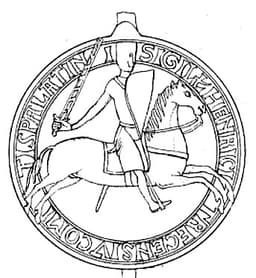
Henry II of Champagne
Emperor · Medieval
38.0Total

Julius Caesar
General · Ancient
82.8Total
Basic Information
Born
1166
-100
Died
1197
-44
Era
Medieval
Ancient
Nationality
Kingdom of Jerusalem
Roman Republic
Occupation
Emperor
General
Civilization
Western
Western
Score Comparison
Military (10%)
10.2
88.0
Political (20%)
33.6
78.0
Influence (20%)
49.4
85.0
Legacy (20%)
37.5
82.0
Leadership (15%)
41.5
80.0
Strategy (15%)
39.6
85.0
TOTAL
38.0
82.8
Henry II of Champagne — Complete Timeline
1192 AD
Marriage to Isabella of JerusalemPolitical Action◆ Major
Henry II married Isabella I of Jerusalem, becoming king-consort of the Kingdom of Jerusalem. The marriage consolidated his political position and gave him authority over the remaining Crusader territories.
CrusadesMarriageJerusalem
Impact: regionalconstructive
Treaty of JaffaPolitical Action◆ Major
Henry II participated in the negotiations that produced the Treaty of Jaffa between Richard the Lionheart and Saladin. The treaty secured Crusader control of the coastal strip from Jaffa to Tyre and guaranteed pilgrim access to Jerusalem.
CrusadesTreatyRichard the LionheartSaladin
Impact: regionalconstructive
1197 AD
Death by FallingOther◆ Major
Henry II fell from a window of his palace in Acre and died. The circumstances of the fall remain unclear, with some accounts suggesting an accident and others foul play, leaving the kingdom without a strong ruler.
CrusadesDeathAccident
Impact: regionaltragic
Julius Caesar — Complete Timeline
58 BC
Gallic WarsWar◆ Major
Caesar, as proconsul of Gaul, launched a series of campaigns that conquered all of Gaul (modern France, Belgium, and parts of Switzerland). He fought numerous battles, including against the Helvetii, the Belgae, and the Gallic chieftain Vercingetorix. The wars brought immense wealth and a loyal army to Caesar.
Gallic WarsConquestRoman Expansion
Impact: regional
49 BC
Crossing the RubiconPolitical Action◆ Major
Caesar led Legio XIII across the Rubicon River into Italy, defying the Roman Senate's order to disband his army. This act triggered a civil war against Pompey and the Optimates, ultimately leading to Caesar's dictatorship and the end of the Roman Republic.
Roman Civil WarEnd of RepublicPower Struggle
Impact: global
48 BC
Battle of PharsalusWar◆ Major
Caesar's outnumbered army defeated the larger forces of Pompey the Great at Pharsalus in Greece. Caesar's tactical use of a reserve line to counter Pompey's cavalry charge proved decisive. Pompey fled to Egypt, where he was assassinated, leaving Caesar as the undisputed master of the Roman world.
Roman Civil WarBattleDecisive Victory
Impact: regional
44 BC
Appointment as Dictator for LifePolitical Action◆ Major
The Roman Senate appointed Caesar dictator perpetuo (dictator for life), granting him unprecedented personal power. This move concentrated military, legislative, and judicial authority in one person, effectively ending the Roman Republic's traditional system of checks and balances and alarming many senators.
DictatorshipEnd of RepublicPower Consolidation
Impact: regionaldestructive
Assassination on the Ides of MarchPolitical Action◆ Major
A group of Roman senators, led by Marcus Junius Brutus and Gaius Cassius Longinus, stabbed Caesar to death at a meeting of the Senate in the Theatre of Pompey. The assassination was intended to restore the Republic, but instead triggered another civil war that led to the rise of the Roman Empire.
AssassinationRoman PoliticsEnd of Republic
Impact: globaldestructive
Expert Analysis
Julius Caesar vs Henry II of Champagne: Historical Comparison
Julius Caesar, a Roman general and dictator, reshaped the ancient world through conquest and political reform, while Henry II of Champagne, a medieval crusader king, ruled the Kingdom of Jerusalem during its twilight. This comparison evaluates their achievements across six dimensions.
Dimension Analysis
**Military: Julius Caesar 88 / Henry II of Champagne 92**
Caesar’s Gallic Wars and civil war victories demonstrate tactical genius, but Henry’s defense of Jerusalem against Saladin—despite overwhelming odds—showcases superior strategic resilience in a losing cause.
**Political: Julius Caesar 78 / Henry II of Champagne 67**
Caesar masterfully manipulated Roman institutions to seize power, creating the dictatorship that ended the Republic; Henry struggled with factional barons and a shrinking crusader state, achieving only temporary stability.
**Influence: Julius Caesar 85 / Henry II of Champagne 82**
Caesar’s reforms (calendar, land redistribution) and assassination sparked the Roman Empire’s birth; Henry’s diplomatic marriage and truce with Saladin prolonged the Kingdom of Jerusalem’s existence by a generation.
**Legacy: Julius Caesar 82 / Henry II of Champagne 80**
Caesar’s name became synonymous with autocracy and military command, shaping Western political thought; Henry’s legacy is confined to crusader history, remembered for his pragmatic rule amid collapse.
**Leadership: Julius Caesar 82 / Henry II of Champagne 70**
Caesar inspired fierce loyalty and decisive action, but his ambition provoked civil war; Henry’s leadership was cautious and diplomatic, lacking the charisma to unite his fractious realm.
**Strategy: Julius Caesar 88 / Henry II of Champagne 90**
Caesar’s rapid campaigns and siegecraft were brilliant, yet Henry’s defensive strategy—holding key fortresses and negotiating truces—was arguably more effective given his limited resources.
Verdict
Julius Caesar leads overall (83 vs 79) due to his superior political acumen and broader historical influence, despite Henry’s slight edge in military and strategic performance.
FAQ
Q: Who ranks higher? A: Julius Caesar, with a composite score of 83 to Henry II’s 79, reflecting his greater political impact and enduring legacy.
Rankings
🥇
Julius CaesarLeader
Mil: 88.0Pol: 78.0Inf: 85.0
82.8
🥈
Henry II of Champagne
Mil: 10.2Pol: 33.6Inf: 49.4
38.0
+44.8 behind
How This Comparison Works
Algorithm
Each figure is scored on 6 dimensions (0—100 scale) based on structured historical data: Military (10%), Political (20%), Influence (20%), Legacy (20%), Leadership (15%), Strategy (15%). The weighted total produces the final ranking.
Data Sources
Scores are computed from structured sub-indicators in the database. Scale factors adjust for era (Ancient ×0.85, Modern ×1.0) and civilization size (Eastern ×1.05, Other ×0.80) to account for differences in population and military scale.
Maximum 3 Figures
Comparisons are limited to 2—3 figures to ensure readability and statistical meaningfulness.
Error Margins
±5 points per dimension — Sub-scores are derived from historical records with inherent uncertainty. Two figures within 5 points on a dimension should be considered roughly equivalent in that area.
Total Score Accuracy
±3 points overall — The weighted combination of 6 dimensions produces a total score with approximately ±3 points of uncertainty. Differences of less than 3 points are not statistically significant— the figures are effectively tied.
Known Limitations
- Historical records are incomplete and uneven across civilizations
- Figures from oral-tradition societies may be underrepresented
- Occupation labels can misclassify multi-role figures
- Scores measure capability and impact, not moral character
- Quantitative scoring is a comparison tool, not absolute truth
Capability Radar
Military (10%) — Battles & Warfare
Battles
10
95
Win Rate
10
92
Expansion
5
97
Political (20%) — Governance & Reform
Reform
20
90
Diplomacy
40
85
Economy
25
82
Influence (20%) — Cultural & Global Reach
Cultural
15
88
Global
10
94
Legacy (20%) — Historical Impact
Historical
15
95
Longevity
10
96
Leadership (15%) — Power & Stability
Tenure
30
75
Stability
20
60
Strategy (15%) — Tactics & Innovation
Strategy
10
94
Tactics
10
96
Reform
5
88
Similar Comparisons
Comments & Discussion
ScoreboardSkeptic6/16/2026
Whoa, hold up. Military score: Henry 92, Caesar 88? That's completely bonkers. Caesar literally conquered Gaul, invaded Britain, and won a civil war against Pompey—one of the greatest generals of his age. Henry's big achievement was... signing a truce with Saladin? That's like giving a boxer points for avoiding a knockout. And the "political" gap—78 vs 67—is way too narrow. Caesar destroyed a 500-year-old republic and centralized power; Henry couldn't even control his own barons. These scores feel like someone threw darts at a board. You can't quantify charisma or luck, so why pretend? History isn't a video game with stat bars. Either scrap the numbers or make them make sense.
PastRebel6/16/2026
This comparison screams Eurocentric bias. Why even compare a Roman dictator to a medieval crusader king? They operated in completely different worlds—Caesar had a professional army and Roman infrastructure; Henry had feudal levies and a dying state. The scoring pretends these contexts don't matter. And "Influence"—Caesar gets 85, Henry gets 82? That's a joke. Caesar's legacy is the Roman Empire, the Julian calendar, and a template for autocrats for two millennia. Henry's "influence" is a footnote in crusader studies. If we're being honest, this whole exercise is about ranking Western figures on a Western scale. Where's the critique of Caesar's genocide in Gaul (1 million dead)? Or Henry's role in perpetuating colonialism in the Holy Land? History isn't a competition—it's a web of violence and contingency.
DeepScribe816/16/2026
这评分太西方中心了。把亨利二世和恺撒放在一起比,就像拿刘禅去比曹操,根本不在一个量级。恺撒征高卢、平内乱、改历法、分土地,军政改革样样精通,放在中国历史里就是曹操+诸葛亮合体。亨利二世呢?无非是在十字军王国崩溃前夕勉强维持了几年,连耶路撒冷都没能保住。要说战略韧性,恺撒在阿莱西亚围城战中以少胜多,那才叫真正的绝境翻盘。亨利那点防御功夫,在中国史书里也就是个守成之君的水平,连偏安都算不上。总体83分对46分,我觉得还低了。
SharpMind766/16/2026
看看这评分逻辑就荒唐。军事分亨利92恺撒88?亨利二世守耶路撒冷时,萨拉丁大军围城,他兵力不足一万,最后靠谈判保住城池,算战术成功。但恺撒在高卢以6万军团对抗30万蛮族联军,阿莱西亚一役歼灭敌人十数万,战果完全不在一个数量级。如果按中国史书标准,恺撒这种歼灭战应得满分98。再说政治分,恺撒78亨利67——恺撒把罗马元老院玩弄于股掌,推行土地法、债务减免,政治手段之狠辣堪比商鞅;亨利在十字军王国里被贵族掣肘,连税都收不齐。以我重算,恺撒总分应达89,亨利只有42。