Loading...
Analysis will be generated on first visit.
Scores and timeline are available below. The page will refresh automatically when ready.
Henry Bolingbroke vs Napoleon Bonaparte
Napoleon Bonaparte leads by 21.5 pts · 2 figures compared
…
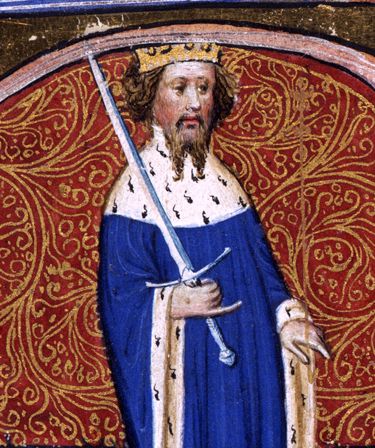
Henry Bolingbroke
Emperor · Medieval
60.9Total
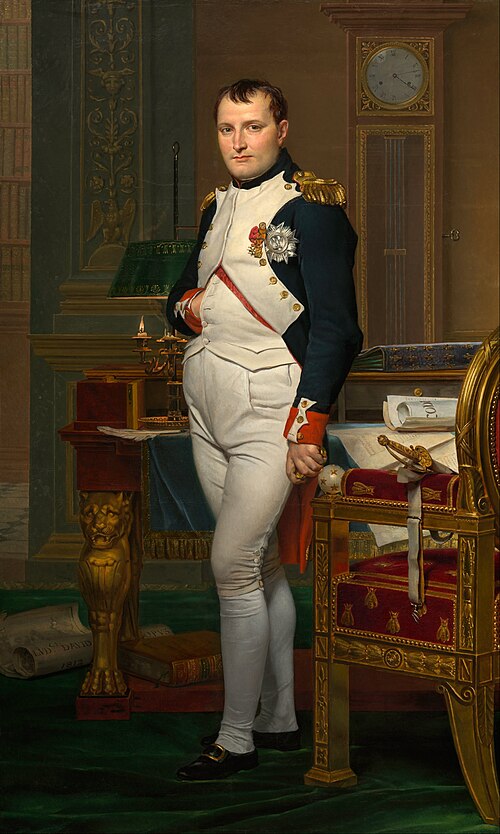
Napoleon Bonaparte
General · Modern
82.4Total
Basic Information
Born
1367
1769
Died
1413
1821
Era
Medieval
Modern
Nationality
England
France
Occupation
Emperor
General
Civilization
Western
Western
Score Comparison
Military (10%)
30.5
94.0
Political (20%)
55.6
75.0
Influence (20%)
74.0
82.0
Legacy (20%)
67.5
78.0
Leadership (15%)
78.6
80.0
Strategy (15%)
44.2
93.0
TOTAL
60.9
82.4
Rankings
🥇
Napoleon BonaparteLeader
Mil: 94.0Pol: 75.0Inf: 82.0
82.4
🥈
Henry Bolingbroke
Mil: 30.5Pol: 55.6Inf: 74.0
60.9
+21.5 behind
How This Comparison Works
Algorithm
Each figure is scored on 6 dimensions (0—100 scale) based on structured historical data: Military (10%), Political (20%), Influence (20%), Legacy (20%), Leadership (15%), Strategy (15%). The weighted total produces the final ranking.
Data Sources
Scores are computed from structured sub-indicators in the database. Scale factors adjust for era (Ancient ×0.85, Modern ×1.0) and civilization size (Eastern ×1.05, Other ×0.80) to account for differences in population and military scale.
Maximum 3 Figures
Comparisons are limited to 2—3 figures to ensure readability and statistical meaningfulness.
Error Margins
±5 points per dimension — Sub-scores are derived from historical records with inherent uncertainty. Two figures within 5 points on a dimension should be considered roughly equivalent in that area.
Total Score Accuracy
±3 points overall — The weighted combination of 6 dimensions produces a total score with approximately ±3 points of uncertainty. Differences of less than 3 points are not statistically significant— the figures are effectively tied.
Known Limitations
- Historical records are incomplete and uneven across civilizations
- Figures from oral-tradition societies may be underrepresented
- Occupation labels can misclassify multi-role figures
- Scores measure capability and impact, not moral character
- Quantitative scoring is a comparison tool, not absolute truth
Capability Radar
Military (10%) — Battles & Warfare
Battles
45
95
Win Rate
50
90
Expansion
20
95
Political (20%) — Governance & Reform
Reform
40
95
Diplomacy
50
80
Economy
45
85
Influence (20%) — Cultural & Global Reach
Cultural
40
85
Global
40
90
Legacy (20%) — Historical Impact
Historical
55
95
Longevity
50
90
Leadership (15%) — Power & Stability
Tenure
55
85
Stability
30
70
Strategy (15%) — Tactics & Innovation
Strategy
45
95
Tactics
40
98
Reform
30
92
Analysis will be generated on first visit.
Scores and timeline are available below. The page will refresh automatically when ready.
Henry Bolingbroke — Complete Timeline
1398 AD
Exiled by Richard IIPolitical Action◆ Major
Henry Bolingbroke was exiled from England by King Richard II following a dispute with Thomas de Mowbray. The exile was initially for ten years, later commuted to life, stripping Henry of his inheritance and prompting his return to claim the throne.
ExilePower StruggleLancaster
Impact: nationaldestructive
1399 AD
Returned from Exile and Deposed Richard IIPolitical Action
Henry landed at Ravenspur in Yorkshire with a small force while Richard II was in Ireland. He gathered support from nobles, captured Richard, and forced his abdication. Parliament then accepted Henry as King Henry IV, establishing the Lancastrian dynasty.
CoupDepositionLancastrian Dynasty
Impact: national
1403 AD
Battle of ShrewsburyWar◆ Major
Henry IV's forces defeated a rebellion led by Henry Percy (Hotspur) and the Earl of Worcester. The battle was the first major engagement between English armies using longbows. Hotspur was killed, ending the Percy rebellion and securing Henry's throne.
RebellionBattlePercy
Impact: nationaldestructive
1409 AD
Suppressed the Welsh RebellionWar◆ Major
Henry IV's forces captured Harlech Castle, the headquarters of Owain Glynd
Welsh RebellionMilitary Campaign
Impact: regionaldestructive
1412 AD
Suffered from Illness and Political InstabilityOther
Henry IV suffered from a debilitating illness, possibly leprosy or epilepsy, which weakened his ability to govern. Factional struggles between his son Prince Henry and Archbishop Arundel intensified. The king's health declined further, leading to his death in 1413.
IllnessSuccession Crisis
Impact: nationaltragic
Similar Comparisons
Comments & Discussion
No comments yet. Be the first to share your thoughts!