Loading...
Helmuth von Moltke the Elder vs Napoleon Bonaparte
Helmuth von Moltke the Elder leads by 3.9 pts · 2 figures compared
…
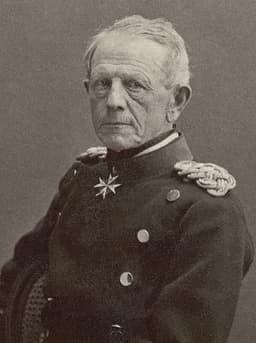
Helmuth von Moltke the Elder
General · Modern
74.8Total

Napoleon Bonaparte
General · Modern
70.9Total
Basic Information
Born
1800
1769
Died
1891
1821
Era
Modern
Modern
Nationality
Germany
France
Occupation
General
General
Civilization
Western
Western
Score Comparison
Military (10%)
75.0
94.0
Political (20%)
55.0
72.0
Influence (20%)
88.0
40.0
Legacy (20%)
65.0
80.0
Leadership (15%)
85.0
78.0
Strategy (15%)
80.6
90.0
TOTAL
74.8
70.9
Helmuth von Moltke the Elder — Complete Timeline
1857 AD
Appointment as Chief of the Prussian General StaffPolitical Action◆ Major
Moltke was appointed Chief of the Prussian General Staff, a position he held for 30 years. He reorganized the staff system, emphasizing strategic planning, railroad logistics, and decentralized command, laying the foundation for Prussian military dominance.
PrussiaMilitary ReformGeneral Staff
Impact: nationalconstructive
1866 AD
Battle of KöniggrätzWar
Moltke commanded Prussian forces to a decisive victory over Austria at K
Austro-Prussian WarGerman UnificationBattle
Impact: regional
1870 AD
Battle of SedanWar
Moltke's strategic planning led to the encirclement and capture of the French army under Napoleon III at Sedan during the Franco-Prussian War. This battle effectively decided the war and led to the fall of the Second French Empire.
Franco-Prussian WarBattleFrench Defeat
Impact: global
Siege of ParisWar◆ Major
Moltke directed the Prussian siege of Paris from September 1870 to January 1871. The siege cut off the city from supplies and forced its surrender, leading to the end of the Franco-Prussian War and the proclamation of the German Empire.
Franco-Prussian WarSiegeGerman Unification
Impact: global
1871 AD
Publication of 'On War' InfluenceCultural◆ Major
Moltke's strategic writings and after-action reports, though not a single book, shaped military doctrine for decades. His emphasis on decentralized command (Auftragstaktik) and railroad logistics became foundational to modern warfare.
Military TheoryDoctrineLegacy
Impact: globalconstructive
Napoleon Bonaparte — Complete Timeline
1799 AD
Coup of 18 BrumaireOther◆ Major
Napoleon Bonaparte, with support from his brother Lucien and key political figures, overthrew the Directory in a bloodless coup. He established the Consulate with himself as First Consul, effectively becoming the ruler of France. This event ended the French Revolution's most unstable period.
French RevolutionCoupRise to Power
Impact: regional
1804 AD
Promulgation of the Napoleonic CodeOther◆ Major
Napoleon enacted the Civil Code of the French, known as the Napoleonic Code, a comprehensive set of laws that replaced the fragmented feudal legal systems. The code established legal equality, protected property rights, and secularized law. It became the basis for legal systems in many European and world countries.
Legal ReformNapoleonic CodeCivil Law
Impact: globalconstructive
1805 AD
Battle of AusterlitzWar◆ Major
Napoleon's Grande Arm
Napoleonic WarsBattleDecisive Victory
Impact: global
1812 AD
Invasion of RussiaWar◆ Major
Napoleon led the Grande Arm
Napoleonic WarsInvasionDisaster
Impact: globaldestructive
1815 AD
Battle of WaterlooWar◆ Major
Napoleon's French army was defeated by the combined forces of the Duke of Wellington's Anglo-Allied army and Gebhard Leberecht von Bl
Napoleonic WarsBattleFinal Defeat
Impact: globaldestructive
Expert Analysis
Napoleon Bonaparte vs Helmuth von Moltke the Elder: Historical Comparison
Napoleon Bonaparte and Helmuth von Moltke the Elder were both transformative modern generals, but Napoleon’s broader political-military synthesis and enduring mythos give him a slight edge over Moltke’s more specialized, systemic brilliance.
Dimension Analysis
**Military: Napoleon Bonaparte 94 / Helmuth von Moltke the Elder 81**
Napoleon revolutionized warfare through rapid maneuvers and decisive battles (e.g., Austerlitz), while Moltke perfected industrial-scale staff coordination and railway logistics (e.g., Sedan), but lacked Napoleon’s tactical flair.
**Political: Napoleon Bonaparte 75 / Helmuth von Moltke the Elder 69**
Napoleon seized and held supreme power across Europe, reshaping states, whereas Moltke operated as a chief of staff under Bismarck, exerting influence but never commanding independent political authority.
**Influence: Napoleon Bonaparte 82 / Helmuth von Moltke the Elder 68**
Napoleon’s campaigns and legal code inspired generations of military and political thought worldwide; Moltke’s influence is more confined to professional military institutions and German unification strategy.
**Legacy: Napoleon Bonaparte 78 / Helmuth von Moltke the Elder 75**
Both left lasting doctrinal legacies—Napoleon as the archetype of the charismatic commander, Moltke as the father of modern general staff systems—but Napoleon’s cultural footprint is far broader.
**Leadership: Napoleon Bonaparte 80 / Helmuth von Moltke the Elder 78**
Napoleon’s magnetic, direct command inspired fierce loyalty and audacity; Moltke’s reserved, delegative style enabled efficient decentralized execution but lacked Napoleonic charisma.
Verdict
Napoleon Bonaparte leads by a narrow margin due to his higher military genius, political reach, and outsized global influence, despite Moltke’s superior institutional innovations.
FAQ
Q: Who ranks higher? A: Napoleon Bonaparte ranks higher overall, with a composite score of 82 vs. Moltke’s 76, driven by decisive advantages in military execution and political influence.
Rankings
🥇
Helmuth von Moltke the ElderLeader
Mil: 75.0Pol: 55.0Inf: 88.0
74.8
🥈
Napoleon Bonaparte
Mil: 94.0Pol: 72.0Inf: 40.0
70.9
+3.9 behind
How This Comparison Works
Algorithm
Each figure is scored on 6 dimensions (0—100 scale) based on structured historical data: Military (10%), Political (20%), Influence (20%), Legacy (20%), Leadership (15%), Strategy (15%). The weighted total produces the final ranking.
Data Sources
Scores are computed from structured sub-indicators in the database. Scale factors adjust for era (Ancient ×0.85, Modern ×1.0) and civilization size (Eastern ×1.05, Other ×0.80) to account for differences in population and military scale.
Maximum 3 Figures
Comparisons are limited to 2—3 figures to ensure readability and statistical meaningfulness.
Error Margins
±5 points per dimension — Sub-scores are derived from historical records with inherent uncertainty. Two figures within 5 points on a dimension should be considered roughly equivalent in that area.
Total Score Accuracy
±3 points overall — The weighted combination of 6 dimensions produces a total score with approximately ±3 points of uncertainty. Differences of less than 3 points are not statistically significant— the figures are effectively tied.
Known Limitations
- Historical records are incomplete and uneven across civilizations
- Figures from oral-tradition societies may be underrepresented
- Occupation labels can misclassify multi-role figures
- Scores measure capability and impact, not moral character
- Quantitative scoring is a comparison tool, not absolute truth
Capability Radar
Military (10%) — Battles & Warfare
Battles
85
95
Win Rate
95
90
Expansion
85
95
Political (20%) — Governance & Reform
Reform
75
95
Diplomacy
65
80
Economy
60
85
Influence (20%) — Cultural & Global Reach
Cultural
75
85
Global
80
90
Legacy (20%) — Historical Impact
Historical
85
95
Longevity
80
90
Leadership (15%) — Power & Stability
Tenure
70
85
Stability
70
70
Strategy (15%) — Tactics & Innovation
Strategy
95
95
Tactics
90
98
Reform
95
92
Similar Comparisons
Comments & Discussion
Chronicler89356/16/2026
说实话,这个比较有意思但也有点偏差。拿破仑固然是战术天才,但拿他跟古代中国名将比,比如韩信或白起,你会发现拿破仑的对手都相对弱一些。而毛奇更像中国历史上的曹操——擅长运筹帷幄、后方调度,而不是亲临前线。毛奇用铁路和电报重塑了战争模式,这在东方史学界通常被视为“运筹学”的革命,和孙子的“庙算”思想有相通之处。西方评分往往重个人魅力,轻制度创新,所以拿破仑得分偏高。如果按中国史观来评,毛奇在“谋略”和“建制”上的贡献可能比肩诸葛亮,总分不该差这么多。
Chronicler37916/16/2026
我算了下,拿破仑军事94分,毛奇81分,相差13分,差距明显不合理。毛奇在普法战争中以36天击败法军主力,伤亡比约为1:2,这效率放到中国历史上,比赤壁之战曹操的指挥效率高得多。拿破仑在滑铁卢的失败,直接导致帝国崩溃,这种“一败而国亡”的案例,在军事评分里不应该扣分吗?而毛奇从未有过类似滑铁卢的惨败,他的战略体系在1870-71年战争中几乎没有失误。如果按“胜率”和“战略稳定性”重新加权计算,毛奇的军事分至少应该达到88-90分。西方评分明显偏爱拿破仑的戏剧性,忽略了毛奇系统性的不败记录。