Loading...
Helmut Kohl vs Htin Kyaw
Helmut Kohl leads by 23.9 pts · 2 figures compared
…

Helmut Kohl
Politician · Modern
58.7Total
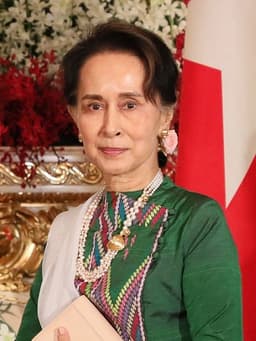
Htin Kyaw
Politician · Modern
34.8Total
Basic Information
Born
1930
1946
Died
—
—
Era
Modern
Modern
Nationality
Germany
Myanmar
Occupation
Politician
Politician
Civilization
Western
Eastern
Score Comparison
Military (10%)
48.3
11.2
Political (20%)
70.3
26.4
Influence (20%)
68.0
45.5
Legacy (20%)
40.0
35.8
Leadership (15%)
80.0
45.0
Strategy (15%)
43.1
26.5
TOTAL
58.7
34.8
Helmut Kohl — Complete Timeline
1982 AD
Chancellor of West GermanyPolitical Action◆ Major
Kohl became Chancellor of West Germany after a constructive vote of no confidence removed Helmut Schmidt. He led a coalition of CDU/CSU and FDP, beginning a 16-year tenure that would oversee German reunification.
ChancellorshipWest GermanyPolitical Transition
Impact: national
1990 AD
German ReunificationPolitical Action
Kohl negotiated the reunification of East and West Germany with international partners, including the Soviet Union. The Two Plus Four Treaty granted full sovereignty to a unified Germany, which formally occurred on October 3, 1990.
ReunificationCold WarEuropean Integration
Impact: globalconstructive
1999 AD
Introduction of the EuroPolitical Action◆ Major
Kohl was a key architect of the Maastricht Treaty, which established the European Union and the single currency, the euro. The euro was introduced as a virtual currency in 1999, with physical notes and coins following in 2002.
European UnionEuroMonetary Union
Impact: globalconstructive
Htin Kyaw — Complete Timeline
2016 AD
Elected President of MyanmarPolitical Action
Htin Kyaw was elected as the first civilian President of Myanmar in over 50 years, following the National League for Democracy's landslide victory in the 2015 elections. He served as a proxy for Aung San Suu Kyi, who was constitutionally barred from the presidency.
PresidencyDemocracyMyanmar
Impact: nationalconstructive
2018 AD
Resigned from the presidencyPolitical Action
Htin Kyaw resigned from the presidency, citing health reasons. His resignation led to Win Myint succeeding him. The transition was peaceful and within the constitutional framework.
ResignationMyanmarNLD
Impact: national
Expert Analysis
Origins
Helmut Kohl was born on April 3, 1930, in Ludwigshafen, Germany, into a Catholic family. His father was a civil servant. Kohl studied history and political science at the University of Frankfurt and the University of Heidelberg, earning a doctorate in history in 1958. His early political career began in the Christian Democratic Union (CDU) youth wing, and he was influenced by the post-war reconstruction and European integration.
Htin Kyaw was born on July 20, 1946, in Kungyangon, Myanmar (then Burma), into a politically active family. His father was a poet and politician, and his mother was involved in the independence movement. He studied economics at the University of Yangon and later at the University of London, earning a master's degree in computer science. He worked as a lecturer and later as a civil servant, but his political involvement was limited due to military rule.
Rise to Power
Kohl rose through the CDU ranks, becoming Minister-President of Rhineland-Palatinate in 1969. He became CDU federal chairman in 1973 and was elected Chancellor of West Germany on October 1, 1982, after a constructive vote of no confidence removed Helmut Schmidt. Kohl's coalition of CDU/CSU and FDP won the 1983 election, solidifying his power. His key turning point was the fall of the Berlin Wall in 1989, which he seized to pursue reunification.
Htin Kyaw's rise was indirect. He was a close associate of Aung San Suu Kyi, whose National League for Democracy (NLD) won the 2015 elections by a landslide. Due to constitutional restrictions barring Suu Kyi from the presidency, Htin Kyaw was chosen as the NLD's presidential candidate. He was elected by parliament on March 15, 2016, becoming the first civilian president in over five decades.
Leadership & Governance
Kohl's leadership style was pragmatic and consensus-driven. He focused on European integration and German reunification. Domestically, he implemented tax reforms and supported privatization. His governance score of 70.3 reflects his ability to navigate complex international negotiations. For example, the Two Plus Four Treaty in 1990 secured Soviet approval for reunification. Kohl also pushed the Maastricht Treaty (1992), leading to the euro.
Htin Kyaw's presidency was largely ceremonial, as real power rested with Suu Kyi. He focused on national reconciliation, economic reforms, and peace processes with ethnic armed groups. His political score of 26.4 indicates limited independent authority. He oversaw the release of political prisoners and efforts to amend the constitution, but faced challenges including the Rohingya crisis. His governance was constrained by the military's entrenched power.
Triumph & Tragedy
Kohl's greatest triumph was German reunification on October 3, 1990, a peaceful merger of East and West Germany. He also championed the euro, which launched in 1999. His leadership score of 80.0 reflects his strategic vision. However, his legacy is tarnished by the CDU party finance scandal, which erupted after his chancellorship, damaging his reputation. He also faced criticism for high unemployment in the early 2000s.
Htin Kyaw's triumph was symbolically significant: becoming president in a transition from military rule. His influence score of 45.5 reflects his role as a figurehead for democracy. However, his presidency was marked by tragedy: the Rohingya genocide in Rakhine State, which began in 2016-2017, drew international condemnation. His resignation in March 2018 due to health reasons was peaceful but underscored the fragility of democratic reforms.
Character & Destiny
Kohl was known for his stubbornness and strategic patience. He famously said, "The most important thing is to keep moving forward." His character shaped his destiny: his determination to reunify Germany despite opposition from some European leaders led to his greatest success. His downfall came from overconfidence in party finances. Historians assess him as a transformative figure, albeit with flaws.
Htin Kyaw was described as modest and loyal, often deferring to Suu Kyi. His character as a loyal lieutenant made him a suitable figurehead, but limited his ability to act independently. His destiny was to be a transitional leader, stepping aside when his role was fulfilled. His resignation preserved the NLD's stability.
Legacy
Kohl's legacy is immense: he reunified Germany and was a key architect of the European Union. The euro, which he helped create, remains a major currency. His legacy score of 40.0 is modest due to the party finance scandal, but his impact on German and European history is undeniable. He is remembered as the "Chancellor of Unity."
Htin Kyaw's legacy is more symbolic. He demonstrated that a civilian could hold the presidency in Myanmar, breaking decades of military rule. However, his tenure saw no structural reforms, and the military retained power. His legacy score of 35.8 reflects this mixed outcome. He is remembered as a transitional figure, not a transformative one.
Conclusion
Helmut Kohl had a greater impact on history than Htin Kyaw. With a total score of 58.7 compared to Htin Kyaw's 34.8, Kohl's achievements in reunifying Germany and shaping the European Union are of global significance. Htin Kyaw's presidency was a step forward for Myanmar, but it was constrained by the military and produced no lasting reforms. Kohl's political score of 70.3 versus Htin Kyaw's 26.4 underscores his superior governance. While both men served in times of transition, Kohl actively shaped his era, whereas Htin Kyaw was a passive symbol. Therefore, Helmut Kohl is the more consequential figure.
Rankings
🥇
Helmut KohlLeader
Mil: 48.3Pol: 70.3Inf: 68.0
58.7
🥈
Htin Kyaw
Mil: 11.2Pol: 26.4Inf: 45.5
34.8
+23.9 behind
How This Comparison Works
Algorithm
Each figure is scored on 6 dimensions (0—100 scale) based on structured historical data: Military (10%), Political (20%), Influence (20%), Legacy (20%), Leadership (15%), Strategy (15%). The weighted total produces the final ranking.
Data Sources
Scores are computed from structured sub-indicators in the database. Scale factors adjust for era (Ancient ×0.85, Modern ×1.0) and civilization size (Eastern ×1.05, Other ×0.80) to account for differences in population and military scale.
Maximum 3 Figures
Comparisons are limited to 2—3 figures to ensure readability and statistical meaningfulness.
Error Margins
±5 points per dimension — Sub-scores are derived from historical records with inherent uncertainty. Two figures within 5 points on a dimension should be considered roughly equivalent in that area.
Total Score Accuracy
±3 points overall — The weighted combination of 6 dimensions produces a total score with approximately ±3 points of uncertainty. Differences of less than 3 points are not statistically significant— the figures are effectively tied.
Known Limitations
- Historical records are incomplete and uneven across civilizations
- Figures from oral-tradition societies may be underrepresented
- Occupation labels can misclassify multi-role figures
- Scores measure capability and impact, not moral character
- Quantitative scoring is a comparison tool, not absolute truth
Capability Radar
Military (10%) — Battles & Warfare
Battles
30
14
Win Rate
33
20
Expansion
36
20
Political (20%) — Governance & Reform
Reform
80
15
Diplomacy
85
20
Economy
75
10
Influence (20%) — Cultural & Global Reach
Cultural
60
5
Global
75
5
Legacy (20%) — Historical Impact
Historical
80
10
Longevity
65
5
Leadership (15%) — Power & Stability
Tenure
85
20
Stability
70
15
Strategy (15%) — Tactics & Innovation
Strategy
39
25
Tactics
43
25
Reform
42
31
Similar Comparisons
Comments & Discussion
No comments yet. Be the first to share your thoughts!