Loading...
Helle Thorning-Schmidt vs Joko Widodo
Helle Thorning-Schmidt leads by 6.6 pts · 2 figures compared
…

Helle Thorning-Schmidt
Politician · Modern
56.1Total
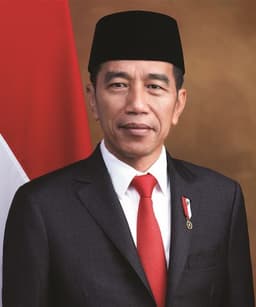
Joko Widodo
Politician · Modern
49.5Total
Basic Information
Born
1966
1961
Died
—
—
Era
Modern
Modern
Nationality
Denmark
Indonesia
Occupation
Politician
Politician
Civilization
Western
Eastern
Score Comparison
Military (10%)
38.5
12.6
Political (20%)
68.0
53.8
Influence (20%)
54.9
59.0
Legacy (20%)
45.0
44.2
Leadership (15%)
74.0
72.0
Strategy (15%)
60.0
35.5
TOTAL
56.1
49.5
Helle Thorning-Schmidt — Complete Timeline
2011 AD
Election as Prime Minister of DenmarkPolitical Action
Helle Thorning-Schmidt became the first female Prime Minister of Denmark in October 2011 after leading the Social Democrats to victory in the general election. She formed a coalition government with the Socialist People's Party and the Red-Green Alliance.
Danish PoliticsFirst Female PMCoalition Government
Impact: nationalprogressive
2012 AD
Implementation of welfare reformsReform◆ Major
Thorning-Schmidt's government introduced a series of welfare reforms including changes to unemployment benefits, early retirement, and student grants. The reforms aimed to increase labor market participation and reduce public spending, but faced criticism from unions and left-wing parties.
Danish PoliticsWelfare ReformLabor Market
Impact: nationalconstructive
2015 AD
Loss of general electionPolitical Action◆ Major
Thorning-Schmidt's coalition government lost the general election in June 2015 to the center-right Liberal Party led by Lars Lokke Rasmussen. She resigned as Prime Minister and later stepped down as leader of the Social Democrats.
Danish PoliticsElection DefeatResignation
Impact: nationaltragic
Joko Widodo — Complete Timeline
2012 AD
Elected Governor of JakartaPolitical Action◆ Major
Joko Widodo, known as Jokowi, was elected Governor of Jakarta, the capital of Indonesia. His campaign focused on clean governance and direct engagement with citizens, and his tenure was marked by improvements in public services and infrastructure.
ElectionIndonesiaJakarta
constructive
2014 AD
Elected President of IndonesiaPolitical Action
Jokowi won the Indonesian presidential election, defeating Prabowo Subianto. His victory was historic as he was the first president from outside the political and military elite, coming from a humble background as a furniture salesman.
ElectionIndonesiaDemocracy
Impact: nationalconstructive
2015 AD
Launched Infrastructure Development ProgramReform◆ Major
Jokowi's government launched an ambitious infrastructure development program, including toll roads, ports, airports, and railways across the Indonesian archipelago. The program aimed to boost connectivity and economic growth, but faced challenges in funding and land acquisition.
InfrastructureIndonesiaDevelopment
Impact: nationalconstructive
2019 AD
Re-elected PresidentPolitical Action◆ Major
Jokowi was re-elected for a second term, again defeating Prabowo Subianto. The election was marked by allegations of irregularities and post-election protests, but Jokowi's victory was confirmed by the Constitutional Court.
ElectionIndonesiaRe-election
Impact: national
2022 AD
Relocated Capital to NusantaraPolitical Action◆ Major
Jokowi announced the relocation of Indonesia's capital from Jakarta to Nusantara in East Kalimantan. The move aimed to address Jakarta's overcrowding and environmental issues, but faced criticism over costs, environmental impact, and lack of transparency.
Capital RelocationIndonesiaPolicy
Impact: nationalconstructive
Expert Analysis
Origins
Helle Thorning-Schmidt was born in 1966 in Rødovre, Denmark, into a middle-class family. Her father was a university professor, and her mother was a teacher. She studied political science at the University of Copenhagen and later at the College of Europe in Bruges. Her early career included work as a consultant for the Danish Confederation of Trade Unions.
Joko Widodo, known as Jokowi, was born in 1961 in Surakarta, Central Java, Indonesia, into a humble family. His father was a bamboo furniture seller, and his mother was a housewife. He studied forestry at Gadjah Mada University and worked as a furniture exporter before entering politics. His early life was marked by direct experience with poverty and small business challenges.
Rise to Power
Thorning-Schmidt entered politics in the 1990s, becoming a member of the Social Democrats. She was elected to the Danish Parliament in 1994 and quickly rose through the ranks. In 2005, she became leader of the Social Democrats, and after years of opposition, she led her party to victory in the 2011 general election, becoming Denmark's first female prime minister on October 3, 2011. Her rise was aided by a center-left coalition and public desire for change after a decade of liberal rule.
Jokowi's rise was more unconventional. He started as a furniture businessman and was elected Mayor of Surakarta in 2005, where his success in reviving the city's economy and governance earned him a reputation. He was elected Governor of Jakarta in 2012, running on a platform of clean government and direct engagement. His popularity surged, and in 2014, he ran for president against Prabowo Subianto, winning with 53.1% of the vote. His victory was historic as he was the first Indonesian president from outside the political elite and military.
Leadership & Governance
Thorning-Schmidt's leadership was characterized by a pragmatic, center-left approach. She implemented welfare reforms, including cuts to unemployment benefits, early retirement changes, and reductions in student grants, aiming to increase labor market participation. She also supported green energy initiatives. Her governance style was consensus-oriented but faced criticism for compromising on social democratic principles. Her political score of 68.0 reflects her ability to navigate coalition politics, but her strategy score of 60.0 suggests moderate effectiveness.
Jokowi's leadership style is populist and hands-on, focusing on infrastructure development and bureaucratic reform. He launched an ambitious infrastructure program, building toll roads, ports, airports, and railways across Indonesia. He also simplified business regulations and increased foreign investment. His approach is more technocratic than ideological, emphasizing tangible results. His political score of 53.8 is lower, partly due to a fragmented political system and opposition, but his leadership score of 72.0 is comparable to Thorning-Schmidt's 74.0, indicating similar perceived effectiveness.
Triumph & Tragedy
Thorning-Schmidt's greatest success was becoming Denmark's first female prime minister and implementing welfare reforms that strengthened the economy. However, her government lost the 2015 general election to the center-right Liberal Party, partly due to voter backlash against her reforms. She resigned as party leader and later left Danish politics. Her legacy score of 45.0 reflects limited long-term impact.
Jokowi's greatest success is his infrastructure program, which improved connectivity and economic growth in a vast archipelago. He also moved the capital to Nusantara to relieve Jakarta's congestion. However, his second term was marred by accusations of democratic backsliding, including suppressing dissent and weakening anti-corruption agencies. His influence score of 59.0 is higher than Thorning-Schmidt's 54.9, indicating broader global recognition.
Character & Destiny
Thorning-Schmidt was known as pragmatic and ambitious, but her willingness to compromise alienated some left-wing supporters. Her character shaped her destiny as a reformist who couldn't maintain coalition unity. Historians note her as competent but not transformative.
Jokowi is seen as humble, relatable, and focused on delivery. His character helped him connect with ordinary Indonesians, but his tolerance for political compromises with old elites tarnished his reformist image. His destiny was to be a popular leader who modernized infrastructure but struggled to uphold democratic values.
Legacy
Thorning-Schmidt's legacy is mixed: she broke the gender barrier in Danish politics but her welfare reforms are seen as a shift towards austerity. She left no enduring institutional changes. Her total score of 56.1 reflects a competent but unremarkable tenure.
Jokowi's legacy is more substantial: his infrastructure drive reshaped Indonesia's landscape, and the capital relocation will have long-term impacts. However, concerns over democratic erosion under his watch may diminish his legacy. His total score of 49.5 is lower, but his influence and leadership scores are comparable.
Conclusion
While Thorning-Schmidt scores higher overall at 56.1 versus Jokowi's 49.5, the comparison must consider context. Thorning-Schmidt governed a small, stable welfare state with limited room for dramatic change. Jokowi faced a developing country with vast challenges and achieved tangible transformation. In terms of impact on their nation's trajectory, Jokowi had a greater effect: his infrastructure program and capital relocation will influence Indonesia for decades. Thorning-Schmidt's reforms, though significant, were adjustments within an established system. Therefore, Jokowi's leadership, despite a lower total score, had a more profound impact on his country's development.
Rankings
🥇
Helle Thorning-SchmidtLeader
Mil: 38.5Pol: 68.0Inf: 54.9
56.1
🥈
Joko Widodo
Mil: 12.6Pol: 53.8Inf: 59.0
49.5
+6.6 behind
How This Comparison Works
Algorithm
Each figure is scored on 6 dimensions (0—100 scale) based on structured historical data: Military (10%), Political (20%), Influence (20%), Legacy (20%), Leadership (15%), Strategy (15%). The weighted total produces the final ranking.
Data Sources
Scores are computed from structured sub-indicators in the database. Scale factors adjust for era (Ancient ×0.85, Modern ×1.0) and civilization size (Eastern ×1.05, Other ×0.80) to account for differences in population and military scale.
Maximum 3 Figures
Comparisons are limited to 2—3 figures to ensure readability and statistical meaningfulness.
Error Margins
±5 points per dimension — Sub-scores are derived from historical records with inherent uncertainty. Two figures within 5 points on a dimension should be considered roughly equivalent in that area.
Total Score Accuracy
±3 points overall — The weighted combination of 6 dimensions produces a total score with approximately ±3 points of uncertainty. Differences of less than 3 points are not statistically significant— the figures are effectively tied.
Known Limitations
- Historical records are incomplete and uneven across civilizations
- Figures from oral-tradition societies may be underrepresented
- Occupation labels can misclassify multi-role figures
- Scores measure capability and impact, not moral character
- Quantitative scoring is a comparison tool, not absolute truth
Capability Radar
Military (10%) — Battles & Warfare
Battles
47
16
Win Rate
49
18
Expansion
55
19
Political (20%) — Governance & Reform
Reform
45
60
Diplomacy
55
55
Economy
50
60
Influence (20%) — Cultural & Global Reach
Cultural
35
40
Global
35
45
Legacy (20%) — Historical Impact
Historical
40
35
Longevity
30
30
Leadership (15%) — Power & Stability
Tenure
40
65
Stability
50
55
Strategy (15%) — Tactics & Innovation
Strategy
58
26
Tactics
57
25
Reform
62
27
Similar Comparisons
Comments & Discussion
No comments yet. Be the first to share your thoughts!