Loading...
Heinz Fischer vs Shigeru Yoshida
Shigeru Yoshida leads by 4.1 pts · 2 figures compared
…
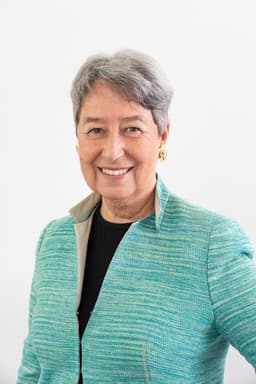
Heinz Fischer
Politician · Modern
52.6Total

Shigeru Yoshida
Politician · Modern
56.7Total
Basic Information
Born
1938
1878
Died
—
1967
Era
Modern
Modern
Nationality
Austria
Japan
Occupation
Politician
Politician
Civilization
Western
Eastern
Score Comparison
Military (10%)
49.0
11.5
Political (20%)
68.0
82.0
Influence (20%)
49.4
56.7
Legacy (20%)
40.8
55.0
Leadership (15%)
72.0
78.0
Strategy (15%)
41.8
36.5
TOTAL
52.6
56.7
Heinz Fischer — Complete Timeline
2004 AD
Elected President of AustriaPolitical Action◆ Major
Heinz Fischer was elected President of Austria on April 25, 2004, winning 52.4% of the vote against Benita Ferrero-Waldner. He succeeded Thomas Klestil and took office on July 8, 2004.
Presidential ElectionSocial Democratic Victory
Impact: nationalconstructive
2010 AD
Re-elected President of AustriaPolitical Action◆ Major
Fischer was re-elected for a second term on April 25, 2010, winning 79.3% of the vote, one of the highest margins in Austrian history. He faced only minor opposition candidates.
Re-electionLandslide Victory
Impact: nationalconstructive
2016 AD
End of Second Presidential TermPolitical Action
Fischer's second term ended on July 8, 2016, after 12 years in office. He was constitutionally barred from seeking a third term. He was succeeded by Alexander Van der Bellen.
End of TermSuccession
Impact: national
Shigeru Yoshida — Complete Timeline
1946 AD
Appointed Prime Minister of JapanPolitical Action◆ Major
Shigeru Yoshida became Prime Minister of Japan on May 22, 1946, during the Allied occupation. He succeeded Kijuro Shidehara and led Japan through post-war reconstruction. Yoshida's government focused on economic recovery, land reform, and drafting a new constitution under U.S. supervision.
Prime MinisterOccupationJapan
Impact: national
1950 AD
Implemented the Yoshida DoctrinePolitical Action
Yoshida articulated the Yoshida Doctrine, prioritizing Japan's economic recovery and reliance on U.S. security guarantees while maintaining a minimal military. This policy guided Japan's post-war strategy, leading to rapid economic growth and a low-profile international role. It was formalized during his tenure.
Yoshida DoctrineEconomic PolicySecurity
Impact: globalconstructive
1951 AD
Signed the Treaty of San FranciscoPolitical Action
Yoshida signed the Treaty of San Francisco on September 8, 1951, formally ending the state of war between Japan and the Allied powers. The treaty restored Japan's sovereignty and allowed it to rejoin the international community. It was a cornerstone of Yoshida's foreign policy.
Treaty of San FranciscoPost-WarSovereignty
Impact: globalconstructive
Signed the U.S.-Japan Security TreatyPolitical Action◆ Major
Yoshida signed the U.S.-Japan Security Treaty on September 8, 1951, alongside the Treaty of San Francisco. The treaty allowed U.S. military bases in Japan and committed the U.S. to Japan's defense. It was controversial domestically but formed the basis of Japan's post-war security policy.
Security TreatyU.S.-JapanAlliance
Impact: regional
Expert Analysis
Origins
Heinz Fischer was born on October 9, 1938, in Graz, Austria, into a middle-class family. His father was a civil servant. Fischer studied law at the University of Vienna, earning his doctorate in 1961. He became involved in politics early, joining the Socialist Party of Austria (SPÖ) in 1964. His academic background and legal training shaped his methodical approach to governance.
Shigeru Yoshida was born on September 22, 1878, in Kōchi, Japan, into a samurai family. His father was a political activist. Yoshida studied at Tokyo Imperial University, graduating in 1906 with a law degree. He entered the diplomatic service, serving in China and Britain. His early career as a diplomat gave him deep insight into international relations, crucial for his later role in postwar Japan.
Rise to Power
Fischer's rise was steady within the SPÖ. He served as Secretary of State in the Chancellery (1983-1987) under Chancellor Fred Sinowatz. He was President of the National Council (1990-2002), a position that made him a prominent figure. In 2004, he was elected President of Austria with 52.4% of the vote, defeating Benita Ferrero-Waldner. His victory marked the first time a Social Democrat held the presidency since 1974.
Yoshida's rise was accelerated by the Allied occupation. He became Prime Minister on May 22, 1946, succeeding Kijuro Shidehara. His diplomatic background made him acceptable to the occupation authorities. He served four terms (1946-1947, 1948-1954), navigating Japan's transition from war to peace. Key turning points included the signing of the Treaty of San Francisco in 1951, which restored Japan's sovereignty, and the U.S.-Japan Security Treaty, which defined postwar security arrangements.
Leadership & Governance
Fischer's leadership style was consensual and ceremonial as Austria's president. He focused on national unity and European integration. He scored 72.0 in leadership and 68.0 in political skill. His governance was characterized by careful adherence to constitutional limits. He did not pursue major domestic reforms but used his moral authority to foster dialogue. For example, he publicly condemned the far-right Freedom Party's inclusion in government in 2000, yet maintained stability.
Yoshida's governance was pragmatic and focused on economic recovery. He scored 82.0 in political skill and 78.0 in leadership. He implemented the Yoshida Doctrine, prioritizing economic growth while relying on the U.S. for security. He signed the San Francisco Treaty and the Security Treaty, securing Japan's place in the Western bloc. Domestically, he promoted industrial policy, leading to rapid reconstruction. His leadership was decisive but sometimes autocratic, earning him the nickname "One-Man Yoshida."
Triumph & Tragedy
Fischer's greatest success was his re-election in 2010 with 79.3% of the vote, one of the highest margins in Austrian history. He served two full terms without major scandal, symbolizing stability. However, his influence was limited by the largely ceremonial role of the Austrian presidency. He scored only 49.4 in influence and 40.8 in legacy. His failure to push for more executive power might be seen as a missed opportunity.
Yoshida's triumphs include restoring Japan's sovereignty through the San Francisco Treaty and laying the foundation for its economic miracle. His political score of 82.0 reflects his effectiveness. However, his strategy score was only 36.5, partly due to his rigid anti-communist stance that strained relations with the Soviet Union and China. He also failed to address social issues like labor rights, leading to strikes and unrest. His legacy is mixed: admired for economic growth but criticized for perpetuating U.S. dependency.
Character & Destiny
Fischer was known for his calm, intellectual demeanor. He was a scholar-politician who authored books on politics. His character shaped a presidency that was dignified but low-impact. He avoided confrontation, which suited Austria's consensus politics. His destiny was to be a respected but not transformative leader.
Yoshida was stubborn and pragmatic. He was a diplomat who believed in realpolitik. His character drove him to make tough decisions, such as accepting U.S. bases. He was sometimes dismissive of opponents, which created enemies. His destiny was to be the architect of postwar Japan, but his approach also set the stage for future political turmoil, including the 1960 Anpo protests against the Security Treaty.
Legacy
Fischer's legacy is that of a stable, unifying president. He is remembered for his integrity and commitment to European integration. However, his impact is limited to Austria. He scored 40.8 in legacy, reflecting his minor global footprint. His main achievement was maintaining democratic norms during a period of far-right resurgence.
Yoshida's legacy is profound. He is considered the father of postwar Japan's economic success and security policy. The Yoshida Doctrine influenced Japanese foreign policy for decades. He scored 55.0 in legacy, higher than Fischer. His political approach shaped Japan's modern identity. However, his legacy is contested: some argue he sacrificed sovereignty for security.
Conclusion
Shigeru Yoshida had greater impact than Heinz Fischer. Yoshida's total score of 56.7 versus Fischer's 52.6 reflects this. Yoshida shaped a nation's trajectory during a critical period, while Fischer operated within a limited constitutional framework. Yoshida's decisions on security and economics defined Japan's postwar path, with global implications. Fischer's role was important for Austria but not transformative. The score gap of 4.1 points understates Yoshida's influence, as his political (82.0) and leadership (78.0) scores far exceed Fischer's (68.0 and 72.0). Yoshida's legacy endures in Japan's economic model and alliance with the U.S., making him the more consequential figure.
Rankings
🥇
Shigeru YoshidaLeader
Mil: 11.5Pol: 82.0Inf: 56.7
56.7
🥈
Heinz Fischer
Mil: 49.0Pol: 68.0Inf: 49.4
52.6
+4.1 behind
How This Comparison Works
Algorithm
Each figure is scored on 6 dimensions (0—100 scale) based on structured historical data: Military (10%), Political (20%), Influence (20%), Legacy (20%), Leadership (15%), Strategy (15%). The weighted total produces the final ranking.
Data Sources
Scores are computed from structured sub-indicators in the database. Scale factors adjust for era (Ancient ×0.85, Modern ×1.0) and civilization size (Eastern ×1.05, Other ×0.80) to account for differences in population and military scale.
Maximum 3 Figures
Comparisons are limited to 2—3 figures to ensure readability and statistical meaningfulness.
Error Margins
±5 points per dimension — Sub-scores are derived from historical records with inherent uncertainty. Two figures within 5 points on a dimension should be considered roughly equivalent in that area.
Total Score Accuracy
±3 points overall — The weighted combination of 6 dimensions produces a total score with approximately ±3 points of uncertainty. Differences of less than 3 points are not statistically significant— the figures are effectively tied.
Known Limitations
- Historical records are incomplete and uneven across civilizations
- Figures from oral-tradition societies may be underrepresented
- Occupation labels can misclassify multi-role figures
- Scores measure capability and impact, not moral character
- Quantitative scoring is a comparison tool, not absolute truth
Capability Radar
Military (10%) — Battles & Warfare
Battles
31
17
Win Rate
34
20
Expansion
32
19
Political (20%) — Governance & Reform
Reform
40
85
Diplomacy
55
90
Economy
45
80
Influence (20%) — Cultural & Global Reach
Cultural
20
50
Global
15
65
Legacy (20%) — Historical Impact
Historical
25
70
Longevity
20
60
Leadership (15%) — Power & Stability
Tenure
60
75
Stability
65
85
Strategy (15%) — Tactics & Innovation
Strategy
37
21
Tactics
38
27
Reform
46
27
Similar Comparisons
Comments & Discussion
No comments yet. Be the first to share your thoughts!