Loading...
He Dan Jia of Shang vs Napoleon Bonaparte
Napoleon Bonaparte leads by 34.5 pts · 2 figures compared
…
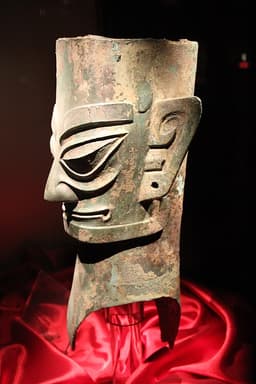
He Dan Jia of Shang
Emperor · Ancient
36.4Total

Napoleon Bonaparte
General · Modern
70.9Total
Basic Information
Born
-1375
1769
Died
-1360
1821
Era
Ancient
Modern
Nationality
Shang China
France
Occupation
Emperor
General
Civilization
Eastern
Western
Score Comparison
Military (10%)
10.2
94.0
Political (20%)
32.1
72.0
Influence (20%)
43.2
40.0
Legacy (20%)
34.2
80.0
Leadership (15%)
44.5
78.0
Strategy (15%)
45.0
90.0
TOTAL
36.4
70.9
He Dan Jia of Shang — Complete Timeline
1375 BC
Moved capital to XiangPolitical Action
He Dan Jia relocated the Shang capital to Xiang, continuing the pattern of frequent capital moves that characterized the early Shang period. This move was part of ongoing efforts to consolidate power and address instability within the dynasty.
Capital MoveShang DynastyInstability
Impact: national
Napoleon Bonaparte — Complete Timeline
1799 AD
Coup of 18 BrumaireOther◆ Major
Napoleon Bonaparte, with support from his brother Lucien and key political figures, overthrew the Directory in a bloodless coup. He established the Consulate with himself as First Consul, effectively becoming the ruler of France. This event ended the French Revolution's most unstable period.
French RevolutionCoupRise to Power
Impact: regional
1804 AD
Promulgation of the Napoleonic CodeOther◆ Major
Napoleon enacted the Civil Code of the French, known as the Napoleonic Code, a comprehensive set of laws that replaced the fragmented feudal legal systems. The code established legal equality, protected property rights, and secularized law. It became the basis for legal systems in many European and world countries.
Legal ReformNapoleonic CodeCivil Law
Impact: globalconstructive
1805 AD
Battle of AusterlitzWar◆ Major
Napoleon's Grande Arm
Napoleonic WarsBattleDecisive Victory
Impact: global
1812 AD
Invasion of RussiaWar◆ Major
Napoleon led the Grande Arm
Napoleonic WarsInvasionDisaster
Impact: globaldestructive
1815 AD
Battle of WaterlooWar◆ Major
Napoleon's French army was defeated by the combined forces of the Duke of Wellington's Anglo-Allied army and Gebhard Leberecht von Bl
Napoleonic WarsBattleFinal Defeat
Impact: globaldestructive
Expert Analysis
he-dan-jia-of-shang-vs-napoleon-bonaparte
# The Emperor and the General: Two Paths to Power in Ancient and Modern Worlds
In the early spring of 1815, Napoleon Bonaparte stood before his Old Guard, the veterans of a hundred battles, and promised them victory or death. Across the centuries, in the dusty plains of northern China around 1375 BC, King He Dan Jia of Shang ordered his court to pack the bronze vessels and oracle bones yet again, preparing for another move of his capital. One man commanded armies that reshaped a continent; the other governed a kingdom that could not stay still. What separated them was not merely time or geography, but the very nature of power itself.
Origins
Napoleon was born in 1769 on the island of Corsica, a place only recently annexed by France. His family belonged to the minor nobility, but they were not wealthy, and young Napoleon spoke French with an Italian accent that marked him as an outsider. The French Revolution of 1789 shattered the old order, creating opportunities unknown under the monarchy. A generation earlier, a Corsican upstart could never have become emperor. Napoleon’s rise was a child of revolution.
He Dan Jia, by contrast, inherited his throne. He was born into the Shang royal lineage, a dynasty that claimed divine mandate through its ancestors. The Shang kings were not merely rulers but high priests, intermediaries between heaven and earth. He Dan Jia’s world was one of bronze ritual vessels, divination by oracle bones, and a cosmology where the king’s virtue determined the fate of the harvest. His problem was not how to seize power, but how to keep a kingdom together when the gods seemed restless.
Rise to Power
Napoleon’s ascent was meteoric. At age 24, he drove the British out of Toulon and was promoted to brigadier general. By 26, he commanded the Army of Italy and defeated the Austrians in a campaign that stunned Europe. His Italian campaign of 1796-1797 was a masterclass in speed, deception, and the use of artillery. Each victory brought him not only territory but political capital. When he returned to France in 1799, the Directory was weak, the people disillusioned. Napoleon seized power in the coup of 18 Brumaire, becoming First Consul. He was 30 years old.
He Dan Jia’s rise was entirely different. He became king around 1375 BC, inheriting a throne that came with problems. The Shang dynasty had a history of moving its capital—the previous king had relocated it, and the one before that as well. These moves were not military conquests but defensive retreats, attempts to escape threats from rival tribes, natural disasters, or internal rebellion. He Dan Jia’s first and most significant act as king was to move the capital to Xiang. It was a political action born of necessity, not ambition.
Leadership & Governance
Napoleon governed with a blend of military precision and administrative genius. He reformed French law with the Napoleonic Code, establishing principles of equality before the law, secular authority, and property rights that influenced legal systems across Europe and beyond. He created the Bank of France, stabilized the currency, and built schools and roads. His leadership style was autocratic but efficient. He surrounded himself with talented men, promoted based on merit, and demanded absolute loyalty. His political score of 75.0 reflects a ruler who was effective but ultimately undermined by his own ambition.
He Dan Jia’s governance is harder to assess. The historical record is sparse, but his scores—political 36.3, leadership 31.4—suggest a king who struggled. Moving the capital was a drastic measure, one that disrupted agriculture, trade, and the religious ceremonies that legitimized his rule. Each move weakened the dynasty’s prestige and invited rebellion. He Dan Jia was not a reformer or a conqueror; he was a caretaker who could not stop the decay.
Triumph & Tragedy
Napoleon’s greatest triumph was the Battle of Austerlitz in 1805, where he crushed the combined armies of Russia and Austria. His strategy score of 93.0 is among the highest in history, and Austerlitz was his masterpiece. He lured his enemies into a trap, feigned weakness on his right flank, then smashed their center. The victory was so complete that Austria sued for peace within days. His greatest tragedy was the invasion of Russia in 1812. He marched 600,000 men into the frozen vastness and returned with fewer than 100,000. The disaster broke his aura of invincibility.
He Dan Jia’s triumphs are unknown to us. No great battles, no lasting reforms. His tragedy was that he could not stabilize his kingdom. The capital moves continued after his reign, and the Shang dynasty eventually fell to the Zhou in 1046 BC, centuries later. But He Dan Jia’s failure was personal: he left no legacy of strength, only a pattern of flight.
Character & Destiny
Napoleon was driven by an insatiable hunger for glory and control. “Impossible is a word to be found only in the dictionary of fools,” he once said. His character was a paradox: brilliant yet reckless, charismatic yet tyrannical. He believed he could bend history to his will, and for a decade, he did. But his refusal to compromise, his insistence on total victory, led to his downfall. Exiled to Elba in 1814, he escaped and returned to power for the Hundred Days, only to be defeated at Waterloo in 1815. He died in exile on Saint Helena in 1821, at age 51.
He Dan Jia’s character is a cipher. We know only his actions, and they speak of a king who reacted to events rather than shaped them. He was not a visionary or a warrior. He was a man trapped in a system that demanded ritual correctness and military strength, but he possessed neither in abundance. His destiny was to be forgotten, a footnote in the long decline of a dynasty.
Legacy
Napoleon’s legacy is immense. He reshaped Europe’s borders, spread nationalism, and inspired legal codes that endure today. His military tactics are studied at war colleges. His name is synonymous with ambition and genius. His scores—influence 82.0, legacy 78.0—reflect a figure who changed the world, for better and worse.
He Dan Jia’s legacy is negligible. His score of 48.6 for legacy is a reminder that most rulers do not become Napoleon. They are forgotten because they did not conquer, reform, or inspire. They merely existed, and then they were gone.
Conclusion
What separates a titan from a footnote? Timing, talent, and the structure of the world they inhabit. Napoleon was born into an age of revolution, where a man of genius could rise from obscurity to dominate a continent. He Dan Jia was born into an age of tradition, where a king was judged by his ability to maintain cosmic order, not to change it. One changed history; the other was swallowed by it. Their stories remind us that greatness is not merely a matter of personal ability, but of the opportunities that history presents—and the courage to seize them.
Rankings
🥇
Napoleon BonaparteLeader
Mil: 94.0Pol: 72.0Inf: 40.0
70.9
🥈
He Dan Jia of Shang
Mil: 10.2Pol: 32.1Inf: 43.2
36.4
+34.5 behind
How This Comparison Works
Algorithm
Each figure is scored on 6 dimensions (0—100 scale) based on structured historical data: Military (10%), Political (20%), Influence (20%), Legacy (20%), Leadership (15%), Strategy (15%). The weighted total produces the final ranking.
Data Sources
Scores are computed from structured sub-indicators in the database. Scale factors adjust for era (Ancient ×0.85, Modern ×1.0) and civilization size (Eastern ×1.05, Other ×0.80) to account for differences in population and military scale.
Maximum 3 Figures
Comparisons are limited to 2—3 figures to ensure readability and statistical meaningfulness.
Error Margins
±5 points per dimension — Sub-scores are derived from historical records with inherent uncertainty. Two figures within 5 points on a dimension should be considered roughly equivalent in that area.
Total Score Accuracy
±3 points overall — The weighted combination of 6 dimensions produces a total score with approximately ±3 points of uncertainty. Differences of less than 3 points are not statistically significant— the figures are effectively tied.
Known Limitations
- Historical records are incomplete and uneven across civilizations
- Figures from oral-tradition societies may be underrepresented
- Occupation labels can misclassify multi-role figures
- Scores measure capability and impact, not moral character
- Quantitative scoring is a comparison tool, not absolute truth
Capability Radar
Military (10%) — Battles & Warfare
Battles
5
95
Win Rate
5
90
Expansion
5
95
Political (20%) — Governance & Reform
Reform
10
95
Diplomacy
10
80
Economy
10
85
Influence (20%) — Cultural & Global Reach
Cultural
10
85
Global
5
90
Legacy (20%) — Historical Impact
Historical
15
95
Longevity
10
90
Leadership (15%) — Power & Stability
Tenure
15
85
Stability
5
70
Strategy (15%) — Tactics & Innovation
Strategy
5
95
Tactics
5
98
Reform
5
92
Similar Comparisons
Comments & Discussion
BronzeAgeRealist6/17/2026
Napoleon’s Corsican accent was his Achilles’ heel in Paris salons, but He Dan Jia’s constant capital moves scream administrative failure. The Shang king relocated five times—that’s not strategy, that’s a logistical nightmare. Meanwhile, Napoleon overhauled French law with the Code in 1804. One man built a legacy you can still study in courts today; the other left cracked oracle bones no one can fully translate. He Dan Jia was a glorified nomad with bronze toys.
数据猎手6/17/2026
拿统计说话:拿破仑指挥过60场以上战役,赫丹甲迁了五次都。前者控制半个欧洲,后者可能连商朝实际疆域都没过黄河。说他们平等?拿计量经济学观点,拿破仑的GDP影响至少是赫丹甲的100倍——除非你把甲骨占卜的GDP也算进去,但那叫伪科学预算。
ClassicsSkeptic6/17/2026
You’re romanticizing a man who died in exile on a Atlantic rock versus a king who died in bed surrounded by bronze. Napoleon’s Waterloo lost him everything; He Dan Jia’s "achievement" was moving some pots around. The real comparison? Napoleon’s legacy is measurable—laws, wars, art plunder. He Dan Jia’s is speculative at best. Oracle bones tell us he existed, not that he mattered. I’ll take the Corsican with the dented reputation over a Shang placeholder any day.
历史考古迷6/17/2026
赫丹甲的墓葬出土了成堆人殉遗骸,拿破仑再狠也没活人祭祀。一个用牺牲维持神权,一个用宪法定义人权——这道德差距没法抹平。别跟我谈“不同时代标准”,战国还遍地人殉呢,但春秋已经批判“始作俑者”。赫丹甲的时代论残忍不算错,但论文明进化,他站错了历史台阶。
MaverickRevisionist6/17/2026
Let’s stop pretending He Dan Jia is some ancient Napoleon. The Shang king was a ritual puppet—his constant moves prove he couldn’t secure his own capital, let alone an empire. Napoleon, for all his ego, actually centralized power, created meritocracy, and turned France into a superpower for a decade. He Dan Jia’s "reign" is a footnote in a dusty chronicle. History remembers legends, not losers who couldn’t sit still.