Loading...
Hattusili III vs Tang of Shang
Hattusili III leads by 1.3 pts · 2 figures compared
…

Hattusili III
Emperor · Ancient
61.4Total
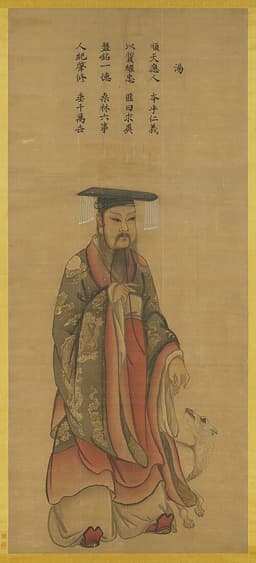
Tang of Shang
Emperor · Ancient
60.1Total
Basic Information
Born
-1270
-1675
Died
-1237
-1588
Era
Ancient
Ancient
Nationality
Hittite Empire
China
Occupation
Emperor
Emperor
Civilization
Middle Eastern
Eastern
Score Comparison
Military (10%)
60.0
50.0
Political (20%)
72.0
68.0
Influence (20%)
58.0
59.0
Legacy (20%)
58.0
52.0
Leadership (15%)
66.0
74.0
Strategy (15%)
57.5
60.0
TOTAL
61.4
60.1
Hattusili III — Complete Timeline
1267 BC
Usurpation of the Hittite throne from Urhi-TeshubPolitical Action◆ Major
Hattusili III deposed his nephew Urhi-Teshub (Mursili III) in a coup, claiming the throne for himself. The usurpation led to internal conflict and Urhi-Teshub's exile, but Hattusili consolidated power and ruled for decades.
CoupUsurpationDynastic Conflict
Impact: nationaldestructive
1259 BC
Signing of the Treaty of Kadesh with EgyptPolitical Action
Hattusili III concluded a peace treaty with Pharaoh Ramesses II of Egypt, ending decades of conflict. The treaty, inscribed on silver tablets, established mutual non-aggression, extradition, and defensive alliance. It is the oldest known surviving peace treaty.
Peace TreatyEgyptDiplomacy
Impact: regionalconstructive
1245 BC
Marriage alliance with EgyptPolitical Action◆ Major
Hattusili III arranged the marriage of his daughter to Ramesses II, sealing the peace treaty. The diplomatic marriage strengthened ties between the Hittite and Egyptian royal families and ensured continued peace.
Marriage AllianceDiplomacyRoyal Family
Impact: regionalconstructive
Tang of Shang — Complete Timeline
1600 BC
Battle of MingtiaoWar
Tang of Shang led a coalition of tribes to defeat the last Xia ruler, Jie, at the Battle of Mingtiao. The victory ended the Xia dynasty and established the Shang dynasty, marking a transition in early Chinese history.
Shang DynastyBattleDynastic Change
Impact: regional
Reforms in GovernanceReform
Tang of Shang instituted administrative reforms, including the appointment of capable officials based on merit rather than birth. He also reduced taxes and corv
Shang DynastyReformGovernance
Impact: regionalprogressive
Founding of the Shang DynastyPolitical Action◆ Major
Tang of Shang established the Shang dynasty, ruling from his capital at Bo. He implemented reforms to reduce corruption and improve governance, contrasting with the perceived tyranny of the Xia. The Shang dynasty lasted for over 500 years.
Shang DynastyFoundingReform
Impact: regionalconstructive
Expert Analysis
Origins
Hattusili III was born around 1280 BCE into the Hittite royal family, the son of King Mursili II. His early life was marked by his role as a younger brother to King Muwatalli II, and he served as a military commander and governor. He was not initially destined for the throne, but his career in the military and administration prepared him for later leadership.
Tang of Shang, also known as Cheng Tang, was born around 1675 BCE as the leader of the Shang tribe, a vassal of the Xia dynasty. His early life is shrouded in myth, but historical records indicate he was a capable ruler who built alliances among discontented tribes. He was known for his virtue and fairness, contrasting with the tyranny of the Xia ruler Jie.
Rise to Power
Hattusili III rose to power through a coup against his nephew, King Urhi-Teshub (Mursili III), around 1267 BCE. After a period of civil war, Hattusili successfully deposed him and claimed the throne. His political maneuvering and military support from key nobles secured his position, though his legitimacy remained contested.
Tang of Shang rose to prominence by leading a rebellion against the Xia dynasty. He gathered support from other tribes who were oppressed by King Jie. The decisive Battle of Mingtiao around 1600 BCE ended Xia rule, and Tang established the Shang dynasty. His victory was aided by his reputation for justice and his strategic alliances.
Leadership & Governance
Hattusili III's leadership was characterized by diplomacy and consolidation. He is best known for the Treaty of Kadesh (c. 1259 BCE) with Ramesses II of Egypt, the first recorded peace treaty in history. He also arranged a marriage alliance, sending his daughter to Egypt. Domestically, he worked to stabilize the Hittite state after the civil war, but his rule was overshadowed by the usurpation. His political score of 72.0 reflects his diplomatic achievements, while his military score of 60.0 indicates a focus on negotiation over conquest.
Tang of Shang focused on internal reforms. He established a merit-based bureaucracy, reduced taxes, and promoted agriculture. His leadership score of 74.0 is the highest among the two, reflecting his effective governance. However, his military score of 50.0 is lower, as his success relied more on coalition-building than personal military prowess. His political score of 68.0 shows his ability to unite diverse groups.
Triumph & Tragedy
Hattusili III's greatest triumph was the Treaty of Kadesh, which brought peace with Egypt and secured Hittite borders. His greatest failure was the usurpation, which created internal strife and a rival faction supporting Urhi-Teshub. The exile of his nephew led to ongoing tensions, and the Hittite empire later declined, partly due to these internal divisions.
Tang of Shang's greatest triumph was the overthrow of the Xia and the founding of a new dynasty that lasted over 500 years. His reforms set a precedent for Chinese governance. His tragedy was the lack of detailed records; much of his story is legendary, making it hard to separate fact from myth. The Shang dynasty itself eventually fell to the Zhou, but Tang's legacy remained strong.
Character & Destiny
Hattusili III was pragmatic and diplomatic, willing to negotiate with former enemies. His character was shaped by his rise through usurpation, making him cautious about internal threats. He secured his rule through alliances, but his methods created long-term instability. Historians view him as a skilled diplomat but a controversial ruler due to his seizure of power.
Tang of Shang is portrayed in Chinese tradition as a virtuous ruler who overthrew a tyrant. His character emphasized justice and merit, which appealed to later Confucian ideals. His destiny was to found a dynasty, and his actions were seen as a mandate from heaven. However, the lack of contemporary records means his character is largely idealized.
Legacy
Hattusili III's legacy is primarily the Treaty of Kadesh, which influenced later international diplomacy. The treaty is a cornerstone of diplomatic history, demonstrating early conflict resolution. His dynasty, however, fell within a century of his death, and his personal legacy is mixed due to the usurpation. His total score of 61.4 reflects his moderate impact.
Tang of Shang's legacy is immense in Chinese history. He is revered as a founding king, and the Shang dynasty established key cultural and political institutions. His emphasis on meritocracy and good governance influenced later Chinese philosophy. His total score of 60.1 is slightly lower, but his long-term influence on Chinese civilization is profound.
Conclusion
While Hattusili III scored higher (61.4 vs 60.1), Tang of Shang had a greater long-term impact. Hattusili's peace treaty was a diplomatic milestone, but his reign was brief and his dynasty collapsed. Tang founded a dynasty that lasted centuries and shaped Chinese civilization. Tang's influence on governance and culture is more enduring. Therefore, Tang of Shang had greater historical impact.
Rankings
🥇
Hattusili IIILeader
Mil: 60.0Pol: 72.0Inf: 58.0
61.4
🥈
Tang of Shang
Mil: 50.0Pol: 68.0Inf: 59.0
60.1
+1.3 behind
How This Comparison Works
Algorithm
Each figure is scored on 6 dimensions (0—100 scale) based on structured historical data: Military (10%), Political (20%), Influence (20%), Legacy (20%), Leadership (15%), Strategy (15%). The weighted total produces the final ranking.
Data Sources
Scores are computed from structured sub-indicators in the database. Scale factors adjust for era (Ancient ×0.85, Modern ×1.0) and civilization size (Eastern ×1.05, Other ×0.80) to account for differences in population and military scale.
Maximum 3 Figures
Comparisons are limited to 2—3 figures to ensure readability and statistical meaningfulness.
Error Margins
±5 points per dimension — Sub-scores are derived from historical records with inherent uncertainty. Two figures within 5 points on a dimension should be considered roughly equivalent in that area.
Total Score Accuracy
±3 points overall — The weighted combination of 6 dimensions produces a total score with approximately ±3 points of uncertainty. Differences of less than 3 points are not statistically significant— the figures are effectively tied.
Known Limitations
- Historical records are incomplete and uneven across civilizations
- Figures from oral-tradition societies may be underrepresented
- Occupation labels can misclassify multi-role figures
- Scores measure capability and impact, not moral character
- Quantitative scoring is a comparison tool, not absolute truth
Capability Radar
Military (10%) — Battles & Warfare
Battles
55
45
Win Rate
60
50
Expansion
45
55
Political (20%) — Governance & Reform
Reform
60
55
Diplomacy
85
50
Economy
55
45
Influence (20%) — Cultural & Global Reach
Cultural
50
55
Global
60
60
Legacy (20%) — Historical Impact
Historical
70
70
Longevity
65
75
Leadership (15%) — Power & Stability
Tenure
70
60
Stability
65
50
Strategy (15%) — Tactics & Innovation
Strategy
55
45
Tactics
50
40
Reform
40
30
Similar Comparisons
Comments & Discussion
No comments yet. Be the first to share your thoughts!