Loading...
Analysis will be generated on first visit.
Scores and timeline are available below. The page will refresh automatically when ready.
Hatshepsut vs Julius Caesar
Julius Caesar leads by 22.0 pts · 2 figures compared
…
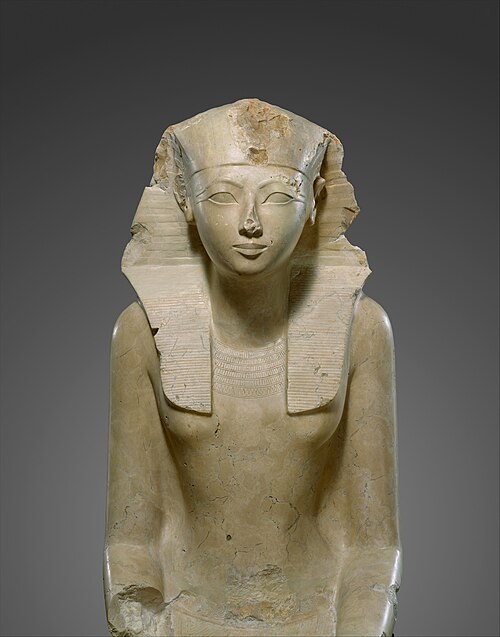
Hatshepsut
Emperor · Ancient
61.3Total
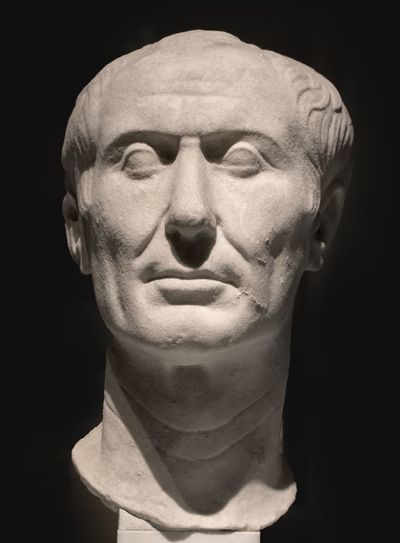
Julius Caesar
General · Ancient
83.3Total
Basic Information
Born
-1507
-100
Died
-1458
-44
Era
Ancient
Ancient
Nationality
Egypt
Roman Republic
Occupation
Emperor
General
Civilization
Middle Eastern
Western
Score Comparison
Military (10%)
35.7
88.0
Political (20%)
72.0
78.0
Influence (20%)
72.5
85.0
Legacy (20%)
67.9
82.0
Leadership (15%)
72.0
82.0
Strategy (15%)
30.0
88.0
TOTAL
61.3
83.3
Rankings
🥇
Julius CaesarLeader
Mil: 88.0Pol: 78.0Inf: 85.0
83.3
🥈
Hatshepsut
Mil: 35.7Pol: 72.0Inf: 72.5
61.3
+22.0 behind
How This Comparison Works
Algorithm
Each figure is scored on 6 dimensions (0—100 scale) based on structured historical data: Military (10%), Political (20%), Influence (20%), Legacy (20%), Leadership (15%), Strategy (15%). The weighted total produces the final ranking.
Data Sources
Scores are computed from structured sub-indicators in the database. Scale factors adjust for era (Ancient ×0.85, Modern ×1.0) and civilization size (Eastern ×1.05, Other ×0.80) to account for differences in population and military scale.
Maximum 3 Figures
Comparisons are limited to 2—3 figures to ensure readability and statistical meaningfulness.
Error Margins
±5 points per dimension — Sub-scores are derived from historical records with inherent uncertainty. Two figures within 5 points on a dimension should be considered roughly equivalent in that area.
Total Score Accuracy
±3 points overall — The weighted combination of 6 dimensions produces a total score with approximately ±3 points of uncertainty. Differences of less than 3 points are not statistically significant— the figures are effectively tied.
Known Limitations
- Historical records are incomplete and uneven across civilizations
- Figures from oral-tradition societies may be underrepresented
- Occupation labels can misclassify multi-role figures
- Scores measure capability and impact, not moral character
- Quantitative scoring is a comparison tool, not absolute truth
Capability Radar
Military (10%) — Battles & Warfare
Battles
10
95
Win Rate
10
92
Expansion
20
97
Political (20%) — Governance & Reform
Reform
75
90
Diplomacy
70
85
Economy
80
82
Influence (20%) — Cultural & Global Reach
Cultural
70
88
Global
55
94
Legacy (20%) — Historical Impact
Historical
65
95
Longevity
60
96
Leadership (15%) — Power & Stability
Tenure
70
75
Stability
75
60
Strategy (15%) — Tactics & Innovation
Strategy
15
94
Tactics
10
96
Reform
10
88
Analysis will be generated on first visit.
Scores and timeline are available below. The page will refresh automatically when ready.
Hatshepsut — Complete Timeline
1479 BC
Coronation as PharaohPolitical Action
Hatshepsut assumed the throne as pharaoh after the death of her husband Thutmose II, initially as regent for her stepson Thutmose III. She later declared herself king, adopting full royal titulary and male iconography to legitimize her rule.
SuccessionFemale PharaohLegitimacy
Impact: national
1470 BC
Expedition to the Land of PuntCultural◆ Major
Hatshepsut dispatched a trading expedition to the Land of Punt, likely located in the Horn of Africa. The mission returned with myrrh trees, gold, ivory, and exotic animals, which were depicted in reliefs at her mortuary temple at Deir el-Bahri.
TradePuntDeir el-Bahri
Impact: regionalconstructive
1460 BC
Construction of Mortuary Temple at Deir el-BahriCultural◆ Major
Hatshepsut commissioned a terraced mortuary temple at Deir el-Bahri, designed by her architect Senenmut. The temple featured colonnades, reliefs of her divine birth and the Punt expedition, and became a masterpiece of Egyptian architecture.
ArchitectureSenenmutMortuary Temple
Impact: nationalconstructive
1458 BC
Damnation of Hatshepsut's MemoryPolitical Action◆ Major
After Hatshepsut's death, Thutmose III ordered the systematic erasure of her name and images from monuments and temples. Her cartouches were chiseled out, and her statues were smashed, likely to consolidate his own legitimacy and remove her from official records.
Damnatio MemoriaeThutmose IIIIconoclasm
Impact: nationaldestructive
1457 BC
Obelisk Erection at KarnakCultural
Hatshepsut erected two massive obelisks at the Karnak temple, one of which still stands. The obelisks were carved from single blocks of granite and inscribed with texts proclaiming her devotion to the god Amun and her right to rule.
MonumentObeliskAmun
Impact: nationalconstructive
Similar Comparisons
Comments & Discussion
No comments yet. Be the first to share your thoughts!