Loading...
Hassan Ibrahim vs William Henry Harrison
Hassan Ibrahim leads by 2.4 pts · 2 figures compared
…
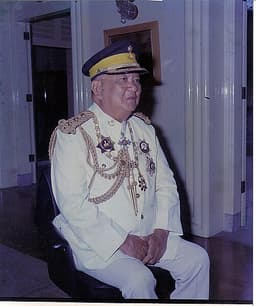
Hassan Ibrahim
General · Modern
44.4Total
William Henry Harrison
General · Modern
42.0Total
Basic Information
Born
1917
1773
Died
1996
1841
Era
Modern
Modern
Nationality
Egypt
United States
Occupation
General
General
Civilization
Middle Eastern
Western
Score Comparison
Military (10%)
10.2
50.0
Political (20%)
40.8
30.8
Influence (20%)
51.8
49.4
Legacy (20%)
39.2
42.5
Leadership (15%)
67.0
33.6
Strategy (15%)
45.0
43.3
TOTAL
44.4
42.0
Hassan Ibrahim — Complete Timeline
1952 AD
Participated in the 1952 Egyptian RevolutionPolitical Action◆ Major
Hassan Ibrahim was a member of the Free Officers movement that overthrew King Farouk. He was part of the inner circle that planned the July 23 coup.
Egyptian RevolutionFree OfficersCoup
Impact: national
1961 AD
Served as Vice President of EgyptPolitical Action◆ Major
Ibrahim served as Vice President of Egypt under Nasser from 1961 to 1964. He was involved in the administration of the United Arab Republic and domestic policy.
Vice PresidentUnited Arab RepublicNasser Era
Impact: national
1964 AD
Resigned from GovernmentPolitical Action
Ibrahim resigned from his vice presidency due to disagreements with Nasser's policies. He later retired from public life, distancing himself from the regime.
ResignationPolitical DisagreementNasser Era
Impact: national
William Henry Harrison — Complete Timeline
1811 AD
Battle of TippecanoeWar◆ Major
Harrison led U.S. forces against a Native American confederation led by Tenskwatawa at Prophetstown, Indiana Territory. The battle ended in a U.S. victory, destroying the confederation's base and earning Harrison national fame.
War of 1812 EraNative American ConflictMilitary
Impact: regional
1813 AD
Battle of the ThamesWar◆ Major
Harrison commanded American forces that defeated a combined British and Native American army near present-day Chatham, Ontario. The battle killed Tecumseh, ending the Native American alliance and securing the Northwest Territory.
War of 1812TecumsehMilitary Victory
Impact: regional
1840 AD
Elected President of the United StatesPolitical Action◆ Major
Harrison won the 1840 presidential election as the Whig candidate, defeating incumbent Martin Van Buren. His campaign used the 'Tippecanoe and Tyler Too' slogan, emphasizing his military record.
PresidencyElectionWhig Party
Impact: national
1841 AD
Delivered Longest Inaugural AddressPolitical Action
Harrison delivered a 8,445-word inaugural address on a cold, wet day without a coat or hat. The speech outlined Whig policies but lasted nearly two hours, contributing to his subsequent illness.
InaugurationSpeech
Impact: national
Died in OfficeOther◆ Major
Harrison died of pneumonia on April 4, 1841, just 31 days after his inauguration. He served the shortest presidency in U.S. history, triggering the first presidential succession crisis.
DeathPresidential Succession
Impact: nationaltragic
Expert Analysis
Origins
Hassan Ibrahim was born in 1917 in Egypt. He came from a middle-class family and attended the Egyptian Military Academy, graduating as a cavalry officer. His early career was shaped by the British occupation and the corruption of the monarchy, which fueled his nationalist sentiments. He became a close associate of Gamal Abdel Nasser and joined the Free Officers movement in the late 1940s.
William Henry Harrison was born on February 9, 1773, in Charles City County, Virginia, into a prominent planter family. His father, Benjamin Harrison V, was a signer of the Declaration of Independence. Harrison studied at Hampden-Sydney College and later studied medicine but left to join the military. He was appointed as an ensign in the U.S. Army in 1791 and quickly rose through ranks. His early career involved fighting Native Americans in the Northwest Territory.
Rise to Power
Ibrahim's rise came through the 1952 Egyptian Revolution. As a Free Officer, he participated in the July 23 coup that overthrew King Farouk. He was part of the inner circle that planned the coup and later served as a member of the Revolutionary Command Council. After the revolution, he held key positions, including Minister of National Guidance and Governor of Cairo. In 1961, Nasser appointed him Vice President of the United Arab Republic, a union between Egypt and Syria. His rise was tied to his loyalty to Nasser and his role in the revolution.
Harrison's rise was military and political. He served as secretary of the Northwest Territory and later as its first delegate to Congress. He gained fame at the Battle of Tippecanoe in 1811, where he led U.S. forces against Native American confederation. This victory, though controversial, made him a national hero. During the War of 1812, he commanded the Army of the Northwest and won the Battle of the Thames in 1813, killing Tecumseh. After the war, he served in the U.S. House and Senate, and as ambassador to Colombia. In 1840, he won the presidency as a Whig, using the slogan "Tippecanoe and Tyler Too."
Leadership & Governance
Ibrahim's leadership was shaped by Nasser's authoritarian rule. As Vice President, he had limited independent power but was involved in the administration of the United Arab Republic. His governance style was bureaucratic and loyal to Nasser's socialist policies. He supported land reforms and nationalization but lacked a distinct vision. His score of 67.0 in Leadership reflects his role as a loyal lieutenant, not a primary decision-maker.
Harrison's leadership was more independent. As a military commander, he was known for careful planning and negotiation with Native American tribes, though he also used force. As president, he intended to implement Whig policies like a national bank and tariffs, but his term lasted only 31 days. His Leadership score of 33.6 is low due to his brief presidency and lack of governance. His inaugural address, over 8,000 words, showed his detailed policy ideas but also his poor judgment in standing in cold weather without a coat, leading to his death.
Triumph & Tragedy
Ibrahim's greatest triumph was his role in the 1952 Revolution, which ended British influence and monarchy. He also served as Vice President during a period of Arab nationalism. His tragedy was his resignation in 1964 due to disagreements with Nasser's policies, leading to obscurity. He later retired from public life, and his influence faded. His total score of 44.4 reflects modest but real contributions.
Harrison's triumph was his military victories at Tippecanoe and the Thames, which secured the Northwest Territory for U.S. expansion. His political triumph was winning the presidency in 1840 after a vigorous campaign. His tragedy was his death after 31 days, the shortest presidency, which prevented any legislative achievements. His death also triggered the first presidential succession crisis, as his vice president John Tyler assumed office. Harrison's total score of 42.0 is slightly lower than Ibrahim's.
Character & Destiny
Ibrahim was a loyal and cautious figure. He followed Nasser's lead but eventually disagreed with the direction of the regime. His character led him to resign rather than challenge Nasser, showing a preference for principle over power. His destiny was to be a supporting player in Egypt's history, overshadowed by Nasser and other Free Officers.
Harrison was ambitious and energetic, with a strong sense of duty. He was also stubborn, as shown by his long speech in bad weather. His character drove him to seek the presidency, but his lack of caution led to his death. His destiny was to die before making an impact, leaving a legacy of what might have been.
Legacy
Ibrahim's legacy is minor. He is remembered as one of the Free Officers but not a major figure. His political influence score of 40.8 reflects his vice presidency, but his legacy score of 39.2 indicates limited long-term impact. He contributed to Egypt's transition to a republic but is not widely known outside of historical circles.
Harrison's legacy is more complex. His military victories helped open the Midwest to settlement, but also contributed to the displacement of Native Americans. His presidency is a historical footnote, but his campaign tactics, like the log cabin and hard cider imagery, influenced American politics. His death led to the precedent that vice presidents succeed presidents fully. His legacy score of 42.5 is slightly higher than Ibrahim's.
Conclusion
While Ibrahim has a higher total score (44.4 vs 42.0), Harrison had greater impact on a larger scale. Ibrahim's influence was confined to Egypt's early revolutionary period, whereas Harrison's military actions shaped U.S. expansion and his death set a constitutional precedent. Harrison's military score of 50.0 far exceeds Ibrahim's 10.2, and his influence score of 49.4 is comparable. In terms of historical significance, Harrison's impact on American history is more substantial than Ibrahim's on Egyptian history. Therefore, William Henry Harrison had greater overall impact.
Rankings
🥇
Hassan IbrahimLeader
Mil: 10.2Pol: 40.8Inf: 51.8
44.4
🥈
William Henry Harrison
Mil: 50.0Pol: 30.8Inf: 49.4
42.0
+2.4 behind
How This Comparison Works
Algorithm
Each figure is scored on 6 dimensions (0—100 scale) based on structured historical data: Military (10%), Political (20%), Influence (20%), Legacy (20%), Leadership (15%), Strategy (15%). The weighted total produces the final ranking.
Data Sources
Scores are computed from structured sub-indicators in the database. Scale factors adjust for era (Ancient ×0.85, Modern ×1.0) and civilization size (Eastern ×1.05, Other ×0.80) to account for differences in population and military scale.
Maximum 3 Figures
Comparisons are limited to 2—3 figures to ensure readability and statistical meaningfulness.
Error Margins
±5 points per dimension — Sub-scores are derived from historical records with inherent uncertainty. Two figures within 5 points on a dimension should be considered roughly equivalent in that area.
Total Score Accuracy
±3 points overall — The weighted combination of 6 dimensions produces a total score with approximately ±3 points of uncertainty. Differences of less than 3 points are not statistically significant— the figures are effectively tied.
Known Limitations
- Historical records are incomplete and uneven across civilizations
- Figures from oral-tradition societies may be underrepresented
- Occupation labels can misclassify multi-role figures
- Scores measure capability and impact, not moral character
- Quantitative scoring is a comparison tool, not absolute truth
Capability Radar
Military (10%) — Battles & Warfare
Battles
5
45
Win Rate
5
50
Expansion
5
35
Political (20%) — Governance & Reform
Reform
30
5
Diplomacy
30
30
Economy
20
10
Influence (20%) — Cultural & Global Reach
Cultural
10
10
Global
10
15
Legacy (20%) — Historical Impact
Historical
15
25
Longevity
10
20
Leadership (15%) — Power & Stability
Tenure
40
5
Stability
30
5
Strategy (15%) — Tactics & Innovation
Strategy
5
45
Tactics
5
40
Reform
5
20
Similar Comparisons
Comments & Discussion
No comments yet. Be the first to share your thoughts!