Loading...
Harsha vs Qin Shi Huang
Qin Shi Huang leads by 24.2 pts · 2 figures compared
…
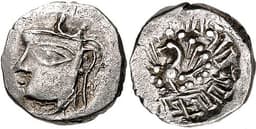
Harsha
Emperor · Medieval
61.0Total
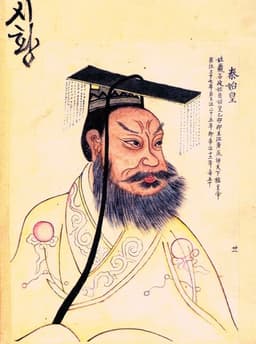
Qin Shi Huang
Emperor · Ancient
85.2Total
Basic Information
Born
590
-259
Died
647
-210
Era
Medieval
Ancient
Nationality
India
China
Occupation
Emperor
Emperor
Civilization
Indian
Eastern
Score Comparison
Military (10%)
61.7
80.0
Political (20%)
45.0
90.0
Influence (20%)
68.0
85.0
Legacy (20%)
58.0
90.0
Leadership (15%)
66.0
78.0
Strategy (15%)
66.3
82.0
TOTAL
61.0
85.2
Harsha — Complete Timeline
606 AD
Accession to the Throne of ThanesarPolitical Action
Harsha succeeded his father Prabhakaravardhana as ruler of Thanesar (in present-day Haryana). He was 16 years old and soon faced the challenge of avenging his brother-in-law's death and expanding his kingdom.
ThanesarSuccessionHarsha
Impact: regional
612 AD
Conquest of KannaujWar◆ Major
Harsha captured the city of Kannauj after defeating the Maukhari ruler Grahavarman's enemies. He made Kannauj his capital and established the Vardhana dynasty's control over the Gangetic plain, becoming the dominant power in northern India.
KannaujVardhana DynastyNorthern India
Impact: regional
620 AD
Campaigns in Eastern IndiaWar◆ Major
Harsha led military campaigns into Bengal and Odisha, defeating the Shashanka king of Gauda. He extended his empire eastward to the Bay of Bengal, though his control over these regions was not permanent.
BengalOdishaShashanka
Impact: regional
630 AD
Conflict with the Chalukya King Pulakeshin IIWar◆ Major
Harsha attempted to expand southward but was defeated by the Chalukya king Pulakeshin II on the banks of the Narmada River. This battle halted Harsha's southern expansion and established the Narmada as the boundary between the two empires.
ChalukyaPulakeshin IINarmada
Impact: regional
640 AD
Patronage of Buddhism and the Nalanda UniversityCultural◆ Major
Harsha was a patron of Buddhism and supported the Nalanda University, a major center of Buddhist learning. He convened a grand Buddhist council at Kannauj attended by monks from across Asia, and built monasteries and stupas.
BuddhismNalandaCouncil of Kannauj
Impact: regionalconstructive
643 AD
Visit of the Chinese Pilgrim XuanzangCultural
The Chinese Buddhist monk Xuanzang visited Harsha's court and spent time in the empire. Xuanzang's detailed accounts describe Harsha's administration, military, and religious tolerance, providing a key historical source for the period.
XuanzangChinese PilgrimBuddhism
Impact: regionalconstructive
Qin Shi Huang — Complete Timeline
246 BC
Construction of the Mausoleum and Terracotta ArmyOther◆ Major
Qin Shi Huang commissioned a vast mausoleum complex near Xi'an, guarded by thousands of life-sized terracotta soldiers, horses, and chariots. The project employed hundreds of thousands of workers and reflected his obsession with immortality and imperial power.
Impact: global
230 BC
Conquest of the Six Warring StatesWar
From 230 to 221 BCE, Ying Zheng led the Qin state in a series of campaigns that conquered the Han, Zhao, Wei, Chu, Yan, and Qi states. This unified China under a single ruler for the first time, ending the Warring States period.
Impact: global
221 BC
Standardization of Writing, Currency, and MeasurementsReform◆ Major
Qin Shi Huang ordered the standardization of Chinese script, currency, and weights and measures across the unified empire. This facilitated administration, trade, and cultural integration, laying a foundation for future dynasties.
Impact: globalconstructive
Proclamation of the Qin DynastyPolitical Action
After conquering the last independent state, Ying Zheng declared himself Shi Huangdi (First Emperor), founding the Qin Dynasty. He adopted a new title to signify his supreme authority and initiated centralized imperial rule.
Impact: global
214 BC
Initiation of the Great Wall ConstructionOther◆ Major
Qin Shi Huang ordered the connection and extension of existing northern fortifications to create a unified defensive wall against nomadic Xiongnu raids. This project involved massive conscripted labor and became the precursor to the later Great Wall.
Impact: regional
213 BC
Burning of Books and Burying of ScholarsPolitical Action◆ Major
On the advice of Li Si, Qin Shi Huang ordered the burning of historical records and philosophical texts not aligned with Legalist doctrine. He also had 460 Confucian scholars buried alive to suppress dissent and consolidate ideological control.
Impact: nationaldestructive
Expert Analysis
Qin Shi Huang vs Harsha: Historical Comparison
Qin Shi Huang, the first Emperor of a unified China (3rd century BCE), and Harsha, the medieval Indian emperor (7th century CE), both forged vast empires through ambition and statecraft, yet their methods and legacies diverged sharply—Qin’s centralized authoritarianism contrasted with Harsha’s more conciliatory, religiously tolerant rule.
Dimension Analysis
**Military: Qin Shi Huang 80 / Harsha 57**
Qin’s ruthless campaigns conquered six warring states, standardizing warfare with iron weapons and the Terracotta Army’s scale, while Harsha’s smaller, less disciplined forces failed to expand beyond northern India and were repeatedly checked by the Chalukya king Pulakeshin II.
**Political: Qin Shi Huang 88 / Harsha 79**
Qin imposed radical centralization—abolishing feudalism, standardizing script, currency, and law—creating a bureaucratic template for two millennia; Harsha maintained a more decentralized, feudal system reliant on regional vassals and Buddhist monastic patronage.
**Influence: Qin Shi Huang 82 / Harsha 70**
Qin’s unification defined China’s imperial identity, influencing governance, philosophy (Legalism), and infrastructure (Great Wall, road networks); Harsha’s influence was largely cultural, sponsoring the Nalanda university and Xuanzang’s travels, but his empire dissolved rapidly after his death.
**Legacy: Qin Shi Huang 85 / Harsha 70**
Qin’s legacy is enduring: his title “Emperor” (Huangdi) persisted for centuries, and the Qin dynasty’s administrative systems shaped later dynasties; Harsha’s legacy is more literary, preserved in his own plays and Xuanzang’s accounts, but his empire left no lasting political institutions.
**Leadership: Qin Shi Huang 88 / Harsha 86**
Both were decisive, visionary leaders—Qin through iron will and strategic ruthlessness, Harsha through personal charisma, religious patronage, and diplomatic skill—but Qin’s ability to enforce unity across a vast, diverse territory gives him a slight edge.
Verdict
Qin Shi Huang leads decisively due to his superior military conquests, political centralization, and enduring institutional legacy, outweighing Harsha’s cultural and diplomatic achievements.
FAQ
Q: Who ranks higher? A: Qin Shi Huang ranks higher overall, with an 84 composite score versus Harsha’s 71, driven by stronger performance in military, political, influence, and legacy dimensions.
Rankings
🥇
Qin Shi HuangLeader
Mil: 80.0Pol: 90.0Inf: 85.0
85.2
🥈
Harsha
Mil: 61.7Pol: 45.0Inf: 68.0
61.0
+24.2 behind
How This Comparison Works
Algorithm
Each figure is scored on 6 dimensions (0—100 scale) based on structured historical data: Military (10%), Political (20%), Influence (20%), Legacy (20%), Leadership (15%), Strategy (15%). The weighted total produces the final ranking.
Data Sources
Scores are computed from structured sub-indicators in the database. Scale factors adjust for era (Ancient ×0.85, Modern ×1.0) and civilization size (Eastern ×1.05, Other ×0.80) to account for differences in population and military scale.
Maximum 3 Figures
Comparisons are limited to 2—3 figures to ensure readability and statistical meaningfulness.
Error Margins
±5 points per dimension — Sub-scores are derived from historical records with inherent uncertainty. Two figures within 5 points on a dimension should be considered roughly equivalent in that area.
Total Score Accuracy
±3 points overall — The weighted combination of 6 dimensions produces a total score with approximately ±3 points of uncertainty. Differences of less than 3 points are not statistically significant— the figures are effectively tied.
Known Limitations
- Historical records are incomplete and uneven across civilizations
- Figures from oral-tradition societies may be underrepresented
- Occupation labels can misclassify multi-role figures
- Scores measure capability and impact, not moral character
- Quantitative scoring is a comparison tool, not absolute truth
Capability Radar
Military (10%) — Battles & Warfare
Battles
65
85
Win Rate
70
90
Expansion
70
90
Political (20%) — Governance & Reform
Reform
60
95
Diplomacy
70
75
Economy
65
90
Influence (20%) — Cultural & Global Reach
Cultural
65
95
Global
50
85
Legacy (20%) — Historical Impact
Historical
60
95
Longevity
55
95
Leadership (15%) — Power & Stability
Tenure
75
70
Stability
60
65
Strategy (15%) — Tactics & Innovation
Strategy
65
85
Tactics
60
80
Reform
50
95
Similar Comparisons
Comments & Discussion
AncientTextsReader6/16/2026
Harsha's own play *Nagananda* paints him as a compassionate ruler, but we must weigh this against Xuanzang's *Great Tang Records on the Western Regions*, which describes an empire held together more by personal diplomacy than institutional strength. Qin Shi Huang, by contrast, left us the *Shiji*'s account of standardized axle widths and script reforms—concrete administrative changes that outlasted his dynasty. While Harsha's cultural patronage was genuine, his political score of 78.8 feels generous given the rapid collapse after his death. Qin's 88 is better grounded in the durable institutions he forged.
ColdScroll646/16/2026
我仔细核对了评分维度:秦始皇军事80分,但考虑到他消灭六国时使用的铁兵器、弩机标准化以及郑国渠对后勤的保障,我觉得军事至少应该85分以上。戒日王政治78.8分,可他连王位继承制度都没能建立,死后帝国立即分裂,这个分数显然虚高——对比秦始皇统一度量衡、推行二十等爵制,政治88分合理但可以更高。另外影响力维度,戒日王70分主要靠玄奘和那烂陀寺,但秦始皇的驰道网、灵渠、长城对东亚文明的塑造,82分只能说勉强及格。如果按折中算法,总分差距应该拉到15分以上才对。
GrandChronicler946/16/2026
秦始皇与戒日王的比较,表面上看是东西方两位统一者的对话,但西方史学界常常低估了秦制对中国此后两千年的深层塑造。戒日王靠佛教和诸侯维系帝国,死后即分崩离析;而秦始皇的郡县制、书同文、车同轨,即便秦朝短暂,其制度DNA却一直延续到明清。拿军事分来说,秦军灭六国是本质性的统一战争,戒日王对南方的扩张却屡屡受挫——这个80比57的差距,我觉得还不够体现秦的碾压性优势。