Loading...
Harald Bluetooth vs Nikephoros II Phokas
Nikephoros II Phokas leads by 5.9 pts · 2 figures compared
…
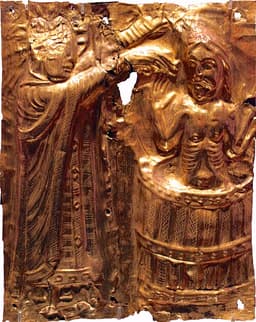
Harald Bluetooth
Emperor · Medieval
59.3Total
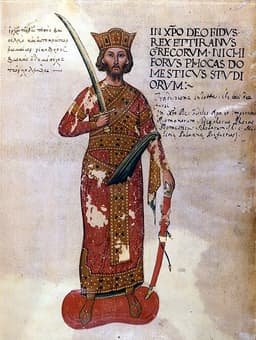
Nikephoros II Phokas
Emperor · Medieval
65.2Total
Basic Information
Born
911
912
Died
985
969
Era
Medieval
Medieval
Nationality
Denmark
Byzantine Empire
Occupation
Emperor
Emperor
Civilization
Western
Western
Score Comparison
Military (10%)
40.0
85.0
Political (20%)
72.0
68.0
Influence (20%)
62.0
60.0
Legacy (20%)
56.0
56.0
Leadership (15%)
70.0
65.7
Strategy (15%)
45.0
76.0
TOTAL
59.3
65.2
Harald Bluetooth — Complete Timeline
958 AD
Unified DenmarkPolitical Action◆ Major
Harald Bluetooth unified the Danish tribes into a single kingdom, consolidating power over Jutland, Zealand, and surrounding islands. This unification laid the foundation for the medieval Danish state and established the Gorm dynasty's rule.
UnificationDenmarkMedieval Kingdom
Impact: regionalconstructive
965 AD
Introduced Christianity to DenmarkCultural◆ Major
Harald Bluetooth converted to Christianity and mandated the conversion of Denmark. He erected the larger Jelling rune stone, which proclaims that he 'made the Danes Christian'. This event marked Denmark's entry into Christian Europe and aligned it with Latin Christendom.
ChristianizationReligionJelling Stones
Impact: regionalconstructive
Built the Jelling monumentsCultural◆ Major
Harald Bluetooth commissioned the Jelling rune stones and burial mounds in memory of his parents. The larger stone, often called 'Denmark's birth certificate', features a depiction of Christ and a runic inscription celebrating his unification of Denmark and Norway.
Jelling StonesMonumentsCultural Heritage
Impact: regionalconstructive
970 AD
Conquered NorwayWar◆ Major
Harald Bluetooth conquered Norway after defeating Earl Hakon Sigurdsson, bringing Norway under Danish rule. This expansion created a short-lived North Sea empire and demonstrated Danish military power in Scandinavia.
ConquestNorwayDanish Empire
Impact: regional
985 AD
Rebelled against by his son Sweyn ForkbeardPolitical Action◆ Major
Harald Bluetooth faced a rebellion led by his son Sweyn Forkbeard, who opposed his father's rule and Christianization policies. The rebellion forced Harald into exile, where he died shortly after, ending his reign and leading to Sweyn's ascension.
RebellionDynastic ConflictExile
Impact: regionaldestructive
Nikephoros II Phokas — Complete Timeline
961 AD
Recapture of Crete (961)War◆ Major
Nikephoros II led a campaign that recaptured the island of Crete from the Arabs after a long siege of Chandax. This victory eliminated a major pirate base and restored Byzantine control over the eastern Mediterranean.
Byzantine-Arab WarsMilitary CampaignNaval
Impact: regionalconstructive
963 AD
Accession as Emperor (963)Political Action◆ Major
Nikephoros II Phokas was proclaimed emperor after the death of Romanos II. He was a successful general who had recaptured Crete. His accession was supported by the military aristocracy.
Accession
Impact: regional
964 AD
Campaigns in Syria and Cilicia (964-969)War◆ Major
Nikephoros II launched a series of campaigns against the Hamdanid Emirate, recapturing Tarsus, Adana, and other cities in Cilicia. He also invaded Syria, capturing Aleppo in 962. These victories expanded Byzantine territory.
Byzantine-Arab WarsMilitary Campaign
Impact: regional
969 AD
Assassination by John Tzimiskes (969)Political Action◆ Major
Nikephoros II was assassinated in his palace by a conspiracy led by his nephew John Tzimiskes and his wife Theophano. He was stabbed to death in his bedchamber. John Tzimiskes then became emperor.
AssassinationCoup
Impact: regionaltragic
Expert Analysis
Origins
Harald Bluetooth, born around 935 in Denmark, was the son of King Gorm the Old and Thyra Danebod. His early life was shaped by the pagan traditions of the Viking Age, but his father's rule over Jutland provided a foundation for unification. Harald's education likely included Norse lore and military training, but details are sparse. His mother Thyra was reputedly wise and influential, and her death around 958 may have spurred his later monument building.
Nikephoros II Phokas, born circa 912 in Cappadocia (modern Turkey), hailed from a distinguished Byzantine military family. His father Bardas Phokas was a general, and his ancestors had served the empire for generations. Nikephoros received a thorough military education, becoming a skilled commander. He rose through the ranks, serving under emperors Constantine VII and Romanos II, and led campaigns against the Arabs in the 950s, including the recapture of Crete in 961.
Rise to Power
Harald Bluetooth's rise began with the death of his father Gorm around 958. He inherited a kingdom that included Jutland and perhaps Zealand. His major turning point was the unification of Denmark, which he achieved through a combination of military force and diplomacy, subduing local chieftains. Around 965, he converted to Christianity, likely influenced by the Holy Roman Empire's pressure and the desire to align with Christian Europe. He erected the larger Jelling rune stone, proclaiming his unification and Christianization. By 970, he had conquered Norway after defeating Earl Hakon Sigurdsson, expanding his realm.
Nikephoros II Phokas rose to prominence as a general under Emperor Romanos II. His greatest early achievement was the recapture of Crete from the Arabs in 961, a campaign that lasted eight months and ended with the fall of Chandax. This victory eliminated a pirate base and boosted his reputation. After Romanos II died in 963, Nikephoros was proclaimed emperor by the army, with support from the influential minister Joseph Bringas. He married Theophano, Romanos's widow, to legitimize his rule. His military successes continued with campaigns in Cilicia and Syria, recapturing Tarsus in 965 and invading Syria in 968.
Leadership & Governance
Harald Bluetooth ruled as a Viking king but adopted Christian governance. He built the Jelling monuments, including rune stones and burial mounds, to honor his parents and assert his legitimacy. He introduced Christianity by building churches and requiring conversion, though enforcement was gradual. His rule was decentralized, relying on local chieftains. He faced rebellion from his son Sweyn Forkbeard, who opposed his Christianization and centralizing policies. Harald's political score of 72.0 reflects his ability to unify Denmark, but his military score of 40.0 indicates limited martial prowess compared to other rulers.
Nikephoros II Phokas was a military emperor who prioritized warfare. He reformed the Byzantine army, focusing on heavy cavalry (cataphracts) and siege tactics. He personally led campaigns, earning the title 'Pale Death of the Saracens.' His governance was authoritarian, suppressing the aristocracy and raising taxes to fund his wars. He alienated the church by forbidding the creation of new bishoprics and confiscating church lands. His political score of 68.0 is lower than Harald's, as his rule ended in assassination due to court conspiracies. His military score of 85.0 reflects his dominance in battle.
Triumph & Tragedy
Harald Bluetooth's greatest triumph was unifying Denmark and introducing Christianity, which aligned Denmark with European civilization. The Jelling rune stone, often called 'Denmark's birth certificate,' symbolizes this achievement. He also conquered Norway, creating a North Sea empire. However, his tragedy was his downfall: his son Sweyn Forkbeard rebelled, forcing Harald into exile in 986, where he died. His empire fragmented after his death, and his Christianization faced backlash from pagan factions.
Nikephoros II Phokas's greatest triumph was the recapture of Crete in 961, which eliminated a major pirate threat and restored Byzantine naval power. His campaigns in Cilicia and Syria expanded the empire's borders, recapturing Tarsus and Aleppo. However, his tragedy was his assassination in 969, stabbed to death in his palace by conspirators including his nephew John Tzimiskes and his wife Theophano. His military gains were partially reversed after his death, as the Byzantines failed to hold all conquered territories.
Character & Destiny
Harald Bluetooth was pragmatic and diplomatic, using religion to consolidate power. His decision to convert to Christianity was politically motivated, as it strengthened ties with the Holy Roman Empire and reduced internal dissent. However, his tolerance of paganism created friction with his son, leading to rebellion. His legacy is one of unification, but his rule ended in exile due to family conflict.
Nikephoros II Phokas was ascetic, devout, and ruthless. He was known for his piety, sleeping on a stone and avoiding luxury. His military genius was undeniable, but his political naivety alienated key allies. His decision to marry Theophano and rely on her led to betrayal. His character—focused on war and austerity—made him enemies at court, leading to his murder. His destiny was cut short because he failed to secure his political base.
Legacy
Harald Bluetooth's legacy is enduring: he is remembered as the unifier of Denmark and the king who brought Christianity. The Jelling stones are UNESCO World Heritage sites. His name is immortalized in Bluetooth technology, symbolizing unification. However, his political unification was temporary, and Denmark's Christianization took centuries to complete. His influence score of 62.0 reflects his lasting symbolic importance.
Nikephoros II Phokas's legacy is as a great military emperor who expanded Byzantine borders. His recapture of Crete and campaigns in the East set the stage for later successes under Basil II. However, his assassination and the subsequent loss of territories limited his long-term impact. He is remembered as a saint in the Eastern Orthodox Church for his piety. His legacy score of 56.0 is similar to Harald's, but his influence is more regional.
Conclusion
Nikephoros II Phokas scored higher overall (65.2 vs 59.3), driven by his superior military (85.0) and strategy (76.0). While Harald Bluetooth's unification of Denmark and Christianization were significant, Nikephoros's military conquests had a more immediate impact on the Byzantine Empire's survival and expansion. Harald's unification was fragile and reversed after his death, whereas Nikephoros's reconquests provided lasting gains for Byzantium. Therefore, Nikephoros II Phokas had a greater impact on history, despite his tragic end.
Rankings
🥇
Nikephoros II PhokasLeader
Mil: 85.0Pol: 68.0Inf: 60.0
65.2
🥈
Harald Bluetooth
Mil: 40.0Pol: 72.0Inf: 62.0
59.3
+5.9 behind
How This Comparison Works
Algorithm
Each figure is scored on 6 dimensions (0—100 scale) based on structured historical data: Military (10%), Political (20%), Influence (20%), Legacy (20%), Leadership (15%), Strategy (15%). The weighted total produces the final ranking.
Data Sources
Scores are computed from structured sub-indicators in the database. Scale factors adjust for era (Ancient ×0.85, Modern ×1.0) and civilization size (Eastern ×1.05, Other ×0.80) to account for differences in population and military scale.
Maximum 3 Figures
Comparisons are limited to 2—3 figures to ensure readability and statistical meaningfulness.
Error Margins
±5 points per dimension — Sub-scores are derived from historical records with inherent uncertainty. Two figures within 5 points on a dimension should be considered roughly equivalent in that area.
Total Score Accuracy
±3 points overall — The weighted combination of 6 dimensions produces a total score with approximately ±3 points of uncertainty. Differences of less than 3 points are not statistically significant— the figures are effectively tied.
Known Limitations
- Historical records are incomplete and uneven across civilizations
- Figures from oral-tradition societies may be underrepresented
- Occupation labels can misclassify multi-role figures
- Scores measure capability and impact, not moral character
- Quantitative scoring is a comparison tool, not absolute truth
Capability Radar
Military (10%) — Battles & Warfare
Battles
30
85
Win Rate
35
90
Expansion
45
80
Political (20%) — Governance & Reform
Reform
70
60
Diplomacy
65
55
Economy
50
50
Influence (20%) — Cultural & Global Reach
Cultural
60
55
Global
50
45
Legacy (20%) — Historical Impact
Historical
65
70
Longevity
55
50
Leadership (15%) — Power & Stability
Tenure
60
45
Stability
55
40
Strategy (15%) — Tactics & Innovation
Strategy
40
88
Tactics
25
92
Reform
20
85
Similar Comparisons
Comments & Discussion
No comments yet. Be the first to share your thoughts!