Loading...
This comparison has not been analyzed yet.
One-time AI generation (~1 minute). Scores and timeline are already available below.
Hara Takashi vs Ramon Magsaysay
Ramon Magsaysay leads by 8.4 pts · 2 figures compared
…
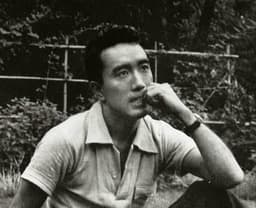
Hara Takashi
Politician · Modern
43.4Total
Ramon Magsaysay
Politician · Modern
51.8Total
Basic Information
Born
1856
1907
Died
1921
1957
Era
Modern
Modern
Nationality
Japan
Philippines
Occupation
Politician
Politician
Civilization
Eastern
Eastern
Score Comparison
Military (10%)
10.9
17.0
Political (20%)
45.0
55.0
Influence (20%)
54.1
61.0
Legacy (20%)
45.8
49.2
Leadership (15%)
53.2
72.0
Strategy (15%)
25.6
35.0
TOTAL
43.4
51.8
Hara Takashi — Complete Timeline
1918 AD
Siberian InterventionWar
Hara Takashi's government committed Japanese troops to the Siberian Intervention, an Allied expedition to support White Russian forces against the Bolsheviks. The intervention was costly and unpopular, leading to Japan's withdrawal in 1922.
Foreign policyMilitary intervention
Impact: regionaldestructive
Appointment as first commoner Prime MinisterPolitical Action
Hara Takashi became Prime Minister of Japan in 1918, the first commoner to hold the office. His appointment marked a shift toward party politics and away from rule by the Meiji oligarchs.
GovernmentDemocracy
Impact: nationalprogressive
1919 AD
Expansion of suffrage and party politicsReform◆ Major
Hara Takashi's government expanded the electorate by lowering the tax qualification for voting, increasing the number of eligible voters. He also strengthened the role of political parties in the cabinet, though he did not achieve universal male suffrage.
SuffragePolitical reform
Impact: nationalprogressive
1921 AD
AssassinationPolitical Action◆ Major
Hara Takashi was assassinated by a right-wing railway worker at Tokyo Station. His death shocked Japan and highlighted the growing political violence and opposition to democratic reforms from ultranationalist groups.
AssassinationPolitical violence
Impact: nationaltragic
Ramon Magsaysay — Complete Timeline
1953 AD
Elected President of the PhilippinesPolitical Action
Ramon Magsaysay was elected as the seventh president of the Philippines, defeating incumbent Elpidio Quirino. His campaign focused on anti-corruption and reform, and he won by a landslide, becoming a popular leader.
PresidencyElectionReform
Impact: nationalconstructive
1954 AD
Suppressed the Hukbalahap RebellionWar◆ Major
Magsaysay's government successfully suppressed the Hukbalahap (Huk) rebellion through a combination of military force and land reform. He offered amnesty to surrendering rebels and implemented social programs to address peasant grievances.
CounterinsurgencyLand ReformPeace
Impact: nationalconstructive
Implemented Land Reform ProgramsReform◆ Major
Magsaysay signed the Agricultural Tenancy Act and established the Land Tenure Administration, aiming to redistribute land to tenant farmers. These reforms sought to reduce rural poverty and address the root causes of peasant unrest.
Land ReformAgricultureSocial Justice
Impact: nationalprogressive
Opened Malacañang Palace to the PublicCultural
Magsaysay opened the gates of Malaca
PopulismTransparencyPublic Engagement
Impact: nationalconstructive
1957 AD
Died in Plane CrashOther◆ Major
Magsaysay died in a plane crash on Mount Manunggal in Cebu, along with 24 others. His sudden death shocked the nation and led to widespread mourning, with millions attending his funeral.
DeathPlane CrashNational Tragedy
Impact: nationaltragic
This comparison has not been analyzed yet.
One-time AI generation (~1 minute). Scores and timeline are already available below.
Rankings
🥇
Ramon MagsaysayLeader
Mil: 17.0Pol: 55.0Inf: 61.0
51.8
🥈
Hara Takashi
Mil: 10.9Pol: 45.0Inf: 54.1
43.4
+8.4 behind
How This Comparison Works
Algorithm
Each figure is scored on 6 dimensions (0—100 scale) based on structured historical data: Military (10%), Political (20%), Influence (20%), Legacy (20%), Leadership (15%), Strategy (15%). The weighted total produces the final ranking.
Data Sources
Scores are computed from structured sub-indicators in the database. Scale factors adjust for era (Ancient ×0.85, Modern ×1.0) and civilization size (Eastern ×1.05, Other ×0.80) to account for differences in population and military scale.
Maximum 3 Figures
Comparisons are limited to 2—3 figures to ensure readability and statistical meaningfulness.
Error Margins
±5 points per dimension — Sub-scores are derived from historical records with inherent uncertainty. Two figures within 5 points on a dimension should be considered roughly equivalent in that area.
Total Score Accuracy
±3 points overall — The weighted combination of 6 dimensions produces a total score with approximately ±3 points of uncertainty. Differences of less than 3 points are not statistically significant— the figures are effectively tied.
Known Limitations
- Historical records are incomplete and uneven across civilizations
- Figures from oral-tradition societies may be underrepresented
- Occupation labels can misclassify multi-role figures
- Scores measure capability and impact, not moral character
- Quantitative scoring is a comparison tool, not absolute truth
Capability Radar
Military (10%) — Battles & Warfare
Battles
16
13
Win Rate
17
17
Expansion
22
18
Political (20%) — Governance & Reform
Reform
65
75
Diplomacy
55
70
Economy
60
55
Influence (20%) — Cultural & Global Reach
Cultural
30
50
Global
35
45
Legacy (20%) — Historical Impact
Historical
45
55
Longevity
30
40
Leadership (15%) — Power & Stability
Tenure
60
60
Stability
40
65
Strategy (15%) — Tactics & Innovation
Strategy
26
26
Tactics
27
24
Reform
28
29
Similar Comparisons
Comments & Discussion
No comments yet. Be the first to share your thoughts!