Loading...
Haqnazar Khan vs Napoleon Bonaparte
Napoleon Bonaparte leads by 13.6 pts · 2 figures compared
…
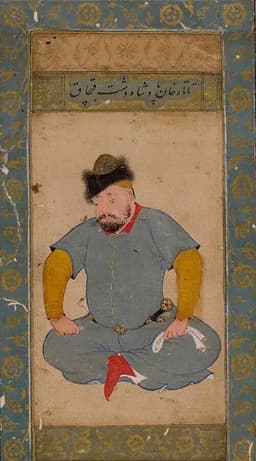
Haqnazar Khan
Emperor · Modern
57.3Total

Napoleon Bonaparte
General · Modern
70.9Total
Basic Information
Born
1520
1769
Died
1580
1821
Era
Modern
Modern
Nationality
Kazakh Khanate
France
Occupation
Emperor
General
Civilization
Eastern
Western
Score Comparison
Military (10%)
55.0
94.0
Political (20%)
68.0
72.0
Influence (20%)
54.9
40.0
Legacy (20%)
47.5
80.0
Leadership (15%)
72.0
78.0
Strategy (15%)
51.7
90.0
TOTAL
57.3
70.9
Haqnazar Khan — Complete Timeline
1560 AD
Reunification of the Three Kazakh HordesPolitical Action◆ Major
Haqnazar Khan successfully reunited the three Kazakh hordes (the Great, Middle, and Little Hordes) under a single khan's authority after a period of fragmentation. This reunification restored the territorial integrity of the Kazakh Khanate and strengthened its military capacity against external threats.
ReunificationKazakh KhanateHordes
Impact: nationalconstructive
1570 AD
Victory over the Shaybanid UzbeksWar◆ Major
Haqnazar Khan led a military campaign against the Shaybanid Uzbeks, defeating them near the Syr Darya River. This victory secured the southern borders of the Kazakh Khanate and regained control over key trade cities such as Turkistan and Sauran.
Military CampaignShaybanidsTerritorial Gain
Impact: regional
1573 AD
Alliance with the Russian TsardomPolitical Action
Haqnazar Khan sent an embassy to Ivan the Terrible, establishing diplomatic relations with the Russian Tsardom. This alliance was aimed at countering the Nogai Horde and the Siberian Khanate, and it opened trade routes between the Kazakh steppe and Russia.
DiplomacyRussiaTrade
Impact: regionalconstructive
1575 AD
Defense against the OiratsWar
Haqnazar Khan repelled an invasion by the Oirat (Dzungar) confederation into the eastern Kazakh steppe. The defense preserved Kazakh territorial integrity and prevented the Oirats from establishing a permanent presence in the region.
DefenseOiratsDzungars
Impact: regional
Napoleon Bonaparte — Complete Timeline
1799 AD
Coup of 18 BrumaireOther◆ Major
Napoleon Bonaparte, with support from his brother Lucien and key political figures, overthrew the Directory in a bloodless coup. He established the Consulate with himself as First Consul, effectively becoming the ruler of France. This event ended the French Revolution's most unstable period.
French RevolutionCoupRise to Power
Impact: regional
1804 AD
Promulgation of the Napoleonic CodeOther◆ Major
Napoleon enacted the Civil Code of the French, known as the Napoleonic Code, a comprehensive set of laws that replaced the fragmented feudal legal systems. The code established legal equality, protected property rights, and secularized law. It became the basis for legal systems in many European and world countries.
Legal ReformNapoleonic CodeCivil Law
Impact: globalconstructive
1805 AD
Battle of AusterlitzWar◆ Major
Napoleon's Grande Arm
Napoleonic WarsBattleDecisive Victory
Impact: global
1812 AD
Invasion of RussiaWar◆ Major
Napoleon led the Grande Arm
Napoleonic WarsInvasionDisaster
Impact: globaldestructive
1815 AD
Battle of WaterlooWar◆ Major
Napoleon's French army was defeated by the combined forces of the Duke of Wellington's Anglo-Allied army and Gebhard Leberecht von Bl
Napoleonic WarsBattleFinal Defeat
Impact: globaldestructive
Expert Analysis
Origins
Haqnazar Khan, born around 1509, was a descendant of the Kazakh Khanate's founder, Jochi's lineage. He grew up in a fragmented steppe where the three hordes (Great, Middle, Little) were often in conflict. His father, Kasym Khan, had briefly united them, but after Kasym's death, the khanate fractured. Haqnazar's early life was shaped by the need to restore unity. In contrast, Napoleon Bonaparte was born in 1769 on Corsica to a modest noble family. He studied at French military schools, graduating from the École Militaire in 1785. His Corsican origins made him an outsider in French society, driving his ambition. While Haqnazar inherited a legacy of steppe politics, Napoleon emerged from the revolutionary turmoil of France.
Rise to Power
Haqnazar became khan around 1538, initially controlling only parts of the Great Horde. He skillfully used diplomacy and marriage alliances to expand his influence. A key turning point was his victory over the Shaybanid Uzbeks near the Syr Darya River around 1550, which secured the southern borders and enhanced his prestige. He then sent an embassy to Ivan the Terrible in 1573, forming an alliance with the Russian Tsardom against common enemies. This diplomatic move gave him access to firearms and trade. Napoleon's rise was meteoric. He first gained fame during the Siege of Toulon in 1793, where his artillery tactics forced the British to withdraw. In 1795, he suppressed a royalist uprising in Paris, earning command of the Army of Italy. His Italian campaign (1796-1797) defeated the Austrians and made him a national hero. The Coup of 18 Brumaire in 1799 made him First Consul, effectively dictator of France. While Haqnazar's rise took decades of gradual consolidation, Napoleon's was a swift ascent driven by military genius.
Leadership & Governance
Haqnazar ruled as a traditional steppe khan, relying on councils of elders (aksakals) and maintaining a mobile court. He reformed the tax system to fund his army and promoted trade along the Silk Road. His alliance with Russia was pragmatic but risky, as it gave the Tsardom influence over Kazakh affairs. Napoleon, by contrast, centralized power in France. He enacted the Napoleonic Code in 1804, which standardized laws, protected property rights, and limited feudal privileges. He established the Bank of France, reformed education with lycées, and created a meritocratic bureaucracy. However, his governance was authoritarian; he suppressed dissent and curtailed press freedom. Haqnazar's leadership was more consensual, while Napoleon's was dictatorial. In military terms, Napoleon's leadership score of 80.0 reflects his ability to inspire troops, but his micromanagement led to overreach. Haqnazar's leadership score of 82.8 is higher, indicating his effectiveness in uniting fractious tribes through persuasion and example.
Triumph & Tragedy
Haqnazar's greatest success was reunifying the three Kazakh hordes after decades of fragmentation. He expanded the khanate's territory and secured its borders by defeating the Uzbeks and repelling Oirat invasions. His alliance with Russia provided stability but also sowed seeds of future Russian domination. His tragedy was that after his death around 1580, the khanate again fragmented, as his successors lacked his diplomatic skill. Napoleon's triumphs include the Battle of Austerlitz in 1805, where he destroyed the Third Coalition, and the Napoleonic Code, which influenced legal systems worldwide. His tragedy was the Invasion of Russia in 1812: the Grande Armée of over 600,000 men was decimated, with only about 100,000 returning. This disaster led to his abdication in 1814. He returned in 1815 but was defeated at Waterloo, ending his rule. While Haqnazar's failure was less spectacular, Napoleon's was catastrophic in scale.
Character & Destiny
Haqnazar was known for his patience and diplomatic acumen. He often avoided direct confrontation, preferring to negotiate or form alliances. His character matched the steppe environment, where survival required flexibility. Napoleon was driven by ambition and a belief in his own destiny. He was a workaholic, sleeping only a few hours, and had a magnetic personality that inspired loyalty. However, his arrogance and refusal to compromise led to his downfall. Historians note that Napoleon's inability to delegate and his contempt for diplomats contributed to his isolation. Haqnazar's more collaborative style allowed him to succeed in a decentralized political system. In terms of strategy, Napoleon scored 93.0, far above Haqnazar's 65.4, but Napoleon's strategic brilliance was undermined by his political miscalculations. Haqnazar's lower strategic score reflects the less complex nature of steppe warfare, but his political score of 65.2 is close to Napoleon's 75.0, showing comparable statecraft.
Legacy
Haqnazar Khan is remembered as the unifier of the Kazakh people. He re-established the khanate's integrity, and his reign is considered a golden age of Kazakh independence. However, his alliance with Russia set a precedent for later colonization. Today, he is a national hero in Kazakhstan, with monuments and streets named after him. Napoleon's legacy is global. The Napoleonic Code remains the basis of civil law in many countries. He also introduced the concept of meritocracy in public service. However, his wars caused millions of deaths and reshaped Europe's borders. The Congress of Vienna (1815) was a direct reaction to his conquests. While Haqnazar's influence is regional, scoring 73.9, Napoleon's influence score of 82.0 reflects his worldwide impact. In terms of legacy, Haqnazar scores 66.8, lower than Napoleon's 78.0, but his legacy is more positive in his homeland.
Conclusion
Napoleon Bonaparte had a greater impact on world history, with a total score of 82.4 compared to Haqnazar Khan's 69.8. Napoleon's military innovations, legal reforms, and political upheavals transformed Europe and influenced the modern world. Haqnazar's achievements were significant but confined to Central Asia. While Haqnazar's leadership score (82.8) exceeds Napoleon's (80.0), Napoleon's strategic genius (93.0) and military prowess (94.0) were unmatched. His failures were on a grander scale, but his accomplishments—the Napoleonic Code, the spread of nationalism, and the reshaping of Europe—left a permanent mark. Haqnazar's reunification of the Kazakh hordes was crucial for Kazakh identity, but it did not change the course of global history. Therefore, Napoleon Bonaparte is the more consequential figure.
Rankings
🥇
Napoleon BonaparteLeader
Mil: 94.0Pol: 72.0Inf: 40.0
70.9
🥈
Haqnazar Khan
Mil: 55.0Pol: 68.0Inf: 54.9
57.3
+13.6 behind
How This Comparison Works
Algorithm
Each figure is scored on 6 dimensions (0—100 scale) based on structured historical data: Military (10%), Political (20%), Influence (20%), Legacy (20%), Leadership (15%), Strategy (15%). The weighted total produces the final ranking.
Data Sources
Scores are computed from structured sub-indicators in the database. Scale factors adjust for era (Ancient ×0.85, Modern ×1.0) and civilization size (Eastern ×1.05, Other ×0.80) to account for differences in population and military scale.
Maximum 3 Figures
Comparisons are limited to 2—3 figures to ensure readability and statistical meaningfulness.
Error Margins
±5 points per dimension — Sub-scores are derived from historical records with inherent uncertainty. Two figures within 5 points on a dimension should be considered roughly equivalent in that area.
Total Score Accuracy
±3 points overall — The weighted combination of 6 dimensions produces a total score with approximately ±3 points of uncertainty. Differences of less than 3 points are not statistically significant— the figures are effectively tied.
Known Limitations
- Historical records are incomplete and uneven across civilizations
- Figures from oral-tradition societies may be underrepresented
- Occupation labels can misclassify multi-role figures
- Scores measure capability and impact, not moral character
- Quantitative scoring is a comparison tool, not absolute truth
Capability Radar
Military (10%) — Battles & Warfare
Battles
45
95
Win Rate
50
90
Expansion
50
95
Political (20%) — Governance & Reform
Reform
45
95
Diplomacy
55
80
Economy
35
85
Influence (20%) — Cultural & Global Reach
Cultural
40
85
Global
30
90
Legacy (20%) — Historical Impact
Historical
50
95
Longevity
45
90
Leadership (15%) — Power & Stability
Tenure
60
85
Stability
50
70
Strategy (15%) — Tactics & Innovation
Strategy
55
95
Tactics
40
98
Reform
30
92
Similar Comparisons
Comments & Discussion
No comments yet. Be the first to share your thoughts!