Loading...
Hage Geingob vs Halil Hamid Pasha
Hage Geingob leads by 3.3 pts · 2 figures compared
…

Hage Geingob
Politician · Modern
53.3Total
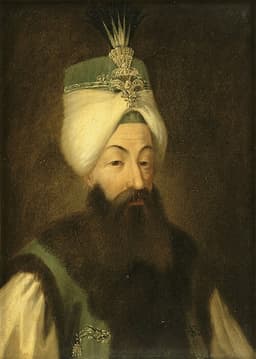
Halil Hamid Pasha
Politician · Modern
50.0Total
Basic Information
Born
1941
1736
Died
—
1785
Era
Modern
Modern
Nationality
Namibia
Ottoman Empire
Occupation
Politician
Politician
Civilization
Other
Middle Eastern
Score Comparison
Military (10%)
50.0
40.8
Political (20%)
55.0
62.7
Influence (20%)
54.1
48.6
Legacy (20%)
45.0
43.3
Leadership (15%)
72.0
64.5
Strategy (15%)
44.5
38.6
TOTAL
53.3
50.0
Hage Geingob — Complete Timeline
1990 AD
Became Prime Minister of NamibiaPolitical Action◆ Major
Hage Geingob was appointed the first Prime Minister of independent Namibia by President Sam Nujoma. He served in this role for 12 years, overseeing the implementation of government policies and the establishment of administrative structures.
Prime MinisterGovernmentIndependence
Impact: nationalconstructive
2008 AD
Served as Minister of Trade and IndustryPolitical Action
After a period out of government, Geingob returned as Minister of Trade and Industry under President Hifikepunye Pohamba. He focused on economic diversification, foreign investment, and industrial policy, including the development of the Walvis Bay port.
TradeIndustryEconomic Policy
Impact: nationalconstructive
2015 AD
Became President of NamibiaPolitical Action◆ Major
Geingob was elected President of Namibia with a large majority, succeeding Pohamba. He promised to continue SWAPO's policies of stability and development, but his tenure was marked by economic challenges, including a recession and rising unemployment.
PresidencyElectionSWAPO
Impact: national
2016 AD
Launched Harambee Prosperity PlanReform◆ Major
Geingob launched the Harambee Prosperity Plan, a five-year development blueprint aimed at accelerating economic growth, reducing poverty, and improving infrastructure. The plan focused on four pillars: effective governance, economic advancement, social progression, and infrastructure development.
Development PlanHarambeeEconomic Policy
Impact: nationalconstructive
2019 AD
Faced 'Fishrot' Corruption ScandalPolitical Action◆ Major
Geingob's government was rocked by the 'Fishrot' scandal, in which senior officials were accused of taking bribes from an Icelandic fishing company in exchange for fishing quotas. The scandal led to the resignation of two ministers and damaged public trust in his administration.
CorruptionFishrotScandal
Impact: nationaldestructive
Halil Hamid Pasha — Complete Timeline
1782 AD
Military ReformsReform◆ Major
As grand vizier, Halil Hamid Pasha initiated reforms to modernize the Ottoman military, including the establishment of a new artillery corps and the recruitment of European advisors. These reforms were precursors to later Tanzimat changes.
ReformMilitaryModernization
Impact: nationalconstructive
Grand Vizier AppointmentPolitical Action
Halil Hamid Pasha was appointed grand vizier by Sultan Abdul Hamid I. His appointment was part of a wave of reformist officials, but his tenure was cut short by conservative opposition and his eventual execution.
AppointmentReformAdministration
Impact: nationalconstructive
1785 AD
Execution on SuspicionOther◆ Major
Halil Hamid Pasha was executed by order of Sultan Abdul Hamid I on suspicion of plotting against the throne. His death ended his reformist tenure, which had included military and administrative changes, and highlighted the dangers of court politics.
ExecutionOttoman PoliticsReform
Impact: nationaltragic
Expert Analysis
Origins
Hage Geingob was born on August 3, 1941, in Otjiwarongo, South West Africa (now Namibia), to a Herero family. His father was a farmworker, and his mother a domestic worker. He attended primary school in Otavi and secondary school in Augustineum, Windhoek. In 1964, he left Namibia for Botswana and then the United States, where he earned a BA in political science from Fordham University in 1970 and an MA in international relations from The New School in 1974. His early life was shaped by apartheid and the liberation struggle, leading him to join SWAPO in exile.
Halil Hamid Pasha was born around 1736 in the Ottoman Empire, likely in the Balkans. He rose through the imperial bureaucracy, serving as a scribe and later as a governor. His early career was typical of Ottoman officials, with education in Islamic law and administration. He became a trusted advisor to Sultan Abdul Hamid I, eventually appointed grand vizier in 1782. His background was rooted in the traditional Ottoman system, but he became a proponent of military reform after witnessing Ottoman defeats against Russia.
Rise to Power
Geingob's rise began in exile when he became SWAPO's chief representative in the Americas and later in the United Nations. He played a key role in lobbying for Namibia's independence. In 1989, he returned to Namibia and chaired the Constituent Assembly that drafted the constitution. In 1990, he became the first Prime Minister of independent Namibia, serving until 2002. He was later Minister of Trade and Industry (2008-2012) and then elected President in 2014 with 87% of the vote, succeeding Hifikepunye Pohamba. His political score of 55.0 reflects his steady ascent through party ranks.
Halil Hamid Pasha's rise was more abrupt. He gained favor with Sultan Abdul Hamid I for his administrative competence and reformist ideas. In 1782, he was appointed grand vizier, the highest official after the sultan. His tenure lasted only three years (1782-1785), during which he attempted to modernize the military. However, his rise was cut short by execution in 1785 on suspicion of plotting, following the sultan's paranoia. His political score of 62.7 indicates high potential but truncated career.
Leadership & Governance
Geingob's leadership style was consultative and technocratic. As president, he launched the Harambee Prosperity Plan (2016-2020), a five-year development blueprint focusing on economic growth, poverty reduction, and infrastructure. He emphasized national unity, coining the phrase 'One Namibia, One Nation.' However, his governance was marred by the 'Fishrot' corruption scandal (2019), where senior officials were accused of taking bribes from an Icelandic fishing company. Geingob's leadership score of 72.0 reflects his ability to maintain stability but also his tolerance of corruption.
Halil Hamid Pasha was a reform-minded vizier who sought to strengthen the Ottoman military after defeats by Russia. He established a new artillery corps and invited European experts to train troops. He also attempted to reform the treasury and reduce corruption. However, his reforms faced opposition from the Janissaries and conservative clerics. His leadership score of 64.5 indicates his determination but limited success due to short tenure and resistance. Unlike Geingob, he governed in an autocratic system where his life depended on the sultan's whim.
Triumph & Tragedy
Geingob's greatest success was overseeing Namibia's peaceful transition to independence and its first democratic government. He served as prime minister for 12 years, implementing policies that maintained stability. As president, he launched the Harambee Prosperity Plan, which improved infrastructure and social services. His greatest failure was the Fishrot scandal, which eroded public trust and damaged Namibia's international reputation. His legacy score of 45.0 reflects mixed achievements.
Halil Hamid Pasha's triumph was initiating military reforms that laid groundwork for later modernization under Selim III. He introduced new artillery and training methods. However, his tragedy was his execution on false suspicion, cutting short his reforms. His legacy score of 43.3 reflects his potential unfulfilled. While Geingob died in office (2024), Halil Hamid Pasha died violently, a common fate for Ottoman officials.
Character & Destiny
Geingob was known for his calm demeanor and diplomatic skills. He was a consensus-builder, often mediating within SWAPO. His destiny was shaped by the liberation struggle; he rose through party loyalty and longevity. His character, however, included a tolerance for cronyism, leading to corruption scandals. His military score of 50.0 is irrelevant as he was a civilian politician.
Halil Hamid Pasha was a reformer in a conservative empire. His character was ambitious and forward-thinking, but his fate was sealed by political intrigue. The sultan's paranoia led to his execution, showing how individual character could not overcome systemic autocracy. His military score of 40.8 reflects his focus on administrative reforms rather than personal combat.
Legacy
Geingob's legacy is as a founding father of Namibia, the first prime minister and third president. He is remembered for stability and the Harambee plan, but the Fishrot scandal tarnishes his record. Namibia remains a stable democracy, but corruption persists. His influence score of 54.1 reflects moderate global impact.
Halil Hamid Pasha's legacy is as a precursor to Ottoman Tanzimat reforms. His military reforms influenced later modernization, but his execution symbolizes the difficulties of reform in the Ottoman Empire. He is remembered by historians but not widely known. His influence score of 48.6 is slightly lower.
Conclusion
Hage Geingob had a greater impact than Halil Hamid Pasha. With a total score of 53.3 compared to 50.0, Geingob's longer tenure and role in founding a nation outweigh the Ottoman vizier's brief reform attempts. Geingob's leadership score of 72.0 versus 64.5 and his political score of 55.0 versus 62.7 (though lower) reflect sustained influence. While Halil Hamid Pasha's reforms were innovative, they were curtailed by execution. Geingob's legacy, despite corruption, shaped a country for decades. Thus, Geingob's impact is more substantial and lasting.
Rankings
🥇
Hage GeingobLeader
Mil: 50.0Pol: 55.0Inf: 54.1
53.3
🥈
Halil Hamid Pasha
Mil: 40.8Pol: 62.7Inf: 48.6
50.0
+3.3 behind
How This Comparison Works
Algorithm
Each figure is scored on 6 dimensions (0—100 scale) based on structured historical data: Military (10%), Political (20%), Influence (20%), Legacy (20%), Leadership (15%), Strategy (15%). The weighted total produces the final ranking.
Data Sources
Scores are computed from structured sub-indicators in the database. Scale factors adjust for era (Ancient ×0.85, Modern ×1.0) and civilization size (Eastern ×1.05, Other ×0.80) to account for differences in population and military scale.
Maximum 3 Figures
Comparisons are limited to 2—3 figures to ensure readability and statistical meaningfulness.
Error Margins
±5 points per dimension — Sub-scores are derived from historical records with inherent uncertainty. Two figures within 5 points on a dimension should be considered roughly equivalent in that area.
Total Score Accuracy
±3 points overall — The weighted combination of 6 dimensions produces a total score with approximately ±3 points of uncertainty. Differences of less than 3 points are not statistically significant— the figures are effectively tied.
Known Limitations
- Historical records are incomplete and uneven across civilizations
- Figures from oral-tradition societies may be underrepresented
- Occupation labels can misclassify multi-role figures
- Scores measure capability and impact, not moral character
- Quantitative scoring is a comparison tool, not absolute truth
Capability Radar
Military (10%) — Battles & Warfare
Battles
22
22
Win Rate
26
25
Expansion
30
26
Political (20%) — Governance & Reform
Reform
60
70
Diplomacy
70
40
Economy
55
30
Influence (20%) — Cultural & Global Reach
Cultural
30
20
Global
35
10
Legacy (20%) — Historical Impact
Historical
40
40
Longevity
30
20
Leadership (15%) — Power & Stability
Tenure
65
30
Stability
60
20
Strategy (15%) — Tactics & Innovation
Strategy
29
31
Tactics
32
36
Reform
38
38
Similar Comparisons
Comments & Discussion
No comments yet. Be the first to share your thoughts!