Loading...
H. H. Asquith vs Siraj-ul-Haq
H. H. Asquith leads by 24.0 pts · 2 figures compared
…

H. H. Asquith
Politician · Modern
60.3Total
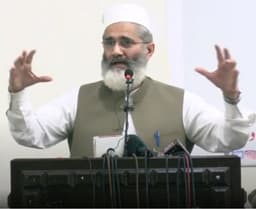
Siraj-ul-Haq
Politician · Modern
36.3Total
Basic Information
Born
1852
1962
Died
1928
—
Era
Modern
Modern
Nationality
United Kingdom
Pakistan
Occupation
Politician
Politician
Civilization
Western
Indian
Score Comparison
Military (10%)
50.0
10.9
Political (20%)
60.0
25.0
Influence (20%)
62.0
47.1
Legacy (20%)
58.0
36.7
Leadership (15%)
79.8
45.0
Strategy (15%)
43.1
37.8
TOTAL
60.3
36.3
H. H. Asquith — Complete Timeline
1911 AD
Passage of the Parliament Act 1911Political Action◆ Major
As Prime Minister, Asquith secured passage of the Parliament Act, which removed the House of Lords' power to veto money bills and reduced its veto over other legislation to a two-year delay. This fundamentally altered the British constitutional balance between the Commons and Lords.
Constitutional ReformHouse of LordsLiberal Government
Impact: nationalconstructive
1914 AD
British Entry into World War IWar
Asquith's cabinet issued an ultimatum to Germany demanding withdrawal from Belgium after the German invasion. When Germany did not comply, Britain declared war on 4 August 1914, committing the British Empire to the First World War.
World War IBelgian NeutralityDeclaration of War
Impact: global
Government of Ireland Act 1914Political Action◆ Major
Asquith's government passed the Government of Ireland Act, granting home rule to Ireland. Implementation was suspended due to the outbreak of World War I and the threat of Ulster Unionist resistance, leaving the Irish question unresolved.
Irish Home RuleUlster CrisisLegislation
Impact: regional
1915 AD
Formation of the First Coalition GovernmentPolitical Action◆ Major
Facing military setbacks and political pressure, Asquith formed a coalition government with the Conservatives and Labour in May 1915. This ended the Liberal Party's sole control of the government and marked a shift in wartime political management.
CoalitionWorld War IPolitical Change
Impact: national
1916 AD
Resignation as Prime MinisterPolitical Action◆ Major
Asquith resigned as Prime Minister in December 1916 after losing the confidence of Conservative coalition partners and facing criticism over war strategy. David Lloyd George succeeded him, leading a new coalition government.
ResignationWorld War IPolitical Crisis
Impact: national
Siraj-ul-Haq — Complete Timeline
2014 AD
Elected Emir of Jamaat-e-Islami PakistanPolitical Action◆ Major
Siraj-ul-Haq was elected as the Emir (chief) of Jamaat-e-Islami Pakistan, succeeding Syed Munawar Hassan. His leadership focused on Islamic revivalism and political activism, positioning the party as a key religious-political force.
Jamaat-e-IslamiEmirIslamic Politics
Impact: nationalconstructive
Led Opposition to Military OperationsPolitical Action◆ Major
Siraj-ul-Haq led Jamaat-e-Islami's opposition to military operations in North Waziristan, advocating for peace talks with Taliban. His stance was controversial, drawing criticism from security-focused factions.
Military OperationsPeace TalksTaliban
Impact: nationaldestructive
2015 AD
Elected SenatorPolitical Action
Siraj-ul-Haq was elected to the Senate of Pakistan, representing Khyber Pakhtunkhwa. As a senator, he advocated for Islamic legislation and opposed government policies he deemed un-Islamic.
SenatorParliamentIslamic Legislation
Impact: nationalconstructive
2017 AD
Formed Muttahida Majlis-e-Amal AlliancePolitical Action◆ Major
Siraj-ul-Haq played a key role in reviving the Muttahida Majlis-e-Amal, an alliance of religious parties. The alliance aimed to consolidate the religious vote and challenge secular parties in elections.
MMAReligious AllianceElections
Impact: nationalconstructive
Expert Analysis
Origins
**H. H. Asquith** was born on 12 September 1852 in Morley, Yorkshire, to a middle-class family. His father was a wool merchant. Asquith was educated at the City of London School and Balliol College, Oxford, where he studied classics and law. He became a barrister, specializing in commercial law, and entered politics as a Liberal MP in 1886. His early career was marked by legal acumen and a reputation for calm, intellectual debate.
**Siraj-ul-Haq** was born in 1962 in Khyber Pakhtunkhwa, Pakistan, into a religious family. He studied at the University of Peshawar, earning a degree in Islamic studies. He joined Jamaat-e-Islami as a youth and rose through the ranks, becoming a prominent figure in the party. His formative experiences included working in the party's student wing and advocating for Islamic governance.
Rise to Power
Asquith became Prime Minister in 1908 after succeeding Henry Campbell-Bannerman. His rise was steady: he served as Home Secretary (1892–1895) and Chancellor of the Exchequer (1905–1908). Key turning points included his defense of free trade and his role in the People's Budget (1909), which led to a constitutional crisis. The Parliament Act 1911, which curbed the House of Lords' powers, solidified his leadership.
Siraj-ul-Haq was elected Emir of Jamaat-e-Islami Pakistan in 2014, succeeding Syed Munawar Hassan. His rise was gradual, shaped by decades of party work. He gained prominence as a senator and by leading the party's opposition to military operations in North Waziristan. He also revived the Muttahida Majlis-e-Amal (MMA) alliance, bringing together religious parties.
Leadership & Governance
Asquith's leadership was characterized by a cabinet-style, cautious approach. He presided over major reforms: old-age pensions (1908), National Insurance (1911), and the Parliament Act. However, his governance during World War I was criticized as indecisive. He formed a coalition in 1915 but failed to manage the war effectively, leading to his resignation in 1916. His score of 79.8 in leadership reflects his peacetime governance but wartime shortcomings.
Siraj-ul-Haq's leadership is ideological, rooted in Islamic revivalism. He advocates for Sharia law and opposes military action against the Taliban. As a senator, he pushes for Islamic legislation. His leadership score of 45.0 indicates limited executive power; he leads a religious party in a democratic system, often out of government. His governance is more about influence than direct administration.
Triumph & Tragedy
Asquith's greatest success was the Parliament Act 1911, which permanently altered British constitutional balance. He also led Britain into WWI with a unified cabinet. His tragedy was his wartime leadership: military stalemates, the Easter Rising 1916, and his replacement by David Lloyd George. His political score of 60.0 reflects these mixed outcomes.
Siraj-ul-Haq's triumph is his leadership of Jamaat-e-Islami and the MMA, giving religious parties a united platform. However, his tragic aspect is his failure to translate religious influence into broad electoral success. The MMA won only limited seats, and his opposition to military operations has been controversial, with critics labeling him as soft on extremism. His political score of 25.0 underscores limited impact.
Character & Destiny
Asquith was intellectual, reserved, and a skilled debater. His calm demeanor served him in peacetime but became a liability in war, where decisiveness was needed. He was nicknamed 'the Last of the Romans' for his classical oratory. His destiny was shaped by the war: he was a reformer whose legacy was overshadowed by conflict.
Siraj-ul-Haq is a disciplined Islamist, consistent in his ideology. He is seen as a moderate within his party, favoring dialogue over violence. His character aligns with his party's long-term goals, but his destiny is limited by Pakistan's political landscape, where religious parties remain marginal. His influence score of 47.1 reflects his role as a religious leader rather than a mainstream politician.
Legacy
Asquith's legacy endures through the Parliament Act 1911, which remains a cornerstone of British constitutional law. His social reforms laid groundwork for the welfare state. However, his wartime record diminished his reputation. He is remembered as a peacetime reformer who faltered in war. His legacy score is 58.0.
Siraj-ul-Haq's legacy is still forming. He has kept Jamaat-e-Islami relevant in Pakistani politics, but the party's influence wanes. He is known for advocating peace talks with the Taliban, a stance that has not yielded results. His legacy score of 36.7 suggests limited lasting impact beyond his party.
Conclusion
H. H. Asquith had a greater impact than Siraj-ul-Haq, as reflected in his higher total score (60.3 vs. 36.3). Asquith shaped British constitutional history and social policy, while Siraj-ul-Haq's influence is confined to Pakistan's religious minority politics. Asquith's reforms endure; Siraj-ul-Haq's achievements are more transient. The gap of 24.0 points underscores a clear difference in historical significance.
Rankings
🥇
H. H. AsquithLeader
Mil: 50.0Pol: 60.0Inf: 62.0
60.3
🥈
Siraj-ul-Haq
Mil: 10.9Pol: 25.0Inf: 47.1
36.3
+24.0 behind
How This Comparison Works
Algorithm
Each figure is scored on 6 dimensions (0—100 scale) based on structured historical data: Military (10%), Political (20%), Influence (20%), Legacy (20%), Leadership (15%), Strategy (15%). The weighted total produces the final ranking.
Data Sources
Scores are computed from structured sub-indicators in the database. Scale factors adjust for era (Ancient ×0.85, Modern ×1.0) and civilization size (Eastern ×1.05, Other ×0.80) to account for differences in population and military scale.
Maximum 3 Figures
Comparisons are limited to 2—3 figures to ensure readability and statistical meaningfulness.
Error Margins
±5 points per dimension — Sub-scores are derived from historical records with inherent uncertainty. Two figures within 5 points on a dimension should be considered roughly equivalent in that area.
Total Score Accuracy
±3 points overall — The weighted combination of 6 dimensions produces a total score with approximately ±3 points of uncertainty. Differences of less than 3 points are not statistically significant— the figures are effectively tied.
Known Limitations
- Historical records are incomplete and uneven across civilizations
- Figures from oral-tradition societies may be underrepresented
- Occupation labels can misclassify multi-role figures
- Scores measure capability and impact, not moral character
- Quantitative scoring is a comparison tool, not absolute truth
Capability Radar
Military (10%) — Battles & Warfare
Battles
26
21
Win Rate
30
25
Expansion
37
29
Political (20%) — Governance & Reform
Reform
70
15
Diplomacy
65
15
Economy
60
10
Influence (20%) — Cultural & Global Reach
Cultural
40
10
Global
60
10
Legacy (20%) — Historical Impact
Historical
65
10
Longevity
50
10
Leadership (15%) — Power & Stability
Tenure
75
20
Stability
55
15
Strategy (15%) — Tactics & Innovation
Strategy
38
35
Tactics
42
34
Reform
44
37
Similar Comparisons
Comments & Discussion
No comments yet. Be the first to share your thoughts!