Loading...
Gyeongjong of Goryeo vs Qin Shi Huang
Qin Shi Huang leads by 38.1 pts · 2 figures compared
…
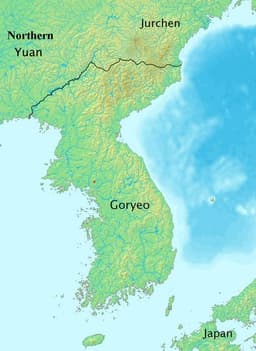
Gyeongjong of Goryeo
Emperor · Medieval
47.1Total
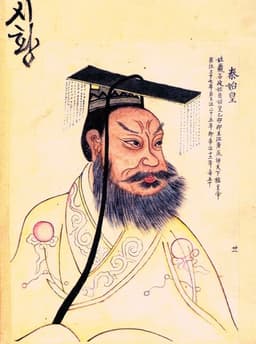
Qin Shi Huang
Emperor · Ancient
85.2Total
Basic Information
Born
955
-259
Died
981
-210
Era
Medieval
Ancient
Nationality
Korea
China
Occupation
Emperor
Emperor
Civilization
Eastern
Eastern
Score Comparison
Military (10%)
20.0
80.0
Political (20%)
53.8
90.0
Influence (20%)
53.3
85.0
Legacy (20%)
47.5
90.0
Leadership (15%)
48.8
78.0
Strategy (15%)
45.0
82.0
TOTAL
47.1
85.2
Gyeongjong of Goryeo — Complete Timeline
976 AD
Institution of the Jeonsigwa Land SystemReform◆ Major
King Gyeongjong established the jeonsigwa, a land distribution system that allocated state-owned farmland to government officials based on their rank. This reform aimed to secure royal revenue and control over land, while providing a stable income for the bureaucracy.
Impact: nationalconstructive
Qin Shi Huang — Complete Timeline
246 BC
Construction of the Mausoleum and Terracotta ArmyOther◆ Major
Qin Shi Huang commissioned a vast mausoleum complex near Xi'an, guarded by thousands of life-sized terracotta soldiers, horses, and chariots. The project employed hundreds of thousands of workers and reflected his obsession with immortality and imperial power.
Impact: global
230 BC
Conquest of the Six Warring StatesWar
From 230 to 221 BCE, Ying Zheng led the Qin state in a series of campaigns that conquered the Han, Zhao, Wei, Chu, Yan, and Qi states. This unified China under a single ruler for the first time, ending the Warring States period.
Impact: global
221 BC
Standardization of Writing, Currency, and MeasurementsReform◆ Major
Qin Shi Huang ordered the standardization of Chinese script, currency, and weights and measures across the unified empire. This facilitated administration, trade, and cultural integration, laying a foundation for future dynasties.
Impact: globalconstructive
Proclamation of the Qin DynastyPolitical Action
After conquering the last independent state, Ying Zheng declared himself Shi Huangdi (First Emperor), founding the Qin Dynasty. He adopted a new title to signify his supreme authority and initiated centralized imperial rule.
Impact: global
214 BC
Initiation of the Great Wall ConstructionOther◆ Major
Qin Shi Huang ordered the connection and extension of existing northern fortifications to create a unified defensive wall against nomadic Xiongnu raids. This project involved massive conscripted labor and became the precursor to the later Great Wall.
Impact: regional
213 BC
Burning of Books and Burying of ScholarsPolitical Action◆ Major
On the advice of Li Si, Qin Shi Huang ordered the burning of historical records and philosophical texts not aligned with Legalist doctrine. He also had 460 Confucian scholars buried alive to suppress dissent and consolidate ideological control.
Impact: nationaldestructive
Expert Analysis
gyeongjong-of-goryeo-vs-qin-shi-huang
# The First Emperor and the Reformer King
On a spring morning in 221 BCE, the ruler of Qin stood before his assembled generals in the conquered palace of Qi, the last independent kingdom to fall. He was thirty-eight years old, and he had just accomplished what no one in Chinese history had ever done: he had united all of China under a single sovereign. Across the centuries and the Yellow Sea, another king, younger and less celebrated, sat on the throne of Goryeo in 976 CE, contemplating a very different kind of conquest—not of territory, but of administration. Gyeongjong was only twenty-one when he signed the decree that would establish the *jeonsigwa* land system, a reform that would stabilize his kingdom for generations. These two men, separated by more than a thousand years, both sought to impose order on their worlds. Yet one became a titan of history, remembered for his brutal ambition and enduring legacy, while the other remains a footnote, a capable administrator whose name is known only to scholars. What drove these vastly different outcomes?
Origins
Qin Shi Huang was born Ying Zheng in 259 BCE, the son of a prince who had been a hostage in a neighboring state. His childhood was forged in the crucible of the Warring States period, an era of relentless conflict where seven kingdoms fought for supremacy. The young prince learned early that power was the only currency that mattered, and that trust was a weakness. His mother’s political machinations and his own precarious position taught him to rule through fear and control. In contrast, Gyeongjong of Goryeo was born in 955 CE into a dynasty that had already established relative stability on the Korean peninsula. His father, King Gwangjong, had purged the aristocracy and centralized power, leaving his son a kingdom that needed not conquest but consolidation. Where Ying Zheng grew up surrounded by swords and sieges, Gyeongjong grew up surrounded by scrolls and courtiers. Their eras shaped their ambitions: one sought to build an empire from chaos, the other to refine a kingdom into a machine.
Rise to Power
Ying Zheng ascended the throne of Qin at thirteen, but he did not truly rule until he was twenty-two, after a regency marked by plots and betrayals. His path to power was bloody: he crushed a rebellion led by his mother’s lover, exiled his own mother, and executed his chief minister. From 230 to 221 BCE, he led his armies in a series of campaigns that conquered the Han, Zhao, Wei, Chu, Yan, and Qi states—each victory a masterpiece of strategy and ruthlessness. As the historian Sima Qian later wrote, “He swallowed up the six states like a silkworm devouring a mulberry leaf.” Gyeongjong’s rise was far quieter. He inherited the throne in 975 CE at the age of twenty, with no wars to fight and no rivals to eliminate. His father had already cleared the path. Where Qin Shi Huang had to seize his destiny with iron hands, Gyeongjong had only to step into it.
Leadership & Governance
Qin Shi Huang’s governance was revolutionary and terrifying. After proclaiming himself Shi Huangdi, the First Emperor, in 221 BCE, he set out to remake the world. He standardized writing, currency, and measurements across his empire, creating a unified administrative system that would outlast his dynasty. He ordered the connection and extension of northern fortifications into what would become the Great Wall, a project that consumed countless lives. But his methods were draconian: in 213 BCE, on the advice of his chancellor Li Si, he ordered the burning of historical records and philosophical texts not aligned with Legalist doctrine, and the burying alive of scholars who protested. As he reportedly said, “I have unified the world, and I will not tolerate dissent.” Gyeongjong’s approach was the opposite. In 976 CE, he instituted the *jeonsigwa* land system, which allocated state-owned farmland to government officials based on their rank. This reform stabilized state finances, reduced corruption, and created a loyal bureaucracy. It was a quiet, administrative revolution—no blood, no fire, just paper and ink.
Triumph & Tragedy
Qin Shi Huang’s greatest triumph was the unification itself, a feat that defined Chinese civilization for two millennia. His mausoleum near Xi’an, guarded by thousands of life-sized terracotta soldiers, stands as a monument to his ambition and his obsession with immortality. But his tragedy was equally immense: his empire collapsed within four years of his death in 210 BCE, destroyed by the very oppression that had built it. His search for an elixir of life, which led him to consume mercury pills, likely hastened his end. Gyeongjong’s triumph was the *jeonsigwa*, which ensured Goryeo’s stability for decades. Yet his tragedy was that he accomplished so little else. He reigned only six years, dying in 981 CE at the age of twenty-six, his potential unfulfilled. His military score of 55.1 and strategy score of 30.0 reflect a king who never led an army or fought a war—a peaceful reign, but a forgettable one.
Character & Destiny
Qin Shi Huang was driven by paranoia, ambition, and a belief in his own divinity. He traveled constantly to inspect his empire, built elaborate palaces, and sought immortality with obsessive fervor. His personality—ruthless, visionary, and deeply insecure—shaped every decision, from the standardization of script to the burning of books. He trusted no one, not even his own sons, and his death was followed by a succession crisis that doomed his dynasty. Gyeongjong, by contrast, seems to have been cautious and pragmatic. He inherited a system and improved it, rather than tearing it down and building anew. His scores—Political 60.5, Leadership 73.5—suggest a competent but unremarkable ruler, one who governed well but did not inspire. His destiny was to be a caretaker, not a creator.
Legacy
Qin Shi Huang’s legacy is colossal. He is remembered as the father of unified China, the builder of the Great Wall, and the architect of the imperial system that lasted until 1912. His total score of 83.5 reflects his immense influence, even as his brutality is condemned. Tourists flock to see his terracotta army, and his name is known to every schoolchild. Gyeongjong’s legacy is far more modest. His *jeonsigwa* system was a milestone in Korean administrative history, but it was later superseded by other reforms. His total score of 60.6 places him among the lesser kings of Goryeo, remembered only by historians of the period. In the Korean historical record, he is a brief chapter, not a book.
Conclusion
What separates a titan from a footnote? Qin Shi Huang and Gyeongjong both sought to impose order, but their contexts were worlds apart. The First Emperor faced chaos and chose to crush it with fire and iron, leaving a legacy of both brilliance and horror. Gyeongjong faced stability and chose to refine it with ink and land grants, leaving a legacy of competence but not greatness. One man’s ambition built an empire that still echoes; the other’s caution built a system that quietly faded. Perhaps the lesson is that history rewards not just what a ruler does, but the scale of the challenges he confronts. Qin Shi Huang fought the war of all wars; Gyeongjong fought only against inefficiency. In the end, the emperor who burned books still illuminates our understanding of power, while the king who distributed land is buried in the footnotes of time.
Rankings
🥇
Qin Shi HuangLeader
Mil: 80.0Pol: 90.0Inf: 85.0
85.2
🥈
Gyeongjong of Goryeo
Mil: 20.0Pol: 53.8Inf: 53.3
47.1
+38.1 behind
How This Comparison Works
Algorithm
Each figure is scored on 6 dimensions (0—100 scale) based on structured historical data: Military (10%), Political (20%), Influence (20%), Legacy (20%), Leadership (15%), Strategy (15%). The weighted total produces the final ranking.
Data Sources
Scores are computed from structured sub-indicators in the database. Scale factors adjust for era (Ancient ×0.85, Modern ×1.0) and civilization size (Eastern ×1.05, Other ×0.80) to account for differences in population and military scale.
Maximum 3 Figures
Comparisons are limited to 2—3 figures to ensure readability and statistical meaningfulness.
Error Margins
±5 points per dimension — Sub-scores are derived from historical records with inherent uncertainty. Two figures within 5 points on a dimension should be considered roughly equivalent in that area.
Total Score Accuracy
±3 points overall — The weighted combination of 6 dimensions produces a total score with approximately ±3 points of uncertainty. Differences of less than 3 points are not statistically significant— the figures are effectively tied.
Known Limitations
- Historical records are incomplete and uneven across civilizations
- Figures from oral-tradition societies may be underrepresented
- Occupation labels can misclassify multi-role figures
- Scores measure capability and impact, not moral character
- Quantitative scoring is a comparison tool, not absolute truth
Capability Radar
Military (10%) — Battles & Warfare
Battles
5
85
Win Rate
5
90
Expansion
5
90
Political (20%) — Governance & Reform
Reform
70
95
Diplomacy
40
75
Economy
65
90
Influence (20%) — Cultural & Global Reach
Cultural
30
95
Global
20
85
Legacy (20%) — Historical Impact
Historical
45
95
Longevity
40
95
Leadership (15%) — Power & Stability
Tenure
55
70
Stability
50
65
Strategy (15%) — Tactics & Innovation
Strategy
5
85
Tactics
5
80
Reform
5
95
Similar Comparisons
Comments & Discussion
QinFanatic6/17/2026
Comparing Gyeongjong to Qin Shi Huang is like contrasting a clerk with a god of war. Sure, Gyeongjong’s jeonsigwa land system was nice for tax rolls, but Qin Shi Huang conquered six kingdoms in a decade—2.7 million troops mobilized—and built the Great Wall. Gyeongjong fiddled while Goryeo stayed a local footnote; the First Emperor created an imperial template that lasted 2,000 years. One’s a footnote, the other’s the book itself.
数据侦探6/17/2026
别被宏大叙事骗了!说Qin Shi Huang统一了中国,可秦朝15年就亡了,人口从3000万暴跌到1500万,青铜货币标准也没活过汉朝。Gyeongjong的田制却撑了Goryeo 400年,土地税稳定到13世纪。耐久性才是真本事,不是暴力闪击。帝王粉丝该醒醒了。
LaurelWreath6/17/2026
Calling Gyeongjong a footnote ignores his genius in adapting Tang China’s equal-field system to Korean clan politics—jeonsigwa literally mapped power onto soil tenure, preventing the civil wars that plagued China. Qin Shi Huang burned books and buried scholars; Gyeongjong patronized Buddhist texts and codified elite ranks. One was a destroyer, the other a weaver of resilience.
纸上春秋6/17/2026
拿“千古一帝”压Gyeongjong太不公平了。公元前221年,Qin Shi Huang用铁器军队碾碎战国的混乱,但他的严刑让全国都变成工地。Gyeongjong面对的是高丽初建的后三国余孽,他选择用土地制度消解矛盾,而不是砍人头。一个用刀剑定天下,一个用笔墨安人心。谁更聪明?自己掂量。
ScriptoriaScribe6/17/2026
Both men faced a fractured state, but Qin Shi Huang’s obsession with immortality—alchemy, mercury rivers—reveals a mind fixated on personal legacy over institutional survival. Gyeongjong, though dying young, embedded his reforms in a bureaucratic codex that outlasted Goryeo itself. The First Emperor aimed for eternity through magic; the Reformer King achieved it through parchment.