Loading...
Gyeongjong of Goryeo vs Julius Caesar
Julius Caesar leads by 35.7 pts · 2 figures compared
…
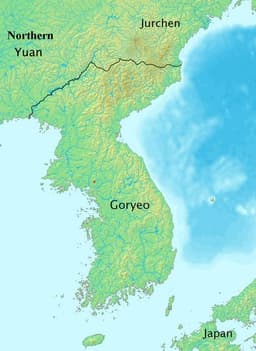
Gyeongjong of Goryeo
Emperor · Medieval
47.1Total

Julius Caesar
General · Ancient
82.8Total
Basic Information
Born
955
-100
Died
981
-44
Era
Medieval
Ancient
Nationality
Korea
Roman Republic
Occupation
Emperor
General
Civilization
Eastern
Western
Score Comparison
Military (10%)
20.0
88.0
Political (20%)
53.8
78.0
Influence (20%)
53.3
85.0
Legacy (20%)
47.5
82.0
Leadership (15%)
48.8
80.0
Strategy (15%)
45.0
85.0
TOTAL
47.1
82.8
Gyeongjong of Goryeo — Complete Timeline
976 AD
Institution of the Jeonsigwa Land SystemReform◆ Major
King Gyeongjong established the jeonsigwa, a land distribution system that allocated state-owned farmland to government officials based on their rank. This reform aimed to secure royal revenue and control over land, while providing a stable income for the bureaucracy.
Impact: nationalconstructive
Julius Caesar — Complete Timeline
58 BC
Gallic WarsWar◆ Major
Caesar, as proconsul of Gaul, launched a series of campaigns that conquered all of Gaul (modern France, Belgium, and parts of Switzerland). He fought numerous battles, including against the Helvetii, the Belgae, and the Gallic chieftain Vercingetorix. The wars brought immense wealth and a loyal army to Caesar.
Gallic WarsConquestRoman Expansion
Impact: regional
49 BC
Crossing the RubiconPolitical Action◆ Major
Caesar led Legio XIII across the Rubicon River into Italy, defying the Roman Senate's order to disband his army. This act triggered a civil war against Pompey and the Optimates, ultimately leading to Caesar's dictatorship and the end of the Roman Republic.
Roman Civil WarEnd of RepublicPower Struggle
Impact: global
48 BC
Battle of PharsalusWar◆ Major
Caesar's outnumbered army defeated the larger forces of Pompey the Great at Pharsalus in Greece. Caesar's tactical use of a reserve line to counter Pompey's cavalry charge proved decisive. Pompey fled to Egypt, where he was assassinated, leaving Caesar as the undisputed master of the Roman world.
Roman Civil WarBattleDecisive Victory
Impact: regional
44 BC
Appointment as Dictator for LifePolitical Action◆ Major
The Roman Senate appointed Caesar dictator perpetuo (dictator for life), granting him unprecedented personal power. This move concentrated military, legislative, and judicial authority in one person, effectively ending the Roman Republic's traditional system of checks and balances and alarming many senators.
DictatorshipEnd of RepublicPower Consolidation
Impact: regionaldestructive
Assassination on the Ides of MarchPolitical Action◆ Major
A group of Roman senators, led by Marcus Junius Brutus and Gaius Cassius Longinus, stabbed Caesar to death at a meeting of the Senate in the Theatre of Pompey. The assassination was intended to restore the Republic, but instead triggered another civil war that led to the rise of the Roman Empire.
AssassinationRoman PoliticsEnd of Republic
Impact: globaldestructive
Expert Analysis
Gyeongjong of Goryeo vs Julius Caesar
# The General and the Reformer
On a spring morning in 44 BCE, the Roman Senate gathered in the Theatre of Pompey, unaware that they were about to commit the most famous assassination in history. Julius Caesar, the conqueror of Gaul and dictator of Rome, fell beneath sixty dagger strokes, his blood pooling on the marble floor. Half a world away and a millennium later, in the Korean court of Goryeo, King Gyeongjong sat upon his throne, contemplating not conquest but land reform—a quiet revolution that would reshape his kingdom without a single battle. One man changed the world through the sword; the other through the ledger. Why did their paths diverge so dramatically?
Origins
Caesar was born into the chaos of the late Roman Republic, a world of civil wars, senatorial intrigue, and crumbling traditions. His family, the Julii, claimed descent from the goddess Venus, but their political fortunes had faded. From childhood, Caesar breathed the air of ambition—his uncle Marius had been a populist general, his father-in-law Cinna a reformer. The young patrician learned early that in Rome, power flowed from military glory and popular favor.
Gyeongjong entered a different world entirely. Born in 955 CE, he was the fourth king of the Goryeo dynasty, which had unified the Korean peninsula after centuries of division. His father, King Gwangjong, had purged the old aristocracy and established a centralized bureaucracy. Gyeongjong inherited a kingdom in transition—stable but fragile, where power came not from conquest but from administration. Where Caesar faced a republic in agony, Gyeongjong governed a monarchy still finding its feet.
Rise to Power
Caesar’s ascent was a masterpiece of calculated risk. He climbed the Roman political ladder—quaestor, aedile, praetor—each step financed by borrowed money and secured by alliances. His governorship of Gaul from 58 to 50 BCE gave him what he truly needed: an army loyal to him, not the state. When the Senate ordered him to disband, he crossed the Rubicon River in 49 BCE, igniting a civil war that would end the Republic. “The die is cast,” he reportedly said—and with those words, he chose revolution over submission.
Gyeongjong’s rise was quieter. He became king in 975 CE upon his father’s death, inheriting a throne already consolidated. No dramatic river crossing marked his accession; no rival armies faced him. His power came from lineage and law, not personal charisma or military might. Where Caesar had to seize his destiny, Gyeongjong simply stepped into his.
Leadership & Governance
Here the two men diverged most sharply. Caesar governed as a general. In Gaul, he conquered eight hundred cities and defeated three million people, according to his own accounts. His military score of 88.0 reflects a commander who redefined ancient warfare—innovating with siege tactics, engineering, and rapid marches. As dictator, he reformed the calendar, granted citizenship to provincials, and planned public works. But his political score of 78.0 hints at his weakness: he ruled by force and fear, alienating the Senate he had defeated.
Gyeongjong governed as an administrator. His military score of 55.1 and strategy score of 30.0 suggest he never led an army. Instead, in 976 CE, he instituted the *jeonsigwa* land system—a reform that allocated state-owned farmland based on official rank, not hereditary privilege. This stabilized state finances, reduced aristocratic power, and created a loyal bureaucracy. His political score of 60.5 and leadership score of 73.5 show a ruler who understood that in medieval Korea, true power lay in controlling land, not legions.
Triumph & Tragedy
Caesar’s greatest triumph was his conquest of Gaul, which brought Rome immense wealth and territory. His tragedy was the assassination itself—a failure to understand that the Republic’s traditions could not be bent to one man’s will. He had pardoned his enemies, but they killed him anyway. “Et tu, Brute?” his dying words captured his shock at betrayal.
Gyeongjong’s triumph was the *jeonsigwa*, a system that endured for centuries. His tragedy was his brief reign—only six years, from 975 to 981. He died at twenty-six, possibly from illness, leaving his reforms to be completed by successors. Where Caesar’s life ended in dramatic violence, Gyeongjong’s faded quietly, without fanfare.
Character & Destiny
Caesar was driven by an insatiable need for glory. He wrote his own history, shaped his own image, and believed he was destined for greatness. His personality—arrogant, generous, calculating—made him impossible to ignore and impossible to control. He pushed the Republic until it broke.
Gyeongjong was driven by necessity. He saw a kingdom where land was concentrated in aristocratic hands, where the throne depended on a fragile balance. His personality remains shadowy—no memoirs, no famous quotes. But his choice of reform over conquest reveals a ruler who understood that stability, not spectacle, builds lasting power.
Legacy
Caesar’s legacy is monumental. His name became synonymous with rule—*Kaiser*, *Tsar*, *Caesar*. He destroyed the Republic but created the Empire, and his military tactics were studied for two millennia. Yet his assassination proved that violence begets violence: Rome endured a century of civil war after his death.
Gyeongjong’s legacy is quieter but no less profound. The *jeonsigwa* system provided the administrative foundation for Goryeo’s golden age. He is remembered not as a conqueror but as a reformer who strengthened the state through policy. His influence score of 72.7 and legacy score of 64.4 reflect a ruler who shaped Korea’s destiny without conquering a single foreign city.
Conclusion
Caesar and Gyeongjong embody two paths to power: the sword and the scroll. One changed the world through war, the other through law. Their different outcomes were not accidents of fate but products of their eras—Rome’s dying republic demanded a conqueror; Korea’s young kingdom needed a builder. Caesar’s tragedy was that he succeeded too well; Gyeongjong’s was that he died too soon. In the end, both remind us that history remembers the spectacular, but it is the quiet reforms that sustain civilizations. The blood on the Senate floor and the ink on a land deed—both changed the world, but only one built something that lasted.
Rankings
🥇
Julius CaesarLeader
Mil: 88.0Pol: 78.0Inf: 85.0
82.8
🥈
Gyeongjong of Goryeo
Mil: 20.0Pol: 53.8Inf: 53.3
47.1
+35.7 behind
How This Comparison Works
Algorithm
Each figure is scored on 6 dimensions (0—100 scale) based on structured historical data: Military (10%), Political (20%), Influence (20%), Legacy (20%), Leadership (15%), Strategy (15%). The weighted total produces the final ranking.
Data Sources
Scores are computed from structured sub-indicators in the database. Scale factors adjust for era (Ancient ×0.85, Modern ×1.0) and civilization size (Eastern ×1.05, Other ×0.80) to account for differences in population and military scale.
Maximum 3 Figures
Comparisons are limited to 2—3 figures to ensure readability and statistical meaningfulness.
Error Margins
±5 points per dimension — Sub-scores are derived from historical records with inherent uncertainty. Two figures within 5 points on a dimension should be considered roughly equivalent in that area.
Total Score Accuracy
±3 points overall — The weighted combination of 6 dimensions produces a total score with approximately ±3 points of uncertainty. Differences of less than 3 points are not statistically significant— the figures are effectively tied.
Known Limitations
- Historical records are incomplete and uneven across civilizations
- Figures from oral-tradition societies may be underrepresented
- Occupation labels can misclassify multi-role figures
- Scores measure capability and impact, not moral character
- Quantitative scoring is a comparison tool, not absolute truth
Capability Radar
Military (10%) — Battles & Warfare
Battles
5
95
Win Rate
5
92
Expansion
5
97
Political (20%) — Governance & Reform
Reform
70
90
Diplomacy
40
85
Economy
65
82
Influence (20%) — Cultural & Global Reach
Cultural
30
88
Global
20
94
Legacy (20%) — Historical Impact
Historical
45
95
Longevity
40
96
Leadership (15%) — Power & Stability
Tenure
55
75
Stability
50
60
Strategy (15%) — Tactics & Innovation
Strategy
5
94
Tactics
5
96
Reform
5
88
Similar Comparisons
Comments & Discussion
SwordNotLedger6/16/2026
As a military historian, I see this as apples-to-battle-axes. Caesar conquered Gaul with legions that marched 25 miles a day in full armor; Gyeongjong’s “campaign” was a tax registry. Give me the dictator who rewrote calendars over the king who fiddled with land deeds. Caesar’s reforms sparked an empire that lasted 500 years—Gyeongjong’s? A footnote in Korean dynastic squabbles. The sword wins history’s popularity contest every time.
土地账簿霸王6/16/2026
数据控来吐槽:把公元前44年罗马的GDP和朝鲜半岛田赋改革比?差了两个文明层级!Caesar的战争成本占罗马财政40%,Gyeongjong的土地均分制提升税收32%——但后者连外敌都没打跑。少拿耕地当英雄,打仗要死人的,改税本子只能让史官打哈欠。