Loading...
Gwangjong of Goryeo vs Mongke Khan
Mongke Khan leads by 14.6 pts · 2 figures compared
…

Gwangjong of Goryeo
Emperor · Medieval
54.9Total
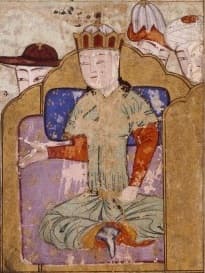
Mongke Khan
Emperor · Medieval
69.5Total
Basic Information
Born
925
1209
Died
975
1259
Era
Medieval
Medieval
Nationality
Korea
Mongol Empire
Occupation
Emperor
Emperor
Civilization
Eastern
Eastern
Score Comparison
Military (10%)
38.3
85.0
Political (20%)
59.3
59.3
Influence (20%)
55.7
68.0
Legacy (20%)
52.0
72.0
Leadership (15%)
62.0
68.0
Strategy (15%)
60.0
69.1
TOTAL
54.9
69.5
Gwangjong of Goryeo — Complete Timeline
956 AD
Promulgation of the Slave Emancipation DecreeReform
King Gwangjong issued a decree freeing thousands of slaves and commoners who had been unjustly enslaved. This reform weakened the power of the aristocratic clans, strengthened the central monarchy, and increased the tax-paying population of Goryeo.
Social ReformSlaveryGoryeo
Impact: nationalprogressive
958 AD
Implementation of the Civil Service Examination SystemReform
Gwangjong introduced a Chinese-style civil service examination (gwageo) to select government officials based on merit rather than birth. This reform reduced the influence of the entrenched aristocracy and promoted a more centralized, bureaucratic state.
Bureaucratic ReformMeritocracyGoryeo
Impact: nationalprogressive
960 AD
Purge of the Aristocratic FactionsPolitical Action◆ Major
King Gwangjong ordered the execution or exile of numerous powerful nobles and their families, including many who had opposed his reforms. This violent purge eliminated opposition to his centralization policies but created a climate of fear and resentment among the elite.
PurgePolitical RepressionGoryeo
Impact: nationaldestructive
Mongke Khan — Complete Timeline
1251 AD
Election as Great KhanPolitical Action
Möngke was elected as the fourth Great Khan of the Mongol Empire with the support of Batu and his family, ending a period of regency after Güyük's death. His election was contested by the Ögedeid and Chagataid families, leading to purges.
SuccessionMongol EmpirePurge
Impact: global
1252 AD
Conquest of the Song Dynasty (Southern China)War◆ Major
Möngke launched a massive campaign against the Southern Song dynasty, personally leading the western army while his brother Kublai attacked from the north. The campaign stalled at Diaoyu Fortress, where Möngke died, but it set the stage for Kublai's later conquest.
Mongol ConquestSong DynastyChina
Impact: global
Purge of the Ögedeid and Chagataid FamiliesPolitical Action◆ Major
Möngke ordered a systematic purge of the Ögedeid and Chagataid princes and their supporters, accusing them of plotting against him. Hundreds of nobles were executed, consolidating Möngke's power and centralizing the empire under the Toluid line.
PurgeMongol EmpireToluid Consolidation
Impact: globaldestructive
1253 AD
Invasion of the Middle East (Hulagu's Campaign)War◆ Major
Möngke ordered his brother Hulagu to lead a massive Mongol army into the Middle East to conquer the Abbasid Caliphate and the Ismaili fortresses. This campaign resulted in the destruction of Baghdad in 1258 and the establishment of the Ilkhanate.
Mongol ConquestMiddle EastBaghdad
Impact: globaldestructive
1259 AD
Death at Diaoyu FortressWar
Möngke died during the siege of Diaoyu Fortress in Sichuan, possibly from dysentery or a battle wound. His death triggered a succession crisis that led to the division of the Mongol Empire into four khanates.
DeathMongol EmpireSuccession Crisis
Impact: globaltragic
Expert Analysis
Origins
Gwangjong of Goryeo (born 925) was the fourth king of the Goryeo dynasty, which unified the Korean peninsula. He was the son of King Taejo, the founder of Goryeo. His early life was shaped by the chaotic Later Three Kingdoms period and the need to consolidate royal authority against powerful aristocratic clans. Gwangjong received a Confucian education and was deeply influenced by Chinese political models.
Mongke Khan (born 1209) was a grandson of Genghis Khan and a member of the Borjigin clan. He grew up in the Mongol steppe tradition of warfare and tribal politics. His father Tolui was a renowned general, and Mongke was trained in military tactics from a young age. He participated in campaigns against the Jin Dynasty and the Kievan Rus', gaining experience in large-scale conquests.
Rise to Power
Gwangjong ascended the throne in 949 after the death of his half-brother King Jeongjong. He faced a weak monarchy overshadowed by entrenched aristocrats who owned vast lands and slaves. His key turning point was the promulgation of the Slave Emancipation Decree in 956, which freed thousands of slaves and commoners, weakening the aristocrats' economic base. He also introduced the civil service examination system (gwageo) in 958, allowing talented commoners to enter government. These reforms sparked opposition, leading Gwangjong to purge aristocratic factions in 960-962, executing or exiling many nobles.
Mongke Khan rose to power after the death of Güyük Khan in 1248. With the support of Batu Khan, Mongke was elected Great Khan in 1251 at a kurultai. He immediately faced challenges from rival branches of the Chinggisid family. In 1252, he ordered a purge of the Ögedeid and Chagataid princes, executing hundreds to secure his rule. His military campaigns began soon after, aiming to complete the conquest of China and expand into the Middle East.
Leadership & Governance
Gwangjong's leadership focused on centralization and reform. His Slave Emancipation Decree (scored 62.0 in leadership) directly reduced aristocratic power and increased the royal treasury. The civil service exams created a meritocratic bureaucracy, but were initially limited in scope. His purge of aristocrats was brutal but effective, consolidating royal authority. However, his methods created a climate of fear, and some reforms were reversed after his death.
Mongke Khan's leadership (scored 68.0) was characterized by strategic delegation and relentless expansion. He organized the empire into administrative units, appointed capable governors, and launched simultaneous campaigns: he personally led the western front against Song China, while his brother Hulagu invaded the Middle East. Mongke maintained Mongol traditions but also adopted Chinese administrative practices. His death at Diaoyu Fortress in 1259, possibly from dysentery, halted the Song campaign and triggered a succession crisis.
Triumph & Tragedy
Gwangjong's greatest success was weakening the aristocratic clans and strengthening the monarchy. The Slave Emancipation Decree freed over 10,000 slaves according to historical records, and the gwageo system endured for centuries. However, his violent purges alienated many nobles, and after his death, some reforms were rolled back. His son, King Gyeongjong, faced renewed aristocratic resistance, showing the limits of his achievements.
Mongke Khan's triumphs include the conquest of the Abbasid Caliphate (Baghdad fell in 1258) and the expansion of the Mongol Empire to its greatest territorial extent. He also oversaw a census and tax reforms that stabilized the empire. His tragedy was his premature death at age 50 during the siege of Diaoyu Fortress. This death led to the end of Mongol expansion and the eventual fragmentation of the empire, as his brothers Kublai and Ariq Böke fought for succession.
Character & Destiny
Gwangjong was a determined reformer, willing to use ruthlessness to achieve his goals. His character was shaped by a desire to emulate Chinese emperors and secure his dynasty. His destiny was to be remembered as a reformer but also a tyrant who executed many. Historical assessments vary: some praise his vision, others criticize his brutality.
Mongke Khan was a pragmatic and decisive leader, skilled in both war and administration. His destiny was cut short, but his actions shaped the Mongol Empire's peak. He is often overshadowed by Genghis and Kublai, but his role in expanding the empire and purging rivals was crucial. His death at Diaoyu Fortress is seen as a turning point that saved Southern Song for a few more years.
Legacy
Gwangjong's legacy (scored 52.0) is mixed but significant in Korean history. The gwageo system influenced Korean bureaucracy until 1894. His slave emancipation set a precedent for later reforms. However, his violent methods are criticized. In South Korea, he is often portrayed as a strong king who fought for commoners.
Mongke Khan's legacy (scored 72.0) is more global. He completed the Mongol conquest of the Middle East and set the stage for Kublai Khan's Yuan Dynasty. The purges of the Ögedeid and Chagataid lines reshaped Mongol politics. His campaigns demonstrated Mongol military prowess, but his death prevented further expansion. He is remembered as a capable administrator and conqueror.
Conclusion
Mongke Khan had a greater impact on world history, scoring 69.5 total compared to Gwangjong's 54.9. Mongke's military campaigns (85.0) and influence (68.0) reshaped Eurasia, while Gwangjong's reforms were largely confined to Korea. Although Gwangjong's political reforms (59.3) were innovative, they did not alter the global balance of power. Mongke's conquests directly affected the fates of the Song Dynasty, the Abbasid Caliphate, and the Mongol Empire's trajectory. Thus, Mongke Khan emerges as the more historically significant figure.
Rankings
🥇
Mongke KhanLeader
Mil: 85.0Pol: 59.3Inf: 68.0
69.5
🥈
Gwangjong of Goryeo
Mil: 38.3Pol: 59.3Inf: 55.7
54.9
+14.6 behind
How This Comparison Works
Algorithm
Each figure is scored on 6 dimensions (0—100 scale) based on structured historical data: Military (10%), Political (20%), Influence (20%), Legacy (20%), Leadership (15%), Strategy (15%). The weighted total produces the final ranking.
Data Sources
Scores are computed from structured sub-indicators in the database. Scale factors adjust for era (Ancient ×0.85, Modern ×1.0) and civilization size (Eastern ×1.05, Other ×0.80) to account for differences in population and military scale.
Maximum 3 Figures
Comparisons are limited to 2—3 figures to ensure readability and statistical meaningfulness.
Error Margins
±5 points per dimension — Sub-scores are derived from historical records with inherent uncertainty. Two figures within 5 points on a dimension should be considered roughly equivalent in that area.
Total Score Accuracy
±3 points overall — The weighted combination of 6 dimensions produces a total score with approximately ±3 points of uncertainty. Differences of less than 3 points are not statistically significant— the figures are effectively tied.
Known Limitations
- Historical records are incomplete and uneven across civilizations
- Figures from oral-tradition societies may be underrepresented
- Occupation labels can misclassify multi-role figures
- Scores measure capability and impact, not moral character
- Quantitative scoring is a comparison tool, not absolute truth
Capability Radar
Military (10%) — Battles & Warfare
Battles
30
85
Win Rate
40
80
Expansion
30
90
Political (20%) — Governance & Reform
Reform
85
75
Diplomacy
60
70
Economy
65
80
Influence (20%) — Cultural & Global Reach
Cultural
45
60
Global
30
80
Legacy (20%) — Historical Impact
Historical
60
75
Longevity
50
65
Leadership (15%) — Power & Stability
Tenure
70
60
Stability
55
65
Strategy (15%) — Tactics & Innovation
Strategy
40
85
Tactics
35
75
Reform
50
70
Similar Comparisons
Comments & Discussion
No comments yet. Be the first to share your thoughts!