Loading...
This comparison has not been analyzed yet.
One-time AI generation (~1 minute). Scores and timeline are already available below.
Gurbanguly Berdimuhamedow vs Mullah Baradar
Mullah Baradar leads by 12.3 pts · 2 figures compared
…

Gurbanguly Berdimuhamedow
Politician · Modern
38.7Total
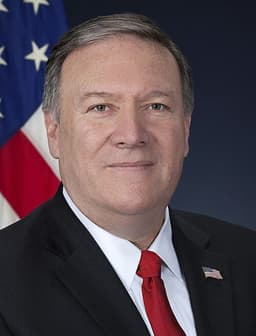
Mullah Baradar
Politician · Modern
51.0Total
Basic Information
Born
1957
1968
Died
—
—
Era
Modern
Modern
Nationality
Turkmenistan
Afghanistan
Occupation
Politician
Politician
Civilization
Eastern
Middle Eastern
Score Comparison
Military (10%)
14.8
38.3
Political (20%)
35.1
45.1
Influence (20%)
47.9
58.0
Legacy (20%)
36.7
46.7
Leadership (15%)
53.2
58.8
Strategy (15%)
28.7
53.8
TOTAL
38.7
51.0
Gurbanguly Berdimuhamedow — Complete Timeline
2007 AD
Reopened the Academy of SciencesReform
Berdimuhamedow reversed Niyazov's closure of the Turkmen Academy of Sciences, reopening the institution. This was part of a broader effort to restore some educational and scientific institutions that had been dismantled under his predecessor.
Education ReformScienceDe-Niyazovization
Impact: nationalconstructive
Elected President of TurkmenistanPolitical Action◆ Major
Following the death of President Saparmurat Niyazov, Berdimuhamedow won the presidential election with 89% of the vote. He succeeded Niyazov as the second president of independent Turkmenistan, inheriting a highly authoritarian system.
Presidential ElectionSuccessionAuthoritarianism
Impact: national
2015 AD
Opened the Turkmenistan-Afghanistan-Pakistan-India (TAPI) Gas PipelinePolitical Action◆ Major
Berdimuhamedow presided over the groundbreaking ceremony for the TAPI pipeline in Mary, Turkmenistan. The project aimed to export Turkmen natural gas to South Asia, but faced security and financing challenges, with construction repeatedly delayed.
Energy PolicyInfrastructureRegional Cooperation
Impact: regionalconstructive
2017 AD
Granted the Title 'Hero of Turkmenistan'Cultural
Berdimuhamedow awarded himself the title 'Hero of Turkmenistan' for the third time, along with other state honors. This was part of an ongoing personality cult that included statues, official songs, and renaming of places after him.
Personality CultSelf-AggrandizementAuthoritarianism
Impact: national
2022 AD
Resigned as President, Appointed Chairman of the People's CouncilPolitical Action◆ Major
Berdimuhamedow resigned as president, triggering a snap election won by his son Serdar. He then became Chairman of the People's Council (Halk Maslahaty), a newly empowered body that retained him as the 'national leader' with significant influence over policy.
Power TransitionDynastic SuccessionConstitutional Reform
Impact: national
Mullah Baradar — Complete Timeline
1994 AD
Co-founded the TalibanPolitical Action◆ Major
Mullah Baradar, alongside Mullah Omar, co-founded the Taliban movement in Kandahar, Afghanistan. The group emerged from madrassas and aimed to impose a strict interpretation of Islamic law, eventually capturing Kabul in 1996.
TalibanAfghanistanIslamic Movement
Impact: regionaldestructive
2020 AD
Doha Peace AgreementPolitical Action◆ Major
Baradar, as head of the Taliban's political office in Doha, signed the agreement with the United States. The deal outlined the withdrawal of US troops from Afghanistan in exchange for Taliban security guarantees and a commitment to peace talks with the Afghan government.
Peace AgreementUS-TalibanAfghanistan
Impact: global
2021 AD
Taliban Takeover of KabulWar◆ Major
Following the US withdrawal, Baradar led the Taliban's rapid military offensive that culminated in the capture of Kabul on August 15, 2021. The takeover ended the Islamic Republic of Afghanistan and restored Taliban rule.
TalibanAfghanistanTakeover
Impact: globaldestructive
This comparison has not been analyzed yet.
One-time AI generation (~1 minute). Scores and timeline are already available below.
Rankings
🥇
Mullah BaradarLeader
Mil: 38.3Pol: 45.1Inf: 58.0
51.0
🥈
Gurbanguly Berdimuhamedow
Mil: 14.8Pol: 35.1Inf: 47.9
38.7
+12.3 behind
How This Comparison Works
Algorithm
Each figure is scored on 6 dimensions (0—100 scale) based on structured historical data: Military (10%), Political (20%), Influence (20%), Legacy (20%), Leadership (15%), Strategy (15%). The weighted total produces the final ranking.
Data Sources
Scores are computed from structured sub-indicators in the database. Scale factors adjust for era (Ancient ×0.85, Modern ×1.0) and civilization size (Eastern ×1.05, Other ×0.80) to account for differences in population and military scale.
Maximum 3 Figures
Comparisons are limited to 2—3 figures to ensure readability and statistical meaningfulness.
Error Margins
±5 points per dimension — Sub-scores are derived from historical records with inherent uncertainty. Two figures within 5 points on a dimension should be considered roughly equivalent in that area.
Total Score Accuracy
±3 points overall — The weighted combination of 6 dimensions produces a total score with approximately ±3 points of uncertainty. Differences of less than 3 points are not statistically significant— the figures are effectively tied.
Known Limitations
- Historical records are incomplete and uneven across civilizations
- Figures from oral-tradition societies may be underrepresented
- Occupation labels can misclassify multi-role figures
- Scores measure capability and impact, not moral character
- Quantitative scoring is a comparison tool, not absolute truth
Capability Radar
Military (10%) — Battles & Warfare
Battles
14
5
Win Rate
15
5
Expansion
21
10
Political (20%) — Governance & Reform
Reform
20
30
Diplomacy
30
60
Economy
25
20
Influence (20%) — Cultural & Global Reach
Cultural
15
40
Global
10
50
Legacy (20%) — Historical Impact
Historical
10
50
Longevity
10
30
Leadership (15%) — Power & Stability
Tenure
60
40
Stability
40
15
Strategy (15%) — Tactics & Innovation
Strategy
24
15
Tactics
29
10
Reform
26
10
Similar Comparisons
Comments & Discussion
No comments yet. Be the first to share your thoughts!