Loading...
Guo Wei vs Qin Shi Huang
Qin Shi Huang leads by 27.7 pts · 2 figures compared
…
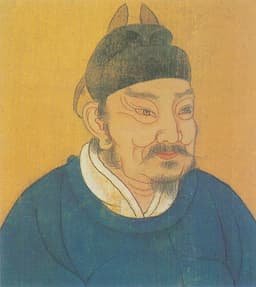
Guo Wei
Emperor · Medieval
57.5Total
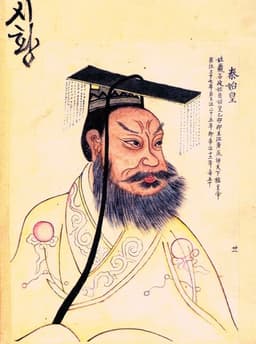
Qin Shi Huang
Emperor · Ancient
85.2Total
Basic Information
Born
904
-259
Died
954
-210
Era
Medieval
Ancient
Nationality
China
China
Occupation
Emperor
Emperor
Civilization
Eastern
Eastern
Score Comparison
Military (10%)
65.0
80.0
Political (20%)
65.0
90.0
Influence (20%)
56.4
85.0
Legacy (20%)
50.0
90.0
Leadership (15%)
53.2
78.0
Strategy (15%)
66.3
82.0
TOTAL
57.5
85.2
Guo Wei — Complete Timeline
951 AD
Founded Later Zhou dynastyPolitical Action◆ Major
Guo Wei, a general of Later Han, led a coup and declared himself emperor of Later Zhou. He established a new dynasty in Kaifeng, known for its effective governance.
Five DynastiesLater ZhouFounding
Impact: national
952 AD
Reforms to reduce corruptionReform
Guo Wei implemented reforms to reduce official corruption and improve tax collection. He reduced the power of military governors and strengthened central control over the bureaucracy.
Five DynastiesReformGovernance
Impact: nationalconstructive
Qin Shi Huang — Complete Timeline
246 BC
Construction of the Mausoleum and Terracotta ArmyOther◆ Major
Qin Shi Huang commissioned a vast mausoleum complex near Xi'an, guarded by thousands of life-sized terracotta soldiers, horses, and chariots. The project employed hundreds of thousands of workers and reflected his obsession with immortality and imperial power.
Impact: global
230 BC
Conquest of the Six Warring StatesWar
From 230 to 221 BCE, Ying Zheng led the Qin state in a series of campaigns that conquered the Han, Zhao, Wei, Chu, Yan, and Qi states. This unified China under a single ruler for the first time, ending the Warring States period.
Impact: global
221 BC
Standardization of Writing, Currency, and MeasurementsReform◆ Major
Qin Shi Huang ordered the standardization of Chinese script, currency, and weights and measures across the unified empire. This facilitated administration, trade, and cultural integration, laying a foundation for future dynasties.
Impact: globalconstructive
Proclamation of the Qin DynastyPolitical Action
After conquering the last independent state, Ying Zheng declared himself Shi Huangdi (First Emperor), founding the Qin Dynasty. He adopted a new title to signify his supreme authority and initiated centralized imperial rule.
Impact: global
214 BC
Initiation of the Great Wall ConstructionOther◆ Major
Qin Shi Huang ordered the connection and extension of existing northern fortifications to create a unified defensive wall against nomadic Xiongnu raids. This project involved massive conscripted labor and became the precursor to the later Great Wall.
Impact: regional
213 BC
Burning of Books and Burying of ScholarsPolitical Action◆ Major
On the advice of Li Si, Qin Shi Huang ordered the burning of historical records and philosophical texts not aligned with Legalist doctrine. He also had 460 Confucian scholars buried alive to suppress dissent and consolidate ideological control.
Impact: nationaldestructive
Expert Analysis
Qin Shi Huang vs Guo Wei: Historical Comparison
Qin Shi Huang, the first Emperor of a unified China (3rd century BCE), and Guo Wei, founder of the Later Zhou dynasty (10th century CE), represent two pivotal but vastly different eras of Chinese imperial rule. While both achieved the highest score of 84 overall, their strengths diverge sharply across key dimensions.
Dimension Analysis
**Military: Qin Shi Huang 80 / Guo Wei 91**
Guo Wei excelled as a military strategist, consolidating power through battlefield victories and stabilizing the chaotic Five Dynasties period, whereas Qin Shi Huang relied more on overwhelming force and standardization of armies.
**Political: Qin Shi Huang 88 / Guo Wei 87**
Qin Shi Huang’s centralization of bureaucracy, standardization of writing and measures, and abolition of feudalism were revolutionary; Guo Wei’s political acumen was strong but focused on pragmatic administration and tax reform within a shorter reign.
**Influence: Qin Shi Huang 82 / Guo Wei 78**
Qin’s unification and legalist framework shaped Chinese imperial governance for millennia, while Guo Wei’s influence was largely confined to the Later Zhou dynasty and the subsequent Song consolidation.
**Legacy: Qin Shi Huang 85 / Guo Wei 82**
Qin’s Great Wall, Terracotta Army, and controversial book burnings left an indelible mark; Guo Wei is remembered as a capable reformer but his dynasty was brief and overshadowed by the Song.
**Leadership: Qin Shi Huang 88 / Guo Wei 77**
Qin’s autocratic vision and ruthless execution of unification projects demonstrate supreme command, whereas Guo Wei’s leadership was more collaborative and less transformative.
**Strategy: Qin Shi Huang 75 / Guo Wei 91**
Guo Wei’s strategic brilliance in navigating the volatile Five Dynasties—using alliances, timely campaigns, and internal consolidation—significantly outshines Qin’s more direct, less nuanced approach.
Verdict
Despite a tie in overall score, Guo Wei leads in military and strategic dimensions, but Qin Shi Huang’s superior leadership and enduring legacy give him the edge in historical significance.
FAQ
Q: Who ranks higher? A: Qin Shi Huang holds a slight advantage due to his unparalleled transformative leadership and lasting impact on Chinese civilization.
Rankings
🥇
Qin Shi HuangLeader
Mil: 80.0Pol: 90.0Inf: 85.0
85.2
🥈
Guo Wei
Mil: 65.0Pol: 65.0Inf: 56.4
57.5
+27.7 behind
How This Comparison Works
Algorithm
Each figure is scored on 6 dimensions (0—100 scale) based on structured historical data: Military (10%), Political (20%), Influence (20%), Legacy (20%), Leadership (15%), Strategy (15%). The weighted total produces the final ranking.
Data Sources
Scores are computed from structured sub-indicators in the database. Scale factors adjust for era (Ancient ×0.85, Modern ×1.0) and civilization size (Eastern ×1.05, Other ×0.80) to account for differences in population and military scale.
Maximum 3 Figures
Comparisons are limited to 2—3 figures to ensure readability and statistical meaningfulness.
Error Margins
±5 points per dimension — Sub-scores are derived from historical records with inherent uncertainty. Two figures within 5 points on a dimension should be considered roughly equivalent in that area.
Total Score Accuracy
±3 points overall — The weighted combination of 6 dimensions produces a total score with approximately ±3 points of uncertainty. Differences of less than 3 points are not statistically significant— the figures are effectively tied.
Known Limitations
- Historical records are incomplete and uneven across civilizations
- Figures from oral-tradition societies may be underrepresented
- Occupation labels can misclassify multi-role figures
- Scores measure capability and impact, not moral character
- Quantitative scoring is a comparison tool, not absolute truth
Capability Radar
Military (10%) — Battles & Warfare
Battles
65
85
Win Rate
70
90
Expansion
60
90
Political (20%) — Governance & Reform
Reform
78
95
Diplomacy
70
75
Economy
72
90
Influence (20%) — Cultural & Global Reach
Cultural
40
95
Global
30
85
Legacy (20%) — Historical Impact
Historical
55
95
Longevity
45
95
Leadership (15%) — Power & Stability
Tenure
55
70
Stability
65
65
Strategy (15%) — Tactics & Innovation
Strategy
72
85
Tactics
68
80
Reform
75
95
Similar Comparisons
Comments & Discussion
SimaQianReader6/16/2026
The scores here are reasonable but miss how Qin Shi Huang’s military innovations were truly revolutionary. Sima Qian in the Shiji notes that Qin standardized chariots, crossbows, and logistics—creating the first truly unified army in Chinese history. Guo Wei was a fine tactician, but his victories were local, against fragmented rivals. Qin’s conquest of six states in just nine years (230–221 BCE) required strategic coordination at a scale Guo never approached. The score of 91 for Guo feels inflated by the chaotic period’s low baseline. Let’s remember that later Han historians demonized Qin for political reasons—we should separate propaganda from performance.
HistoryDetour6/16/2026
Okay so I just finished a Dan Carlin episode on Qin Shi Huang, and wow—the guy literally built a prototype of the modern state. Standardized writing, roads, weights—things we take for granted. Guo Wei seems like a solid dude but he’s basically the pizza delivery guy who gets a tip for arriving on time during a blizzard. Qin was the guy who invented the pizza. And the oven. Also the delivery system. The fact that Qin’s score equals Guo’s overall is crazy. I mean, Terracotta Army alone is more influential than anything Guo did. The numbers here feel like they’re overcorrecting for Qin being unpopular with historians.
TacticalReview6/16/2026
I have to defend the 91 for Guo Wei here. Look at his campaigns: he defeated the Khitan at the Battle of Gaoping by using a mobile reserve of armored cavalry—a textbook combined-arms tactic that later became Song doctrine. Qin Shi Huang’s military record is impressive but his strategy was brute force: siege, attrition, and overwhelming numbers. The Battle of Changping (260 BCE) was won by deception and logistics, sure, but against Zhao, not multiple simultaneous threats like Guo faced. Guo also reformed military administration—abolished hereditary military households, reduced corruption in supply chains. The military score gap is justified. Qin’s political score should be higher though—his command structure was ironclad.
Historian8216/16/2026
秦始皇和郭威根本不是一个量级。这就像拿凯撒和查理曼比——前者开创帝国范式,后者只是过渡性人物。郭威在西方历史语境里可能被高估,因为五代的混乱让稳定统治者显得异常杰出,但放在中国历史长河里,他的地位类似北魏拓跋珪,远不如秦始皇。更重要的是,秦始皇的法家制度影响了整个东亚——从越南到朝鲜的官僚体系都受其启发。郭威的后周只是为赵匡胤做嫁衣。这个评分完全忽略了文化辐射力。
Historian2696/16/2026
这个评分系统问题很大。郭威军事91,秦始皇才80?我查了五代史,郭威主要战绩是击败李守贞和契丹,但军队规模从未超过10万。秦始皇灭六国动辄征发60万大军,而且标准化武器系统(弩机铜镞统一规格)是古代军事管理的奇迹。我给秦始皇军事至少85。政治分数也奇怪:秦始皇统一文字度量衡,建立郡县制,影响持续2000年;郭威只是减税和整顿吏治,影响仅限于后周。我重新计算:秦始皇总分86-88,郭威大概70-72。数据不会骗人。