Loading...
Analysis will be generated on first visit.
Scores and timeline are available below. The page will refresh automatically when ready.
Goodwill Zwelithini vs Napoleon Bonaparte
Napoleon Bonaparte leads by 20.2 pts · 2 figures compared
…

Goodwill Zwelithini
Emperor · Modern
62.2Total
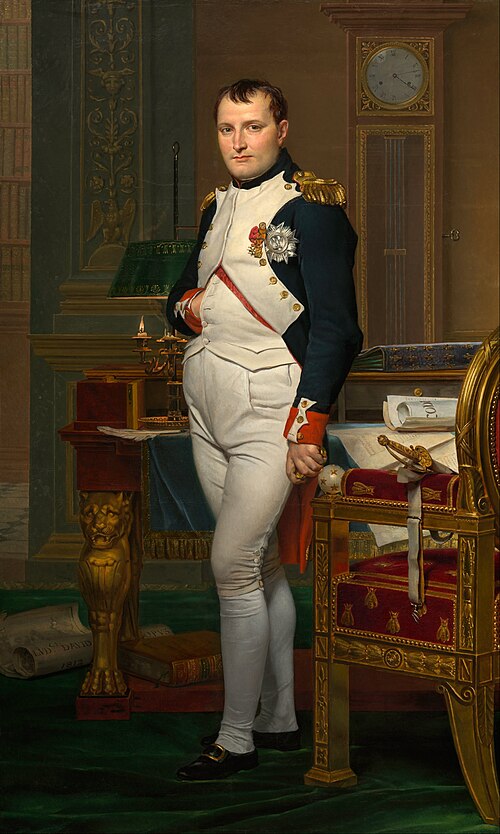
Napoleon Bonaparte
General · Modern
82.4Total
Basic Information
Born
1948
1769
Died
—
1821
Era
Modern
Modern
Nationality
Zulu Kingdom
France
Occupation
Emperor
General
Civilization
Other
Western
Score Comparison
Military (10%)
14.6
94.0
Political (20%)
59.2
75.0
Influence (20%)
74.3
82.0
Legacy (20%)
65.7
78.0
Leadership (15%)
73.4
80.0
Strategy (15%)
65.8
93.0
TOTAL
62.2
82.4
Rankings
🥇
Napoleon BonaparteLeader
Mil: 94.0Pol: 75.0Inf: 82.0
82.4
🥈
Goodwill Zwelithini
Mil: 14.6Pol: 59.2Inf: 74.3
62.2
+20.2 behind
How This Comparison Works
Algorithm
Each figure is scored on 6 dimensions (0—100 scale) based on structured historical data: Military (10%), Political (20%), Influence (20%), Legacy (20%), Leadership (15%), Strategy (15%). The weighted total produces the final ranking.
Data Sources
Scores are computed from structured sub-indicators in the database. Scale factors adjust for era (Ancient ×0.85, Modern ×1.0) and civilization size (Eastern ×1.05, Other ×0.80) to account for differences in population and military scale.
Maximum 3 Figures
Comparisons are limited to 2—3 figures to ensure readability and statistical meaningfulness.
Error Margins
±5 points per dimension — Sub-scores are derived from historical records with inherent uncertainty. Two figures within 5 points on a dimension should be considered roughly equivalent in that area.
Total Score Accuracy
±3 points overall — The weighted combination of 6 dimensions produces a total score with approximately ±3 points of uncertainty. Differences of less than 3 points are not statistically significant— the figures are effectively tied.
Known Limitations
- Historical records are incomplete and uneven across civilizations
- Figures from oral-tradition societies may be underrepresented
- Occupation labels can misclassify multi-role figures
- Scores measure capability and impact, not moral character
- Quantitative scoring is a comparison tool, not absolute truth
Capability Radar
Military (10%) — Battles & Warfare
Battles
8
95
Win Rate
11
90
Expansion
13
95
Political (20%) — Governance & Reform
Reform
30
95
Diplomacy
40
80
Economy
20
85
Influence (20%) — Cultural & Global Reach
Cultural
60
85
Global
30
90
Legacy (20%) — Historical Impact
Historical
50
95
Longevity
60
90
Leadership (15%) — Power & Stability
Tenure
70
85
Stability
50
70
Strategy (15%) — Tactics & Innovation
Strategy
15
95
Tactics
17
98
Reform
21
92
Analysis will be generated on first visit.
Scores and timeline are available below. The page will refresh automatically when ready.
Goodwill Zwelithini — Complete Timeline
1971 AD
Coronation as Zulu KingPolitical Action◆ Major
Goodwill Zwelithini was crowned as the eighth Zulu monarch, succeeding his father Cyprian Bhekuzulu. His coronation was recognized by the South African government, making him the ceremonial leader of the Zulu nation.
Zulu KingdomCoronationSouth Africa
Impact: regionalconstructive
1994 AD
Establishment of Ingonyama TrustPolitical Action◆ Major
Goodwill Zwelithini signed the Ingonyama Trust Act, placing 2.8 million hectares of Zulu land under a trust administered by the king. This preserved communal land ownership for the Zulu people in post-apartheid South Africa.
Land RightsPost-ApartheidZulu Kingdom
Impact: regionalconstructive
2000 AD
Support for HIV/AIDS AwarenessCultural
Goodwill Zwelithini initially opposed condom use and made controversial statements about HIV/AIDS. Later, he reversed his position and supported awareness campaigns, though his early stance was criticized as harmful.
HIV/AIDSPublic HealthZulu Kingdom
Impact: regional
2015 AD
Controversial Statements on XenophobiaCultural
Goodwill Zwelithini made public statements blaming foreign nationals for crime and economic problems in South Africa, which were widely criticized as inciting xenophobic violence. The remarks sparked debate about the king's political role.
XenophobiaControversySouth Africa
Impact: nationaldestructive
Similar Comparisons
Comments & Discussion
No comments yet. Be the first to share your thoughts!