Loading...
Analysis will be generated on first visit.
Scores and timeline are available below. The page will refresh automatically when ready.
George III vs Napoleon Bonaparte
Napoleon Bonaparte leads by 16.9 pts · 2 figures compared
…

George III
Emperor · Modern
65.5Total
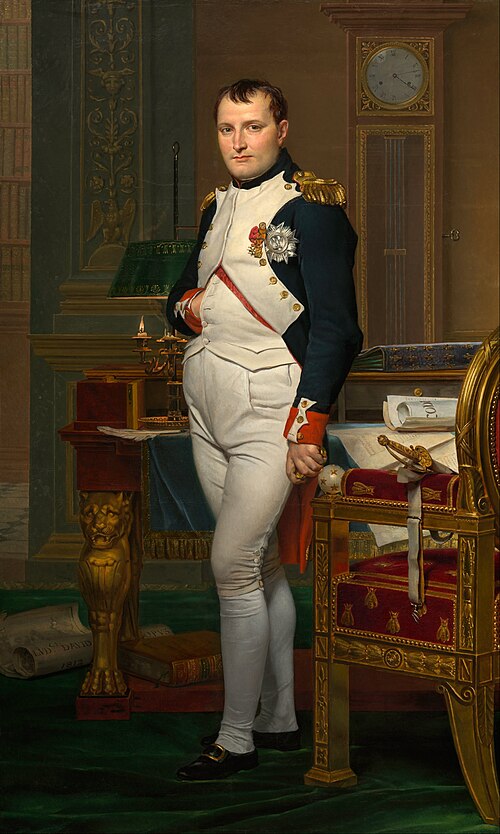
Napoleon Bonaparte
General · Modern
82.4Total
Basic Information
Born
1738
1769
Died
1820
1821
Era
Modern
Modern
Nationality
United Kingdom
France
Occupation
Emperor
General
Civilization
Western
Western
Score Comparison
Military (10%)
21.7
94.0
Political (20%)
74.8
75.0
Influence (20%)
68.5
82.0
Legacy (20%)
75.0
78.0
Leadership (15%)
82.4
80.0
Strategy (15%)
48.6
93.0
TOTAL
65.5
82.4
Rankings
🥇
Napoleon BonaparteLeader
Mil: 94.0Pol: 75.0Inf: 82.0
82.4
🥈
George III
Mil: 21.7Pol: 74.8Inf: 68.5
65.5
+16.9 behind
How This Comparison Works
Algorithm
Each figure is scored on 6 dimensions (0—100 scale) based on structured historical data: Military (10%), Political (20%), Influence (20%), Legacy (20%), Leadership (15%), Strategy (15%). The weighted total produces the final ranking.
Data Sources
Scores are computed from structured sub-indicators in the database. Scale factors adjust for era (Ancient ×0.85, Modern ×1.0) and civilization size (Eastern ×1.05, Other ×0.80) to account for differences in population and military scale.
Maximum 3 Figures
Comparisons are limited to 2—3 figures to ensure readability and statistical meaningfulness.
Error Margins
±5 points per dimension — Sub-scores are derived from historical records with inherent uncertainty. Two figures within 5 points on a dimension should be considered roughly equivalent in that area.
Total Score Accuracy
±3 points overall — The weighted combination of 6 dimensions produces a total score with approximately ±3 points of uncertainty. Differences of less than 3 points are not statistically significant— the figures are effectively tied.
Known Limitations
- Historical records are incomplete and uneven across civilizations
- Figures from oral-tradition societies may be underrepresented
- Occupation labels can misclassify multi-role figures
- Scores measure capability and impact, not moral character
- Quantitative scoring is a comparison tool, not absolute truth
Capability Radar
Military (10%) — Battles & Warfare
Battles
15
95
Win Rate
10
90
Expansion
10
95
Political (20%) — Governance & Reform
Reform
40
95
Diplomacy
30
80
Economy
45
85
Influence (20%) — Cultural & Global Reach
Cultural
55
85
Global
60
90
Legacy (20%) — Historical Impact
Historical
70
95
Longevity
65
90
Leadership (15%) — Power & Stability
Tenure
90
85
Stability
25
70
Strategy (15%) — Tactics & Innovation
Strategy
15
95
Tactics
10
98
Reform
20
92
Analysis will be generated on first visit.
Scores and timeline are available below. The page will refresh automatically when ready.
George III — Complete Timeline
1775 AD
American Revolutionary WarWar
George III's reign saw the outbreak of the American Revolutionary War after colonial protests against British taxation. Britain lost the war after the French intervention. The Treaty of Paris in 1783 recognized American independence, ending British control of the Thirteen Colonies.
American RevolutionLoss of ColoniesTreaty of Paris
Impact: globaldestructive
1800 AD
Acts of Union 1800Political Action◆ Major
George III gave royal assent to the Acts of Union, which united Great Britain and Ireland into the United Kingdom of Great Britain and Ireland. This created a single parliament in London and ended the Irish Parliament. The union took effect on January 1, 1801.
UnionIrelandConstitutional Change
Impact: nationalconstructive
1803 AD
Napoleonic WarsWar◆ Major
George III's reign included the Napoleonic Wars against France under Napoleon Bonaparte. Britain fought coalitions across Europe and at sea. The wars ended with Napoleon's defeat at Waterloo in 1815, establishing British naval supremacy and colonial expansion.
Napoleonic WarsWaterlooEuropean Conflict
Impact: global
1810 AD
Mental Illness and Regency CrisisOther◆ Major
George III suffered a final relapse of mental illness, likely due to porphyria. He became permanently incapacitated, leading to the Regency Act of 1811. His son George IV became Prince Regent, ruling in his stead until George III's death in 1820.
Mental IllnessRegencySuccession
Impact: nationaltragic
1820 AD
Death at Windsor CastleOther◆ Major
George III died at Windsor Castle at age 81, blind and deaf. He was buried in St George's Chapel. His 60-year reign was the longest of any British monarch at that time. His death ended the Regency era and passed the throne to George IV.
DeathLong ReignMonarchy
Impact: nationaltragic
Similar Comparisons
Comments & Discussion
No comments yet. Be the first to share your thoughts!