Loading...
This comparison has not been analyzed yet.
One-time AI generation (~1 minute). Scores and timeline are already available below.
Gallienus vs Lugalzagesi
Gallienus leads by 9.3 pts · 2 figures compared
…

Gallienus
Emperor · Ancient
59.1Total
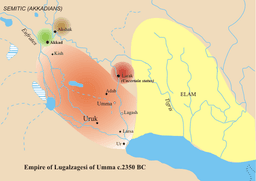
Lugalzagesi
Emperor · Ancient
49.8Total
Basic Information
Born
218
-2350
Died
268
-2330
Era
Ancient
Ancient
Nationality
Roman Empire
Umma
Occupation
Emperor
Emperor
Civilization
Western
Middle Eastern
Score Comparison
Military (10%)
50.0
67.5
Political (20%)
72.0
39.4
Influence (20%)
56.4
51.0
Legacy (20%)
50.0
42.5
Leadership (15%)
65.0
51.9
Strategy (15%)
69.1
60.0
TOTAL
59.1
49.8
Gallienus — Complete Timeline
259 AD
Defeat of the Alemanni at the Battle of MediolanumWar◆ Major
Gallienus led Roman forces to victory against the Alemanni who had invaded Italy and reached Mediolanum (Milan). The victory secured northern Italy from Germanic incursions and demonstrated Gallienus's military capability during the Crisis of the Third Century.
Germanic WarsBattleCrisis of the Third Century
Impact: regionalconstructive
260 AD
Reforms of the Roman ArmyReform◆ Major
After his father Valerian's capture, Gallienus reorganized the Roman army by creating a mobile cavalry force (vexillationes) under commanders like Aureolus. He also promoted equestrians over senators for military commands, reducing senatorial influence and improving military efficiency.
Military ReformCavalryEquestrian Order
Impact: regionalconstructive
Edict of Toleration (Gallienus)Political Action◆ Major
Gallienus issued an edict ending the persecution of Christians that had been enforced under his father Valerian. He restored Christian property and allowed freedom of worship, marking a shift in imperial policy toward Christianity before the later Edict of Milan.
Religious TolerationChristianityEdict
Impact: regionalprogressive
268 AD
Assassination at MediolanumPolitical Action◆ Major
Gallienus was murdered by his own officers while besieging the usurper Aureolus at Mediolanum. The conspiracy was led by Claudius, who succeeded him as emperor. Gallienus's death ended a 15-year reign that held the empire together during its deepest crisis.
AssassinationUsurpationCrisis of the Third Century
Impact: regionaltragic
Lugalzagesi — Complete Timeline
2340 BC
Conquest of LagashWar◆ Major
Lugalzagesi, as king of Umma, conquered the rival city-state of Lagash, ending the Ur-Nanshe dynasty. He destroyed the city and its temples, consolidating his power over much of Sumer.
Sumerian WarfareConquest
Impact: regionaldestructive
2335 BC
Unification of SumerPolitical Action◆ Major
Lugalzagesi united the city-states of Sumer under his rule, claiming kingship over the entire region. He established his capital at Uruk and controlled territory from the Persian Gulf to the Mediterranean Sea.
UnificationSumerian Empire
Impact: regional
2330 BC
Defeat by Sargon of AkkadWar◆ Major
Lugalzagesi was defeated and captured by Sargon of Akkad at the Battle of Uruk. He was paraded in a neck stock to the temple of Enlil at Nippur, ending his rule and marking the rise of the Akkadian Empire.
BattleAkkadian ConquestEnd of Sumerian Independence
Impact: regionaltragic
This comparison has not been analyzed yet.
One-time AI generation (~1 minute). Scores and timeline are already available below.
Rankings
🥇
GallienusLeader
Mil: 50.0Pol: 72.0Inf: 56.4
59.1
🥈
Lugalzagesi
Mil: 67.5Pol: 39.4Inf: 51.0
49.8
+9.3 behind
How This Comparison Works
Algorithm
Each figure is scored on 6 dimensions (0—100 scale) based on structured historical data: Military (10%), Political (20%), Influence (20%), Legacy (20%), Leadership (15%), Strategy (15%). The weighted total produces the final ranking.
Data Sources
Scores are computed from structured sub-indicators in the database. Scale factors adjust for era (Ancient ×0.85, Modern ×1.0) and civilization size (Eastern ×1.05, Other ×0.80) to account for differences in population and military scale.
Maximum 3 Figures
Comparisons are limited to 2—3 figures to ensure readability and statistical meaningfulness.
Error Margins
±5 points per dimension — Sub-scores are derived from historical records with inherent uncertainty. Two figures within 5 points on a dimension should be considered roughly equivalent in that area.
Total Score Accuracy
±3 points overall — The weighted combination of 6 dimensions produces a total score with approximately ±3 points of uncertainty. Differences of less than 3 points are not statistically significant— the figures are effectively tied.
Known Limitations
- Historical records are incomplete and uneven across civilizations
- Figures from oral-tradition societies may be underrepresented
- Occupation labels can misclassify multi-role figures
- Scores measure capability and impact, not moral character
- Quantitative scoring is a comparison tool, not absolute truth
Capability Radar
Military (10%) — Battles & Warfare
Battles
65
55
Win Rate
55
60
Expansion
30
65
Political (20%) — Governance & Reform
Reform
80
35
Diplomacy
65
40
Economy
60
30
Influence (20%) — Cultural & Global Reach
Cultural
50
40
Global
50
25
Legacy (20%) — Historical Impact
Historical
65
45
Longevity
55
30
Leadership (15%) — Power & Stability
Tenure
60
40
Stability
40
25
Strategy (15%) — Tactics & Innovation
Strategy
75
50
Tactics
70
45
Reform
85
30
Similar Comparisons
Comments & Discussion
No comments yet. Be the first to share your thoughts!