Loading...
Fumio Kishida vs Ulysses Guimaraes
Ulysses Guimaraes leads by 7.9 pts · 2 figures compared
…
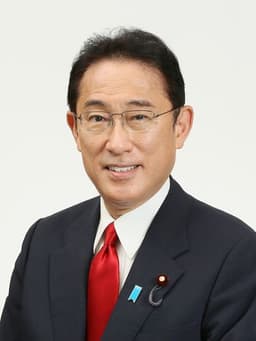
Fumio Kishida
Politician · Modern
51.8Total

Ulysses Guimaraes
Politician · Modern
59.7Total
Basic Information
Born
1957
1916
Died
—
1992
Era
Modern
Modern
Nationality
Japan
Brazil
Occupation
Politician
Politician
Civilization
Eastern
Western
Score Comparison
Military (10%)
29.2
50.0
Political (20%)
68.0
62.7
Influence (20%)
53.3
61.0
Legacy (20%)
40.0
56.0
Leadership (15%)
64.0
78.0
Strategy (15%)
57.2
43.1
TOTAL
51.8
59.7
Fumio Kishida — Complete Timeline
2021 AD
Announced new capitalism policyReform◆ Major
Kishida unveiled a 'new capitalism' economic policy aiming to redistribute wealth and promote growth. The plan included raising wages, increasing investment in green technology, and addressing income inequality in Japan.
JapanEconomic PolicyNew Capitalism
Impact: nationalconstructive
Elected Prime Minister of JapanPolitical Action◆ Major
Kishida was elected as Prime Minister of Japan after winning the LDP leadership election. He succeeded Yoshihide Suga and formed a cabinet focused on economic recovery and COVID-19 response.
JapanPrime MinisterLDP
Impact: national
2022 AD
Assassination of Shinzo AbePolitical Action◆ Major
Former Prime Minister Shinzo Abe was assassinated during a campaign speech in Nara. Kishida, as sitting prime minister, led the government's response, including security reviews and a state funeral for Abe.
JapanAssassinationAbe
Impact: nationaltragic
Ulysses Guimaraes — Complete Timeline
1971 AD
Elected President of the Chamber of DeputiesPolitical Action◆ Major
Ulysses Guimar
CongressOppositionDemocracy
Impact: nationalconstructive
1974 AD
Led the Brazilian Democratic Movement (MDB)Political Action◆ Major
Ulysses became the national president of the MDB, the only legal opposition party under the dictatorship. He led the party to significant electoral gains in 1974, challenging the regime's legitimacy.
OppositionMDBElectoral Politics
Impact: nationalconstructive
1984 AD
Championed the Diretas Já CampaignPolitical Action◆ Major
Ulysses was the leading figure in the Diretas J
Diretas JáDemocracy MovementCivil Society
Impact: nationalconstructive
1987 AD
Presided over the 1988 Constituent AssemblyPolitical Action
Ulysses was elected president of the National Constituent Assembly, which drafted the 1988 Constitution. He played a key role in ensuring the constitution enshrined democratic rights, social protections, and civilian control over the military.
ConstitutionDemocratizationCitizenship
Impact: nationalconstructive
1992 AD
Died in a Helicopter CrashOther◆ Major
Ulysses Guimar
DeathTragedyLegacy
Impact: nationaltragic
Expert Analysis
Origins
Fumio Kishida was born on July 29, 1957, in Tokyo, Japan, into a political family. His father was a bureaucrat, and his grandfather served as a member of the House of Representatives. Kishida studied law at Waseda University and worked at a bank before entering politics. He was first elected to the House of Representatives in 1993, representing Hiroshima.
Ulysses Guimaraes was born on October 6, 1916, in Rio Claro, São Paulo, Brazil. He studied law at the University of São Paulo and began his political career as a city councilor. He was elected to the Chamber of Deputies in 1950 and became a prominent figure in the Brazilian Democratic Movement (MDB), the main opposition party during the military dictatorship.
Rise to Power
Kishida rose through the ranks of the Liberal Democratic Party (LDP). He served as Minister of State for Okinawa and Northern Territories Affairs under Prime Minister Shinzo Abe, and later as Foreign Minister from 2012 to 2017. In 2021, he won the LDP leadership election, becoming Prime Minister. His rise was characterized by a reputation for consensus-building and moderate policies.
Guimaraes became the national president of the MDB in 1971. He led the party through the difficult years of the dictatorship, uniting opposition forces. He was a key figure in the Diretas Já campaign in 1984, which demanded direct presidential elections. Although the campaign did not immediately succeed, it pressured the regime to transition. In 1985, he was elected president of the Chamber of Deputies, and in 1987 he presided over the National Constituent Assembly that drafted the 1988 Constitution.
Leadership & Governance
Kishida's leadership style is cautious and consensus-oriented. He launched a 'new capitalism' policy in 2021, aiming to address income inequality through wage increases and investment in innovation. He also led Japan's response to the COVID-19 pandemic and the assassination of Shinzo Abe in 2022. His governance focuses on stability, but critics argue he lacks bold vision. His political score of 68.0 reflects his effectiveness within Japan's political system.
Guimaraes was a passionate and charismatic leader, known for his unwavering defense of democracy. As president of the Constituent Assembly, he ensured the 1988 Constitution enshrined civil liberties and social rights. His leadership score of 78.0 reflects his ability to inspire and mobilize. He used his position as Chamber president to protect democratic institutions. However, his strategy score of 43.1 indicates a less systematic approach to governance.
Triumph & Tragedy
Kishida's greatest success is maintaining political stability and steering Japan through economic challenges. His 'new capitalism' policy has led to some wage increases and corporate governance reforms. However, his tenure has been marred by the assassination of Abe, which raised security concerns. He also faced declining approval ratings due to perceived indecisiveness and ties to the Unification Church.
Guimaraes' triumph was the 1988 Constitution, which established democratic rule and social welfare in Brazil. He is revered as the 'Father of Democracy.' His tragedy was his death in a helicopter crash in 1992, which cut short his influence. He also faced the failure of the Diretas Já campaign to immediately achieve direct elections.
Character & Destiny
Kishida is seen as a pragmatic and cautious politician, often described as 'safe' rather than innovative. His character shaped his moderate governance, but also limited his ability to enact bold reforms. He scored 64.0 in leadership and 57.2 in strategy, indicating a balanced but not exceptional profile.
Guimaraes was known for his integrity and perseverance. He remained committed to democracy even under persecution. His character drove him to lead the opposition and craft a new constitution. His leadership score of 78.0 is the highest among the two, but his strategy score of 43.1 suggests a more reactive than proactive approach.
Legacy
Kishida's legacy is still forming. He will be remembered for his 'new capitalism' and for leading Japan during a turbulent period. If his policies yield long-term growth, his legacy could grow. Currently, his legacy score is 40.0, reflecting his ongoing tenure.
Guimaraes' legacy is secure. He is a national hero in Brazil, credited with restoring democracy. The 1988 Constitution remains the foundation of Brazilian law. His influence score of 61.0 and legacy score of 56.0 reflect his enduring impact.
Conclusion
Ulysses Guimaraes had a greater impact on history. His role in drafting the 1988 Constitution and leading the democratic transition fundamentally changed Brazil. Kishida, while a competent leader, has not achieved transformative change. Guimaraes' total score of 59.7 surpasses Kishida's 51.8, and his leadership score of 78.0 indicates a more decisive influence. Guimaraes' legacy of democratic restoration outweighs Kishida's incremental reforms.
Rankings
🥇
Ulysses GuimaraesLeader
Mil: 50.0Pol: 62.7Inf: 61.0
59.7
🥈
Fumio Kishida
Mil: 29.2Pol: 68.0Inf: 53.3
51.8
+7.9 behind
How This Comparison Works
Algorithm
Each figure is scored on 6 dimensions (0—100 scale) based on structured historical data: Military (10%), Political (20%), Influence (20%), Legacy (20%), Leadership (15%), Strategy (15%). The weighted total produces the final ranking.
Data Sources
Scores are computed from structured sub-indicators in the database. Scale factors adjust for era (Ancient ×0.85, Modern ×1.0) and civilization size (Eastern ×1.05, Other ×0.80) to account for differences in population and military scale.
Maximum 3 Figures
Comparisons are limited to 2—3 figures to ensure readability and statistical meaningfulness.
Error Margins
±5 points per dimension — Sub-scores are derived from historical records with inherent uncertainty. Two figures within 5 points on a dimension should be considered roughly equivalent in that area.
Total Score Accuracy
±3 points overall — The weighted combination of 6 dimensions produces a total score with approximately ±3 points of uncertainty. Differences of less than 3 points are not statistically significant— the figures are effectively tied.
Known Limitations
- Historical records are incomplete and uneven across civilizations
- Figures from oral-tradition societies may be underrepresented
- Occupation labels can misclassify multi-role figures
- Scores measure capability and impact, not moral character
- Quantitative scoring is a comparison tool, not absolute truth
Capability Radar
Military (10%) — Battles & Warfare
Battles
51
26
Win Rate
56
31
Expansion
57
35
Political (20%) — Governance & Reform
Reform
40
85
Diplomacy
55
70
Economy
45
50
Influence (20%) — Cultural & Global Reach
Cultural
20
50
Global
30
45
Legacy (20%) — Historical Impact
Historical
25
65
Longevity
15
55
Leadership (15%) — Power & Stability
Tenure
35
60
Stability
40
55
Strategy (15%) — Tactics & Innovation
Strategy
59
40
Tactics
63
43
Reform
69
41
Similar Comparisons
Comments & Discussion
No comments yet. Be the first to share your thoughts!